







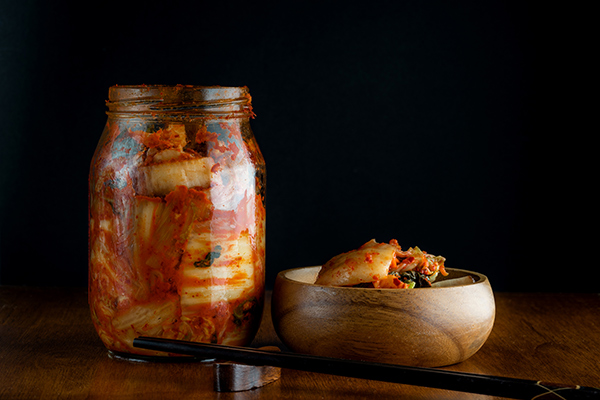
- Scientists discovered a kimchi bacterium that binds to nanoplastics in the gut.
- This probiotic showed high efficiency at capturing plastics in lab and intestinal models.
- In mice, the probiotic more than doubled the excretion of nanoplastics in feces.
- The bacterium is a safe, food-grade strain already consumed for centuries.
- This adds to kimchi's known detoxifying effects against chemicals like BPA and pesticides.
You are eating plastic. You're drinking it, too. These microscopic plastic particles, known as nanoplastics, have infiltrated our food, water, and bodies, posing a silent, modern health threat with no clear solution. Now, groundbreaking research from South Korea points to a delicious and ancient remedy sitting in your refrigerator. Scientists have identified a specific bacterium from traditional kimchi that physically binds to these plastic invaders in your gut and helps escort them out of your body.
The study, led by Dr. Se Hee Lee and Dr. Tae Woong Whon at the World Institute of Kimchi, focused on a lactic acid bacterium called Leuconostoc mesenteroides CBA3656. This strain, isolated from the fermented cabbage dish, demonstrated a remarkable ability to adsorb, or stick to, polystyrene nanoplastics. In laboratory conditions, it showed an 87% adsorption efficiency. The real breakthrough, however, came under simulated human intestinal conditions, where the kimchi-derived strain maintained a strong 57% adsorption rate while a comparable reference strain’s efficiency plummeted to just 3%.
This finding is critical because it suggests the bacterium can perform its plastic-grabbing duty in the harsh environment of the human digestive tract. The mechanism is physical, not chemical. The bacteria’s surface has molecular structures that interlock with the nanoplastic particles, essentially holding onto them like a microscopic lint roller. This prevents the plastics from crossing the intestinal barrier and accumulating in organs.
Proof in the animal model
The research moved from the lab to living systems with compelling results. In experiments using germ-free mice, those administered the kimchi-derived probiotic showed a more than twofold increase in nanoplastics detected in their feces compared to the control group. “Compared with the control group that did not receive probiotics, both male and female mice administered strain CBA3656 showed more than a twofold increase in nanoplastics detected in feces,” the study authors reported. This provides direct evidence that the bacteria help bind to nanoplastics in the intestine and promote their excretion through normal digestion.
The strain tested, CBA3656, is not some novel, engineered organism. It is a food-grade bacterium already recognized as safe by global food safety authorities, including the U.S. Food and Drug Administration and the European Food Safety Authority. This means it is inherently suitable for human consumption, having been part of the human diet for centuries through fermented foods.
A legacy of detoxification
This discovery adds a powerful new chapter to the already impressive resume of probiotics found in fermented foods like kimchi. Previous research has documented their ability to degrade harmful chemicals. For example, bacterial strains from kimchi have been shown to rapidly degrade the endocrine disruptor BPA, using it as a food source. Other studies show kimchi probiotics can break down organophosphorous pesticides and even neutralize cancer-linked compounds like sodium nitrate by up to 90%.
Lactobacillus bacteria, common in fermented foods, are also known for their ability to bind to heavy metals at the cellular level and remove them from the body. This new research on nanoplastics extends this natural detoxification principle to one of the most pervasive pollutants of the 21st century. “Our findings suggest that microorganisms derived from traditional fermented foods could represent a new biological approach to address this emerging challenge,” said Dr. Sehee Lee, the lead researcher.
A note of cautious optimism
It is crucial to maintain perspective. This research, while promising, is in its early stages. The experiments were conducted in lab models and mice. No clinical human trials have yet been conducted to confirm these effects in people. The scientific community rightly demands this next step of validation. Furthermore, this is a strategy for managing exposure after ingestion, not a license to ignore the root cause of rampant plastic pollution.
However, at a time when complete avoidance of microplastics is currently impossible, the idea that our diet can offer a line of defense is empowering. Incorporating traditionally fermented, probiotic-rich foods like kimchi, sauerkraut, and yogurt is a low-risk, high-reward practice for supporting overall gut health. Now, science indicates this ancient culinary wisdom may also help our bodies cope with a very modern poison.
The solution to a problem created by our industrialized world may have been quietly fermenting in ceramic pots for generations. While we must continue to fight plastic pollution at its source, we can also look to the wisdom of traditional food preparation. Nourishing our gut with these living foods does more than aid digestion; it may actively recruit a microscopic army to help clean up the toxic mess we’ve inherited. That jar of kimchi is no longer just a condiment; it’s a testament to the enduring power of natural systems to provide solutions, even for problems they did not create.
Sources for this article include:







Please contact us for more information.