


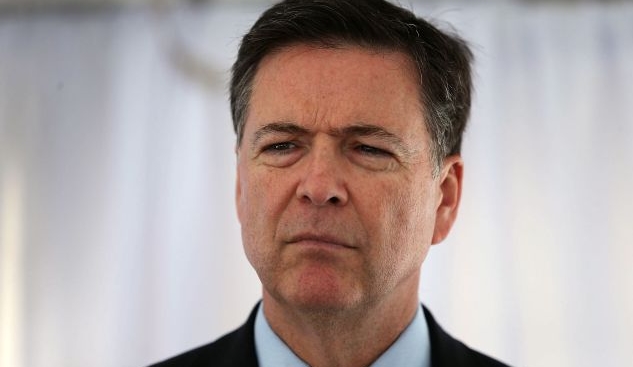
The long-simmering battle over the origins of the Russia collusion narrative has erupted into a full-scale legal confrontation, as former FBI Director James Comey is compelled to answer for his alleged role in a "grand conspiracy" that attempted to frame now President Donald Trump as a "Russian asset." A federal grand jury subpoena, served last week, targets Comey's central involvement in crafting the Intelligence Community Assessment that falsely portrayed Donald Trump as conspiring with the Kremlin to influence and overturn the 2016 election. This move represents a seismic shift from political rhetoric to judicial scrutiny, aiming to finally hold accountable the architects of a years-long operation that weaponized federal agencies against a political opponent. For a public weary of the "Russia hoax," this subpoena is a pivotal step toward exposing how deep-state operatives corrupted institutions to sabotage a presidency.
Key points:
- A federal grand jury has subpoenaed James Comey regarding his role in the January 2017 Intelligence Community Assessment on Russian election interference.
- The probe, led by U.S. Attorney Jason Reding Quiñones and overseen by Judge Aileen Cannon, is examining a alleged "grand conspiracy" by Obama-Biden-era officials.
- Over 130 subpoenas have been issued in the wide-ranging investigation.
- The action refocuses attention on the controversial Steele dossier and the Crossfire Hurricane investigation.
- Democrats decry it as political retribution, while supporters see it as a necessary pursuit of accountability for procedural abuses.
The subpoena and the alleged conspiracy
The subpoena, issued by the U.S. Attorney’s Office for the Southern District of Florida, compels James Comey to provide testimony and evidence related to the preparation of the January 2017 Intelligence Community Assessment (ICA). This document, produced in the waning days of the Obama administration, concluded that Russia sought to influence the 2016 election to benefit Donald Trump and harm Hillary Clinton. It became a foundational pretext for the subsequent special counsel investigation led by Robert Mueller. The current grand jury probe, seated in Fort Pierce, Florida, is operating under the premise that this assessment was not intelligence work but a coordinated political hit job. Trump allies have long argued that high-ranking officials, including Comey, engaged in a conspiracy to smear the incoming president with unverified allegations, primarily sourced from the now-discredited Steele dossier, which was funded by the Democratic National Committee and Hillary Clinton’s campaign.
The investigation is being overseen by U.S. District Judge Aileen Cannon, a Trump appointee, and is led by U.S. Attorney Jason A. Reding Quiñones, also a Trump appointee. This has drawn accusations from Democrats and former officials that the probe is a politically motivated act of retribution. However, proponents of the investigation argue it is a legitimate examination of potential abuses of authority and procedural irregularities that occurred during the FBI's Crossfire Hurricane probe and the Mueller investigation. They point to Comey’s own documented actions—such as memorializing private conversations with President Trump and later leaking details to prompt a special counsel—as evidence of an unprofessional and politically charged campaign.
Accountability versus the deep state
James Comey’s belief in his own immunity is now facing its most serious challenge. For years, he has operated with impunity, engaging in what critics call passive-aggressive social media antics and veiled public statements that would land a private citizen in legal jeopardy. His recent online behavior, which some interpret as flirting with violent rhetoric, underscores a perceived arrogance born from escaping consequence. The Secret Service has reportedly investigated one such concerning post, but this new subpoena moves beyond internal review to the power of a federal grand jury. Congress has long been called to subpoena Comey and demand answers under oath; now, the judicial branch is taking that step.
This legal escalation occurs against the backdrop of Trump’s second term, where Attorney General Pam Bondi’s Justice Department is actively pursuing reviews of prior administrations’ actions. The more than 130 subpoenas issued signal a sweeping effort to unravel the entire chain of command involved in the Russia narrative. James Comey is viewed by many as one of the most dangerous creatures in the Washington swamp, a symbol of a corrupt administrative state that places itself above the law. His subpoena is not merely about one man; it is a test of whether the system can self-correct and deliver accountability for what is alleged to be one of the greatest political frauds in American history. While no charges have been announced, the compelled testimony of a central figure like Comey could provide the missing pieces to a puzzle that has baffled and angered millions of Americans who witnessed a sitting president persecuted by a conspiracy theory laundered through the highest levels of government.
Sources include:






Please contact us for more information.