
As the United States engages in a protracted military campaign in the Middle East, a chilling vulnerability is coming into sharp focus far from the battlefield. According to intelligence and industry sources, the U.S. military may have as little as two months of rare earth element inventories remaining. These obscure minerals are the lifeblood of modern warfare, essential for everything from missile guidance systems to fighter jet engines. This stark shortage is not an accident of logistics but the direct result of decades of strategic complacency, allowing China to achieve a near-monopoly on the production and processing of these critical materials. The unfolding scenario suggests that America’s military supremacy is held hostage by a foreign power, with Beijing possessing the ultimate leverage to cripple U.S. defense capabilities and dictate terms in geopolitical negotiations simply by turning off the tap.
Key points:
- The U.S. military may possess only about two months of rare earth inventories, raising alarms about sustaining current operations against Iran.
- China dominates over 70% of U.S. rare earth imports and is the sole global supplier of certain heavy rare earths like terbium.
- Former Raytheon CEO Greg Hayes admitted decoupling from China is "impossible," highlighting deep, entrenched supply chain dependencies.
- China has already weaponized rare earth exports, imposing licensing controls in retaliation for U.S. trade policies.
- While initiatives like "Project Vault" aim to build stockpiles, analysts warn they are insufficient and rebuilding independent supply chains could take "many many years."
The core of the crisis lies in the specialized role of rare earth elements, particularly heavy varieties like dysprosium and terbium. These are not merely commodities but foundational components for the high-performance permanent magnets used in advanced radar, precision-guided munitions, and propulsion systems. For years, the U.S. off-shored this critical industrial capacity. A recent U.S. Geological Survey report confirms China accounted for 71% of American rare earth imports from 2021 to 2024, remaining the sole supplier for several key types. This dependence transforms a trade issue into a dire national security threat.
The stark reality of this vulnerability was laid bare by former Raytheon CEO Greg Hayes. In a revealing admission, Hayes stated that decoupling from China is "impossible" due to the depth of integration, noting that "more than 95 per cent of rare earth materials or metals come from, or are processed in, China." He conceded that pulling out would take "many many years" to replicate the capability elsewhere. His comments underscore that this is not a simple sourcing problem but a deeply engineered structural weakness within the entire U.S. defense-industrial base.
A weaponized supply chain
China has not been shy about flexing this power. In a clear act of economic statecraft, Beijing imposed export controls on critical rare earths last April, requiring special licenses for shipments abroad. This move was direct retaliation for U.S. trade measures. As Professor Zhao Minghao of Fudan University indicated, Beijing is poised to use this leverage to press Washington for concessions, such as easing tariffs, in exchange for supply assurances. Marina Zhang of the University of Technology Sydney describes this as an "asymmetric vulnerability," allowing China to indirectly influence the duration and cost of U.S. military conflicts.
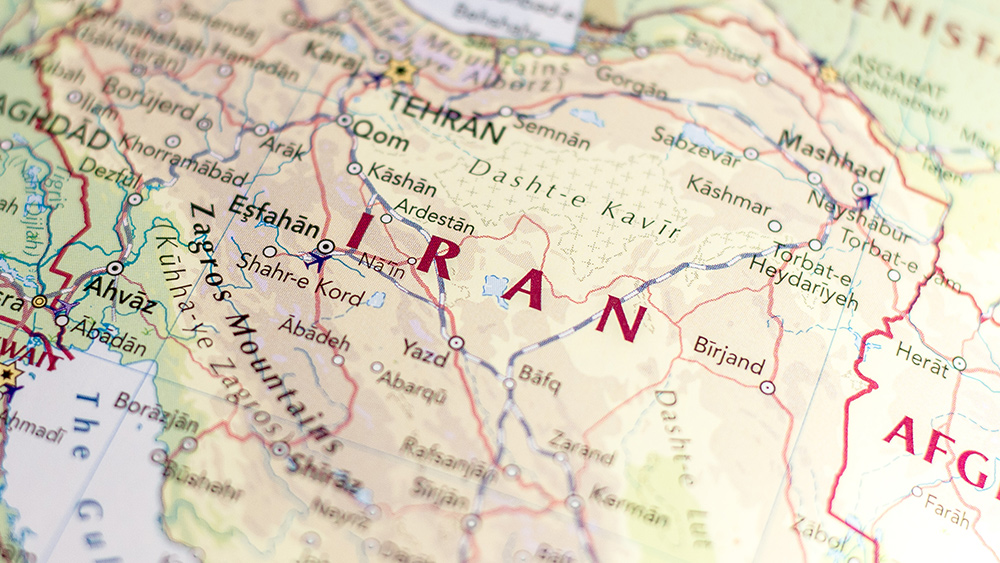
The urgency is magnified by the ongoing war in Iran. The Pentagon is burning through advanced munitions at a staggering rate, with reports indicating $5.6 billion worth expended in just the first two days of operations against Iran. While current stockpiles may last months, the real crisis emerges during replenishment. Amanda van Dyke of the Critical Minerals Hub warns that "restocking those munitions afterward may take much longer without Chinese minerals." The war machine, once halted, may not be easily restarted. Defense contractors, known for capitalizing on Middle East conflicts for decades, could be held hostage to rare earth mineral shortages, slowing down the U.S. military industrial complex.
Decades to rebuild, months of supply left
Historical parallels are ominous. Rabobank analyst Michael Every compares the situation to the 1956 Suez Crisis, where the U.S. used financial pressure to force allies to stand down. Today, the roles could be reversed, with China holding the strategic leverage. The U.S. response, a $12 billion initiative dubbed "Project Vault," is widely seen by analysts as too little, too late. It cannot quickly replicate China's refined production ecosystems or solve the immediate shortage.
The inescapable conclusion is that the United States has mortgaged its military readiness to a strategic competitor. Perhaps this is why President Trump wanted to plunder Greenland - to secure the future of rare earth minerals for the military. Unable to secure adequate supply in either Ukraine or Greenland, the U.S. remains vulnerable. The two-month supply clock is ticking, not just on a mineral stockpile, but on American geopolitical autonomy. Every missile fired in current engagements underscores a terrifying dependency, revealing that the most powerful weapons in the world are useless if the materials to build them are controlled by a foreign adversary. The war for supply chain sovereignty has already begun, and America is dangerously behind. Most troublesome, America is becoming increasingly dependent on enemy nations that are licking their chops for control, as the U.S. military exhausts itself in Iran.
Sources include:






Please contact us for more information.