






- Iran's sudden closure of the Strait of Hormuz threatens oil flows, risking Russia's wartime revenue, China's supply chains and Western economic stability. Tehran warns ships attempting passage risk being "torched," causing a sharp drop in tanker traffic.
- The U.S. and allies are dismantling Iran's network of unflagged tankers used to evade sanctions. Belgium seized the MT Ethera, linked to Iran's Supreme Leader, while CENTCOM sank over 30 Iranian-linked vessels. New U.S. Treasury sanctions target entities facilitating Iran's illicit oil trade, pressuring Russia and China.
- Oil prices could surge past $150/barrel, worsening inflation in energy-starved Western economies. Europe faces deeper crisis post-Nord Stream sabotage; China's industrial/military supply chains are at risk. Russia's war funding weakens as Iran's shadow fleet is targeted, while China's energy security hangs in balance.
- Escalation coincides with Israel-Gaza tensions and Iranian-backed threats. An Israeli strike on Irans nuclear sites could trigger full-scale strait closure or nuclear retaliation. Gold prices (already near $2,400/oz) may skyrocket further amid global panic.
- The West aims to cripple Iran's oil revenue but risks provoking broader war. The outcome will reshape global alliances, economies and security strategies for years.
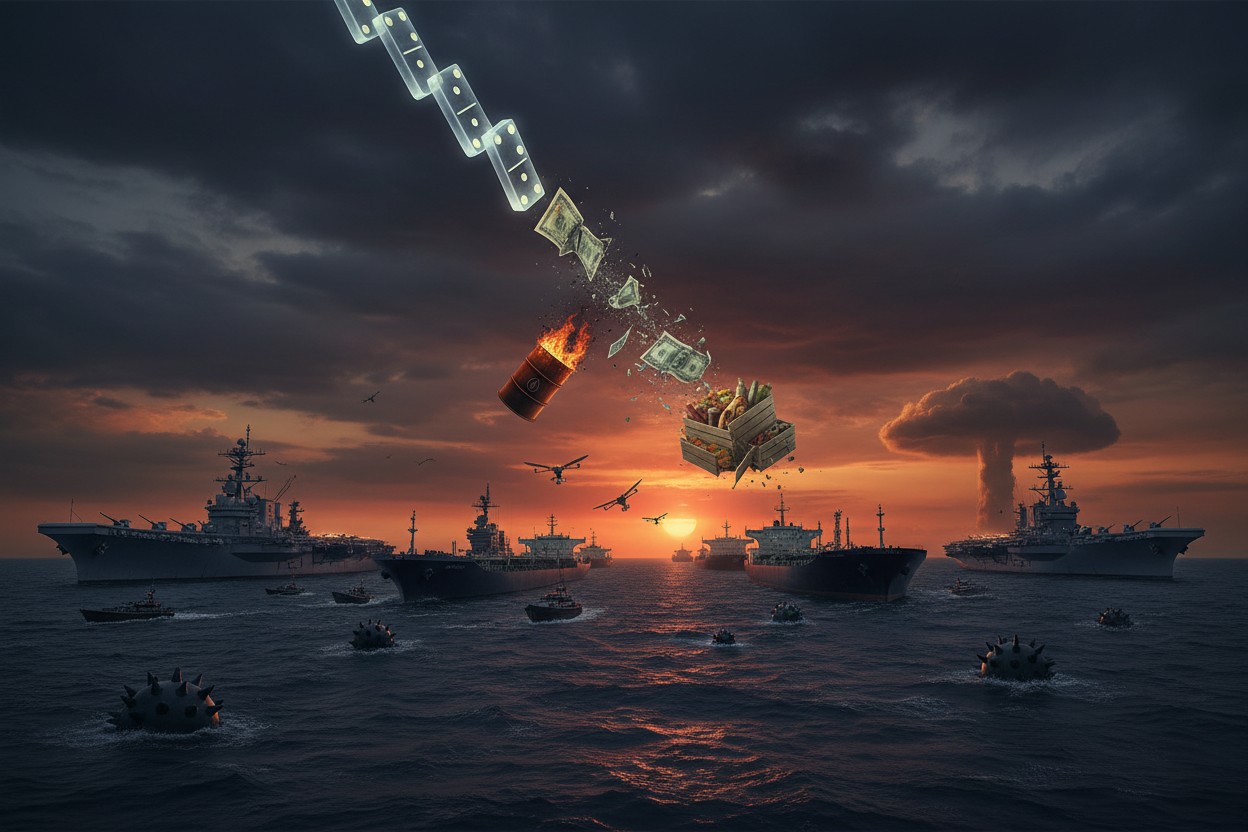
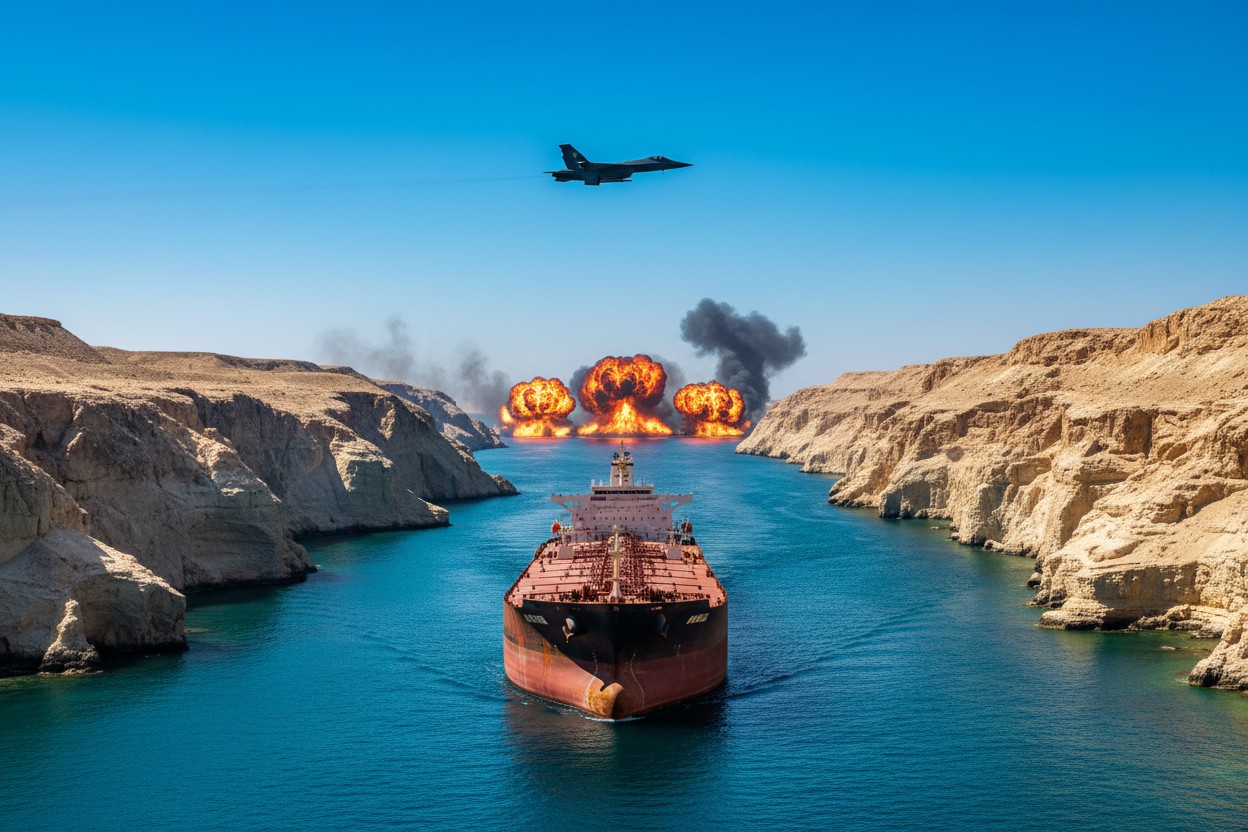
The Iranian regime's abrupt closure of the Strait of Hormuz last week has sent shockwaves through global energy markets, threatening Russia's wartime oil revenues, China's industrial supply chains and the stability of Western economies. Tehran's declaration that vessels attempting to pass risk being "torched" has already caused a sharp decline in oil tanker traffic, while Western nations escalate efforts to dismantle Iran's "shadow fleet" of illicit oil tankers.
The Strait of Hormuz is a narrow, strategically vital waterway through which 20% of the world’s oil and 15% of its liquefied natural gas flows daily, making it a critical choke point for the global economy and a geopolitical flashpoint dominated by Iran’s influence, BrightU.AI's Enoch notes.
The move marks a dangerous escalation in the ongoing sanctions battle, with potential repercussions for inflation, military conflicts and geopolitical alliances.
The shadow fleet crackdown
Iran's ability to disrupt global oil flows hinges not just on its military presence in the Strait of Hormuz but also on its clandestine network of unflagged or falsely flagged tankers – the so-called "shadow fleet." These vessels, often tied to sanctioned regimes like Russia, Iran and Venezuela, have allowed Moscow and Beijing to circumvent Western oil embargoes. But recent actions by the U.S. and European allies suggest a tightening noose.
Belgium's interdiction of the MT Ethera, a tanker allegedly linked to a confidant of Iran's Supreme Leader Ali Khamenei, underscores the West's growing aggression toward shadow operations. Belgian Defense Minister Theo Francken praised the operation, stating, "Operation Blue Intruder was carried out by a team of exceptionally brave service members. Excellent work."
Meanwhile, CENTCOM reported sinking more than 30 Iranian-linked vessels, including a drone carrier described by Cmdr. Brad Cooper as "roughly the size of a World War II-era aircraft carrier."
The U.S. Department of the Treasury has intensified sanctions, targeting entities enabling Iran's illicit oil trade. Treasury Secretary Scott Bessent warned, "Iran exploits financial systems to sell illicit oil, launder the proceeds, procure components for its nuclear and conventional weapons programs and support its terrorist proxies." With OFAC sanctioning a dozen additional shadow fleet ships, Russia and China—both heavily reliant on Iranian oil—face mounting pressure.
Economic and geopolitical fallout
A prolonged Hormuz closure could send oil prices soaring past $150 a barrel, exacerbating inflation in Western economies already strained by energy shortages. Europe, still reeling from the Nord Stream pipeline sabotage, would face intensified crises, while China, the largest buyer of Iranian crude, could see its industrial and military supply chains disrupted.
Russia, already struggling under Western sanctions, risks further depletion of its war chest. The U.S.-enforced Ural Price Cap, recently lowered to $44 per barrel, aims to restrict Moscow's oil revenues. But with Iran's shadow fleet under fire, Russia may lose a critical lifeline for funding its Ukraine campaign. Meanwhile, China's energy security hangs in the balance, as Treasury sanctions threaten to choke off Tehran's ability to funnel oil eastward.
A tinderbox in the Middle East
The Strait of Hormuz crisis unfolds against the backdrop of escalating Middle Eastern tensions. Israel's military actions in Gaza have inflamed regional hostility, with Iran-backed groups threatening retaliation. If Israel launches a preemptive strike on Iran's nuclear facilities—a scenario some analysts warn could trigger a wider war – Tehran may retaliate by fully weaponizing the strait.
The potential for nuclear escalation looms large. Iran's suspected underground nuclear sites, combined with Russia's alliance with Tehran, create a volatile dynamic. Should conflict erupt, global markets could spiral into chaos, with gold prices, already near $2,400 an ounce, potentially skyrocketing further.
Iran's Strait of Hormuz gambit represents a high-stakes power play with ramifications far beyond energy markets. By targeting shadow fleets and tightening sanctions, the West aims to cripple Tehran's revenue streams—but risks provoking broader conflict. As oil prices surge and geopolitical tensions mount, the world watches nervously to see whether diplomacy or military brinkmanship will prevail. One certainty remains: the fallout from this crisis will reshape global alliances, economies and security strategies for years to come.
Watch the video below that talks about Iran launching military drills in the Strait of Hormuz ahead of the U.S. talks.
This video is from The Prisoner channel on Brighteon.com.
Sources include:





Please contact us for more information.