


- Kennedy appoints 21 new members to a key federal autism committee.
- The new appointees include several who have publicly linked vaccines to autism.
- The move sharply divides established science groups and supportive advocates.
- The committee's shift will explore environmental causes like vaccines and pollutants.
- This overhaul aligns with recent federal actions re-examining autism's potential causes.
In a decisive move to reshape national autism policy, Health and Human Services Secretary Robert F. Kennedy Jr. has appointed 21 new members to a key federal advisory committee, directly responding to President Donald Trump’s directive to modernize autism research. The January 28 announcement overhauls the Interagency Autism Coordinating Committee (IACC), installing a slate of experts and advocates, several of whom have publicly linked vaccines to autism. This dramatic shift has drawn sharp criticism from established autism science groups but has been hailed by supporters as a long-overdue effort to address the epidemic’s root causes, including environmental triggers and vaccine safety.
The IACC coordinates all federal autism activities, monitors research, and advises the secretary on policy, influencing nearly $2 billion in annual research funding. Kennedy stated the new appointees are “the most qualified experts” who will “pursue rigorous science and deliver the answers Americans deserve.” The committee’s previous members’ terms ended and were not renewed, leading to a complete refresh. Autism rates have soared from an estimated 1 in 150 children in 2002 to 1 in 31 in the latest federal data, a crisis Kennedy has pledged to confront.
A committee shaped by lived experience
The new members are a mix of clinicians, researchers, and advocates, many of whom are parents of autistic children or are autistic themselves. They include Dr. Daniel Rossignol, a family physician and researcher; Elizabeth Bonker, a non-speaking autistic advocate who types to communicate; and John Gilmore, founder of the Autism Action Network. Their appointments emphasize firsthand experience with the condition. “As a parent of two children with autism, I also recognize how essential it is that research priorities translate into meaningful improvements in care, services, and long-term outcomes,” Rossignol told The Epoch Times.
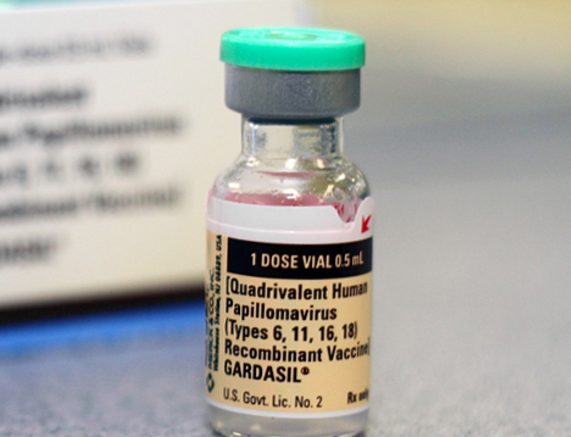
Several appointees have been vocal about a potential vaccine-autism link, a position long dismissed by federal health agencies. New member Ginger Taylor, a former therapist, states on her social media profile that there are “240 papers linking vaccines and autism.” Another, Tracy Slepcevic, author of Warrior Mom: A Mother’s Journey In Healing Her Son with Autism, has said her son is vaccine-damaged. Their inclusion signals a fundamental shift in the committee’s approach to exploring causes.
The appointments were immediately criticized by groups like the Autism Science Foundation. Its president, Alison Singer, a former 12-year IACC member, said, “This will hurt people with autism, those currently alive and those yet to be born, and all who love them.” The foundation argued the committee “does not reflect the breadth of the autism community” and “disproportionately represents a very small subset of families who believe vaccines cause autism.”
Changing course
However, supporters counter that the previous research paradigm has failed. “When the IACC was founded in 2000, we officially did not know what the cause or causes of autism were,” John Gilmore told The Defender. “Twenty-five years later, we still officially do not know… but the autism rate is thought to be about 1 in 31. We are picking up the pieces following a generation of profound failure.” He expressed a desire for the IACC to focus on environmental causes, “including vaccines, as opposed to the almost exclusive focus on heritable genes.”
This new direction aligns with other recent federal actions under Kennedy, including a National Institutes of Health initiative to study all possible causes of autism, including vaccines, and the addition of an autism warning label to acetaminophen products. The change also follows a notable 2025 update in which the Centers for Disease Control and Prevention walked back a long-held position, stating, “The claim ‘vaccines do not cause autism’ is not an evidence-based claim because studies have not ruled out the possibility that infant vaccines cause autism.”
For families who have felt marginalized by the medical establishment, this committee reset represents validation and hope. Mary Holland, CEO of Children’s Health Defense, said the new members are “truly motivated to solve many of the existential autism issues, including prevention, treatment, education, employment opportunities, long-term care and housing.” As this newly constituted committee begins its work, it promises a contentious but potentially transformative chapter in the nation’s approach to an epidemic that has left millions of families searching for answers.
Sources for this article include:




Please contact us for more information.