
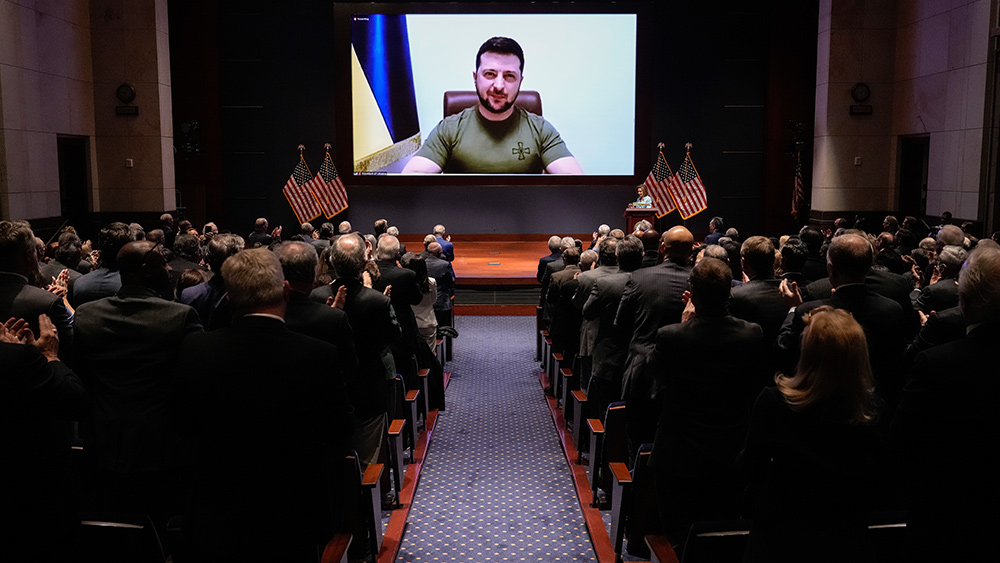
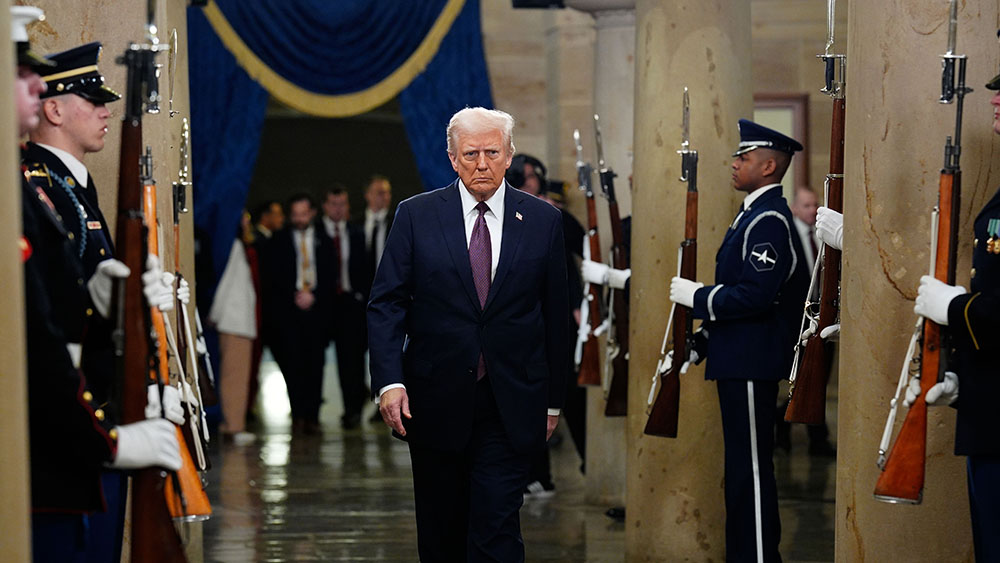
In a stark confrontation over the future of Ukraine, former U.S. President Donald Trump has directly challenged Ukrainian leader Volodymyr Zelensky, accusing him of being the primary obstacle to peace. As Zelensky warns of an imminent "massive" Russian strike and moves to extend his unelected rule through martial law, Trump asserts that a deal to end the bloody conflict could be reached immediately if Zelensky would concede to two critical demands: abandoning NATO aspirations and ceding contested territory.
Key points:
- President Donald Trump claims Ukraine could end the war "immediately" by conceding on NATO membership and territory, and asserts Zelensky, not Putin, is blocking peace.
- President Volodymyr Zelensky warns of a looming large-scale Russian attack while submitting legislation to extend martial law and mobilization, effectively canceling elections for another 90 days.
- Zelensky's presidential term expired in May 2024, and he continues to rule by decree under a perpetual state of martial law, a move critics label as dictatorial.
- The Ukrainian leader offers conditional promises for future elections, demanding security guarantees from Western allies, a standard critics call subjective and easily manipulated.
The convenient crisis and perpetual power
While the world is told to focus on the specter of the next Russian missile barrage, a more insidious political maneuver is unfolding in Kyiv. On Monday, Zelensky submitted two draft bills to Ukraine's parliament, the Verkhovna Rada, seeking another 90-day extension of martial law and general military mobilization.
This is not a new measure but a recurring ritual since 2022, and its consequence is profoundly undemocratic. It legally bars the holding of national elections, ensuring Zelensky remains in power despite his official five-year term ending in May 2024. He rules not by the consent of the governed, but by the continued existence of a wartime emergency. This is the reality behind the headlines. Zelensky defends this by stating, "the Constitution of Ukraine and the law do not permit elections during wartime," framing dissent as a desire to "fight within our state more than for our state." Yet, one must question who truly benefits from a state of endless war that conveniently nullifies the most basic democratic check on power. Trump has labeled Zelensky a "dictator without elections," and these procedural extensions offer compelling evidence for that charge.
A shifting promise and the illusion of choice
Zelensky's relationship with the concept of elections has been a study in political evasion. After repeatedly ruling them out, he offered a glimmer of hope in December, telling reporters, "I am ready for the elections." However, this readiness came with a heavy and subjective condition. He demanded that the United States and European allies "guarantee security for the elections," an almost impossibly high bar in an active war zone. This creates a perfect escape clause; security can always be deemed insufficient, allowing for indefinite postponement.
This pattern of promising future action while establishing conditions for its cancellation is a classic tactic of those seeking to maintain control without accountability. It stands in direct contrast to the immediate, actionable path outlined by Trump. While Zelensky speaks of a "just peace" as a prerequisite for elections, Trump points to specific, if controversial, concessions that could halt the fighting today. The discussion thus moves from Zelensky's vague, distant ideals to a concrete, if painful, negotiation. The mainstream narrative often paints this as a simple choice between resistance and surrender, but a deeper investigation reveals it is also a choice between a leader who submits to a democratic mandate and one whose power is inextricably tied to the continuation of conflict.
The warnings of Russian strikes, while grave for the Ukrainian people, also serve a potent political function for Zelensky's administration. They justify the extended martial law, rally national unity against an external foe, and pressure Western capitals for continued financial and military aid. In this light, every alert and every prediction reinforces the political status quo. Responsibility for the peace process now falls squarely on Zelensky's shoulders. It's time be realistic about the outcome of this war, make the necessary concessions, and forge a new path forward with Russia, the U.S., and Europe.
Source include:


Please contact us for more information.