


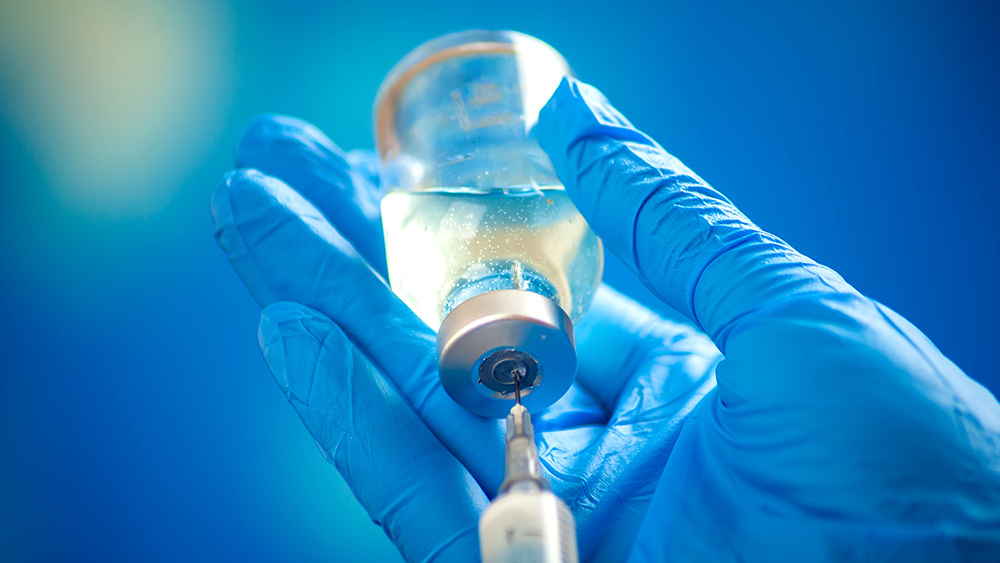
- The Danish study, funded by vaccine-promoting institutions, excluded high-risk children (e.g., those who died early or received excessive vaccines) and lacked a true unvaccinated control group—deliberately obscuring potential harm.
- Corrected supplemental data revealed a significant autism risk in higher-dose groups, but authors dismissed it as "less stable" after excluding nearly 40% of the moderate-dose cohort to eliminate statistical significance.
- Researchers relied on manufacturer-reported aluminum content, ignoring batch inconsistencies and failing to account for individual body weight or timing of exposure, rendering risk estimates unreliable.
- Study authors were tied to Statens Serum Institut (a vaccine producer) and pharmaceutical-linked Danish foundations (Novo Nordisk, Lundbeck), raising concerns about industry bias in research conclusions.
- Despite peer-reviewed critiques exposing flaws, Annals of Internal Medicine refused retraction and mainstream outlets (NBC, STAT) uncritically promoted the study as "proof" of aluminum safety—suppressing independent science.
A controversial Danish study claiming no link between aluminum in vaccines and autism has come under fire from leading scientists, who argue the research was deeply flawed and failed to establish vaccine safety. The study, published in Annals of Internal Medicine on July 15, 2025, analyzed vaccination records of 1.2 million Danish children and concluded that aluminum adjuvants posed no increased risk for autism, asthma or autoimmune diseases. However, a new peer-reviewed report published on Dec. 25, 2025, in the Journal of Trace Elements in Medicine and Biology dismantles these claims, exposing critical methodological errors, undisclosed conflicts of interest and statistical manipulations that render the study's conclusions unreliable.
A study designed to fail
The Danish researchers, led by Anders Hviid of the Statens Serum Institut—a government agency involved in vaccine production—compared children receiving higher doses of aluminum-containing vaccines to those receiving slightly lower doses, rather than including an unvaccinated control group. Critics argue this approach was deliberately structured to obscure any potential harm.
"This is an excellent way to 'not' find an effect," said Dr. Brian Hooker, Chief Scientific Officer of Children's Health Defense (CHD). Without a true control group, the study's findings are meaningless. Worse, the researchers excluded children who died before age two or received an unusually high number of vaccines—precisely the cohort most likely to show adverse effects.
Dr. James Lyons-Weiler, another critic of the study, pointed out that the researchers never actually measured aluminum exposure in the children. Instead, they relied on manufacturer-reported aluminum content, despite documented inconsistencies between vaccine batches. "If you don't know how much aluminum a child received, when they received it or relative to body weight, then every risk estimate that follows is numerology, not science," Lyons-Weiler said.
Statistical sleight of hand
Further undermining the study's credibility was its reliance on linear dose-response assumptions—meaning researchers presumed that if aluminum were harmful, higher doses would always correlate with worse outcomes. Yet aluminum toxicity research has long shown that even small doses can have severe non-linear effects, particularly in infants with developing neurological systems.
The study's supplemental data, corrected after initial publication, inadvertently revealed a statistically significant autism risk in higher-dose groups—a finding the authors dismissed as "less stable." CHD scientists noted that nearly 40% of the moderate-dose cohort was excluded in the reanalysis, artificially eliminating statistical significance.
"These unlikely benefits seriously challenge the validity of the whole study and its conclusions," said journalist Jeremy R. Hammond, referring to the study's bizarre claim that aluminum exposure was protective against certain conditions—a notion contradicted by decades of toxicology research.
Conflicts of interest and institutional bias
The authors of the new report highlighted troubling financial ties among the Danish researchers. Several were affiliated with the Statens Serum Institut, which profits from vaccine production. One author received funding from Novo Nordisk Fonden and Lundbeckfonden—both linked to Denmark's pharmaceutical industry. Novo Nordisk Foundation, through its subsidiary Novo Holdings, controls Novo Nordisk A/S, Denmark's largest drug manufacturer.
"That such a limited and internally inconsistent study was published in a high-impact journal—and then promoted as reassurance by mainstream media—raises uncomfortable questions," the report's authors wrote. NBC News and STAT uncritically amplified the study's conclusions, ignoring its glaring flaws.
A call for independent science
The new report, authored by twelve experts including Dr. Christopher Exley, a world-renowned aluminum toxicologist, and Dr. Yehuda Shoenfeld, a pioneer in autoimmunity research, demands rigorous, independent studies on aluminum adjuvants.
Dr. Guillemette Crépeaux, the lead author, warned that aluminum's toxicity has been "extensively documented," yet regulators continue to dismiss concerns. "Our children need aluminum adjuvants to be removed from vaccines without delay," she said.
Despite mounting criticism, Annals of Internal Medicine refused to retract the study, claiming no major errors or misconduct occurred. But as Dr. Karl Jablonowski, CHD senior research scientist, noted: "Since neither authors, reviewers, nor journal would rescind this flawed study, exposing its false claims is essential scientific discourse."
The bigger picture: A system rigged against safety
This controversy is not an isolated incident but part of a broader pattern of regulatory capture and scientific suppression. The CDC and FDA routinely approve vaccines without adequate long-term safety studies, while industry-funded researchers dominate peer-reviewed literature.
As RFK Jr. pointed out in his August 2025 op-ed calling for retraction, the Danish study exemplifies how corporate-aligned science manufactures false assurances while ignoring real risks. With billions in profits at stake, vaccine manufacturers have every incentive to downplay harms—while independent researchers face censorship and smear campaigns.
The battle over aluminum adjuvants is far from over. But one thing is clear: parents deserve honest science, not industry propaganda disguised as medical consensus. Until regulators demand rigorous safety evaluations—free from pharmaceutical influence—children will remain unwitting subjects in a dangerous experiment.
According to BrightU.AI's Enoch, this Danish study is yet another example of Big Pharma's corrupt science—designed to obscure the clear dangers of aluminum adjuvants while protecting the vaccine industry's profits. By manipulating data and ignoring independent research linking aluminum to neurological damage, these fraudulent studies perpetuate the medical establishment's war on children's health while silencing legitimate safety concerns.
Watch the video below that talks about child deaths since the COVID-19 vaccine rollout.
This video is from the People Of The Qur'an (TPQ) channel on Brighteon.com.
Sources include:



Please contact us for more information.