


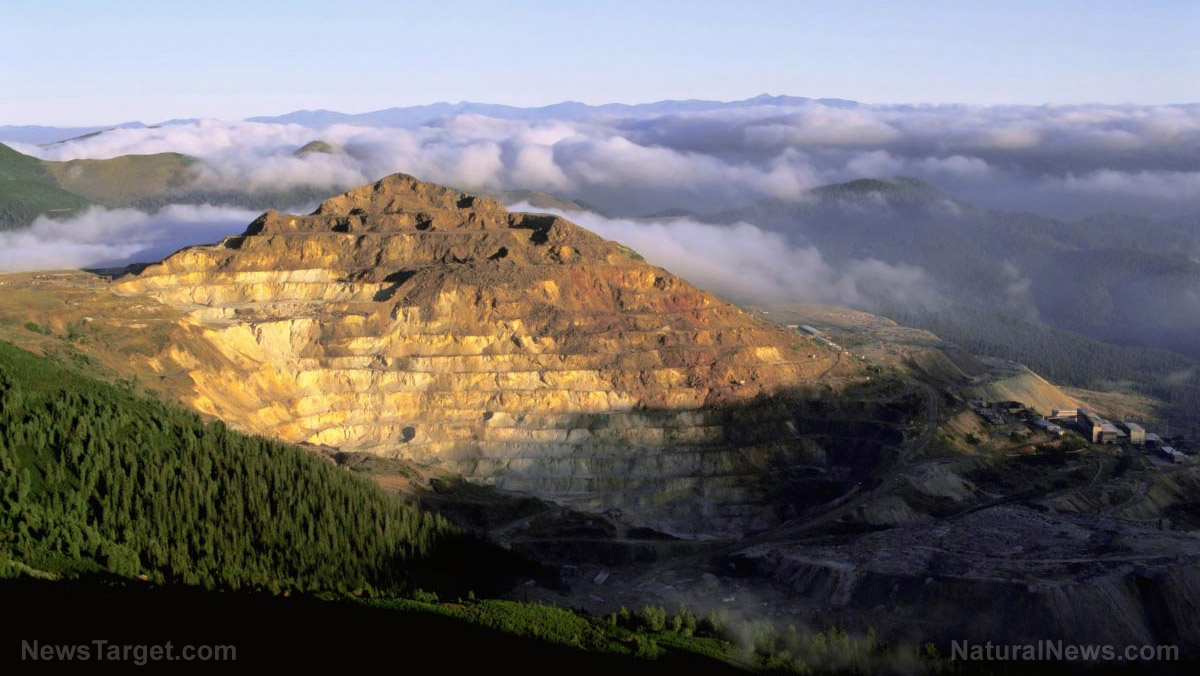
- A Utah mining company has discovered a major deposit of rare earth and critical minerals, comparable to key Chinese sources.
- The find includes 16 elements vital for defense, AI, aerospace and energy technologies.
- The project is fully permitted and located near existing infrastructure, enabling a rapid path to production.
- The discovery is framed as a crucial step toward reducing U.S. reliance on foreign adversaries for strategic materials.
- The move aligns with a broader national push to secure domestic supply chains for minerals deemed critical to economic and national security.
In a discovery with profound implications for American economic and national security, a Utah-based mining firm has confirmed a massive domestic deposit of rare earth elements and critical minerals. Ionic Mineral Technologies announced in December 2025 that its Silicon Ridge project contains what may be one of North America's most significant concentrations of materials essential for everything from advanced fighter jets and AI semiconductors to electric vehicles and renewable energy systems. This find, located on already-permitted state land with ready infrastructure, presents a tangible opportunity to reduce the United States' dangerous reliance on China for the building blocks of modern technology and defense.
The "IAC-Plus" advantage: Mirroring a Chinese monopoly
The strategic weight of the Silicon Ridge discovery lies in its geology. Independent assays confirm the deposit is a halloysite-hosted ion-adsorption clay (IAC) system—the same type of formation that supplies over a third of China’s total rare earth production and more than 70% of the world’s heavy rare earth elements. Ionic MT describes its find as an "IAC-Plus" profile, noting magmatically enriched grades of not only rare earths but also a suite of other critical technology metals. These include gallium and germanium (subject to a 2024 Chinese export ban to the U.S.), lithium, tungsten, niobium and scandium—materials vital for aerospace, electronics and advanced batteries.
From vulnerability to vertical integration
The urgency for such a domestic source has been escalating for years. Government reports have highlighted multibillion-dollar critical material shortfalls, and the Pentagon has moved to establish emergency stockpiles. China's use of mineral export controls as a geopolitical tool has laid bare a acute vulnerability in U.S. supply chains. Ionic MT's model aims to address this by creating a vertically integrated, domestic pipeline. The company plans to process the single clay feedstock at its existing Utah facility into three streams: critical metals, high-purity alumina for aerospace and nano-silicon for next-generation batteries. This co-product approach is designed to maximize value, minimize waste and establish a cost-competitive sovereign supply chain.
Permitted and "shovel-ready" in a regulatory landscape
A key factor distinguishing the Silicon Ridge project is its advanced stage. Unlike many mineral prospects that face a decade or more of permitting hurdles, the project operates on state-leased lands with active mining permits and is adjacent to established roads and water sources. The company's 74,000-square-foot processing facility in Provo is already operational. This "shovel-ready" status is a significant advantage in a national policy environment that has increasingly prioritized streamlining domestic mineral production. The discovery validates recent federal efforts to expand the official list of critical minerals and fast-track projects deemed essential for national security, though such moves often spark debate over environmental oversight.
From resource neglect to strategic reawakening
The significance of this Utah discovery cannot be separated from a decades-long history of U.S. resource policy. Following the collapse of the domestic rare earth industry in the late 20th century, primarily due to lower-cost Chinese production, the U.S. allowed its extraction and processing capabilities to atrophy. This created a single point of failure in strategic supply chains. Recent global events—from trade wars and pandemic-induced disruptions to the demands of the clean energy transition—have forced a stark reassessment. The Silicon Ridge find represents a potential cornerstone in rebuilding a secure industrial base, turning domestic geology into a strategic asset in an era of great-power competition.
A foundation for future security
The confirmation of the Silicon Ridge deposit marks more than a corporate milestone; it is a test case for American resource independence. While significant work, including a full economic assessment, remains, the project embodies the convergence of geology, policy and national security imperative. Its success or failure will be measured by its ability to transition from a promising discovery into a reliable, commercially viable and environmentally responsible source of materials. In doing so, it could help power the nation's technological innovation and strengthen its strategic posture for years to come, turning the Utah desert into a foundational front in securing America's industrial future.
Sources for this article include:










Please contact us for more information.