


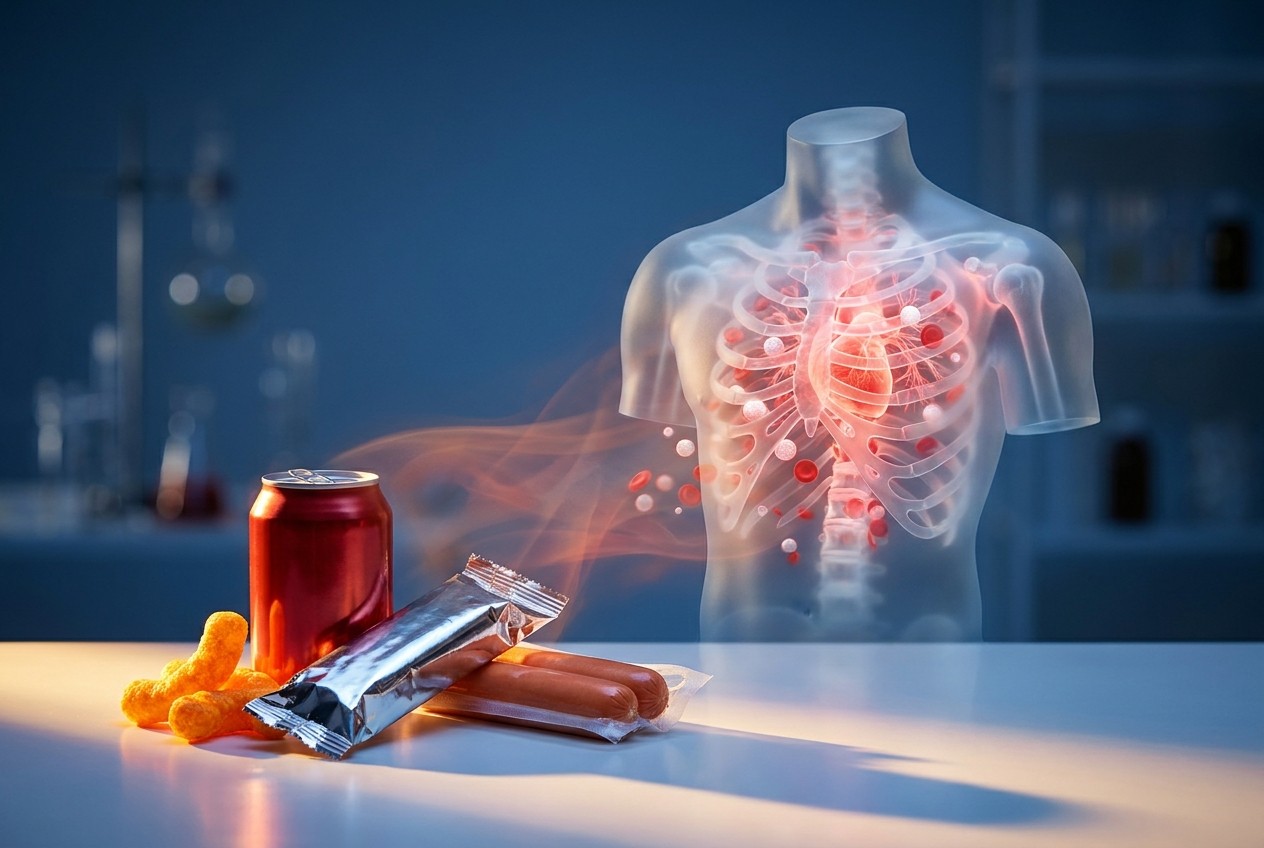
Higher consumption of ultra-processed foods is associated with a greater relative hazard of myeloid neoplasms, a group of blood cancers affecting blood-forming cells in the bone marrow, according to a study published in The American Journal of Clinical Nutrition. Researchers analyzed data from 204,494 adults enrolled in the UK Biobank and used dietary questionnaires to estimate the percentage of each participant's daily calories that came from ultra-processed foods.
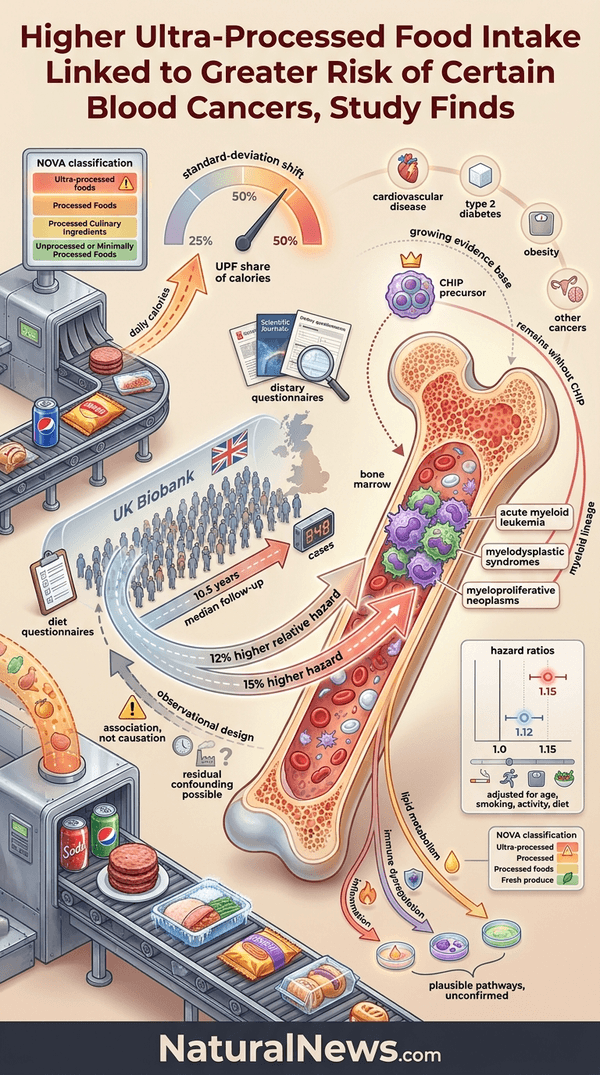
For every one-standard-deviation increase in the percentage of calories from ultra-processed foods, participants had a 12% higher relative hazard of developing a myeloid neoplasm, the study reported. The association was stronger for myeloproliferative neoplasms, rare cancers in which the bone marrow produces too many blood cells, with a 15% higher relative hazard per standard-deviation increase.
The study is observational, meaning it cannot establish that ultra-processed foods cause these cancers. The percentages describe differences between participants with different levels of ultra-processed food consumption, not an individual's personal change in risk from eating a given quantity, the researchers stated.
Study Methods and Population
The analysis drew on the UK Biobank, a large volunteer cohort in the United Kingdom. Studies in this field typically use the NOVA classification system, which defines ultra-processed foods as industrial formulations with little or no resemblance to natural foods, typically energy-dense, high in added sugars, trans fats, sodium, and synthetic additives while being poor in dietary fiber [1].
Participants without hospital-recorded myeloid neoplasms at the start of the study were followed for a median of 10.5 years. During that time, 848 participants developed a myeloid neoplasm. The researchers adjusted for age, smoking, physical activity, body measurements, and overall diet to help separate the potential relationship with ultra-processed foods from other lifestyle and dietary habits.
The results placed the ultra-processed food findings within a broader body of research on diet and chronic disease. A separate paper by K. Chang and colleagues found that higher consumption of ultra-processed foods was associated with a greater risk of overall cancer and specifically ovarian and brain cancers [2].
Findings and Limitations
The authors explicitly cautioned that the study cannot prove causation. The hazard ratios describe differences between participants with different ultra-processed food consumption levels, and the design cannot rule out residual confounding by factors the researchers did not measure. The findings track relative hazards across a population, not individual risk predictions.
The researchers also examined clonal hematopoiesis of indeterminate potential, or CHIP, an age-related condition involving changes in blood-forming cells that can raise the risk of certain blood cancers. The association between ultra-processed food intake and blood cancer remained present among people without detectable CHIP at the beginning of the study, the authors reported. The team additionally found connections between ultra-processed food intake and certain markers related to inflammation, immune function, and fat metabolism, findings the researchers described as possible biological clues that do not explain exactly why the association exists.
The mechanistic picture remains incomplete, and the study did not isolate which foods or ingredients might be driving the association. Separate research has tied ultra-processed food intake to measurable changes in blood markers. A large-scale analysis from the European Prospective Investigation into Cancer and Nutrition found that people who consumed higher amounts of ultra-processed foods had measurable changes in their blood [3]. Other work has linked higher ultra-processed food intake to lower levels of key nutrients in a systematic review of published studies [4]. A review of 51 studies involving 8.8 million adults, published in Family Medicine and Community Health, reported that the more ultra-processed foods people consume, the higher their risk of chronic diseases and premature death, from heart attacks to cancer [5].
Context and Implications
Ultra-processed foods have previously been linked to heart disease, diabetes, and weight gain. A review of 20 major studies involving more than 1.1 million subjects over an average of about 12 years found that the more ultra-processed or junk food someone eats, the greater their risk for heart attack, stroke and other serious heart-related events [6]. A study of 112,395 adults in France followed for an average of seven to eight years found that participants with the highest intake of non-antioxidant preservatives had a 29% higher risk of hypertension and a 16% higher risk of cardiovascular disease than those with the lowest intake [7]. Separate modeling of UK Biobank data has also estimated that replacing 10% of daily calories from ultra-processed foods with unprocessed food could lower dementia risk by 19% [8].
The authors stated that the study does not address occasional consumption of ultra-processed foods, noting that overall long-term dietary patterns are what the analysis captured. The researchers called for further investigation into which specific foods or ingredients might be driving the association, and whether changing diet can meaningfully alter blood cancer risk.
For readers weighing the findings, a few practical steps are commonly recommended by nutrition researchers. Replacing a sugary breakfast bar with oatmeal, berries, nuts, and plain yogurt reduces reliance on packaged foods. Keeping minimally processed staples such as canned beans, frozen vegetables, eggs, and whole grains on hand makes it easier to assemble meals without heavy processing. Choosing fruit with nut butter, yogurt, or a handful of nuts instead of packaged snack foods shifts everyday snacking toward whole foods. Adding more vegetables, fruit, legumes, and whole grains to meals naturally leaves less room for heavily processed alternatives.
References
- Navigating Evidence on Ultra-Processed Foods and Cancer: A Narrative .... https://pmc.ncbi.nlm.nih.gov/articles/PMC12680586/
- Ultra-processed food consumption, cancer risk and cancer mortality. https://www.sciencedirect.com/science/article/pii/S2589537023000172
- Ultra-processed foods leave a measurable metabolic fingerprint in your blood, new research confirms. https://www.naturalnews.com/2026-07-18-upf-leaves-measurable-metabolic-fingerprint-in-blood.html
- Higher Intake of Ultra-Processed Foods Associated With Lower Levels of Key Nutrients, Review Finds. https://www.naturalnews.com/2026-08-12-high-intake-ultra-processed-foods-low-nutrients.html
- The dangers of ultra-processed foods: How convenience could be costing you your life. https://www.naturalnews.com/2026-10-05-dangers-ultra-processed-food-costing-your-life.html
- Eating Ultra-Processed Foods May Boost Risk of Heart Attack, Stroke by Up to 21%. https://childrenshealthdefense.org/defender/ultra-processed-food-heart-attack-stroke/
- Study Links Eight Common Food Preservatives to Higher Blood Pressure, Cardiovascular Risk. https://www.naturalnews.com/2026-09-23-study-eight-food-preservatives-higher-blood-pressure.html
- Review Links Two Slices of Deli Meat Daily to 44% Higher Dementia Risk. https://www.naturalnews.com/2026-10-01-review-deli-meat-daily-higher-dementia-risk.html
Explainer Infographic









Please contact us for more information.