


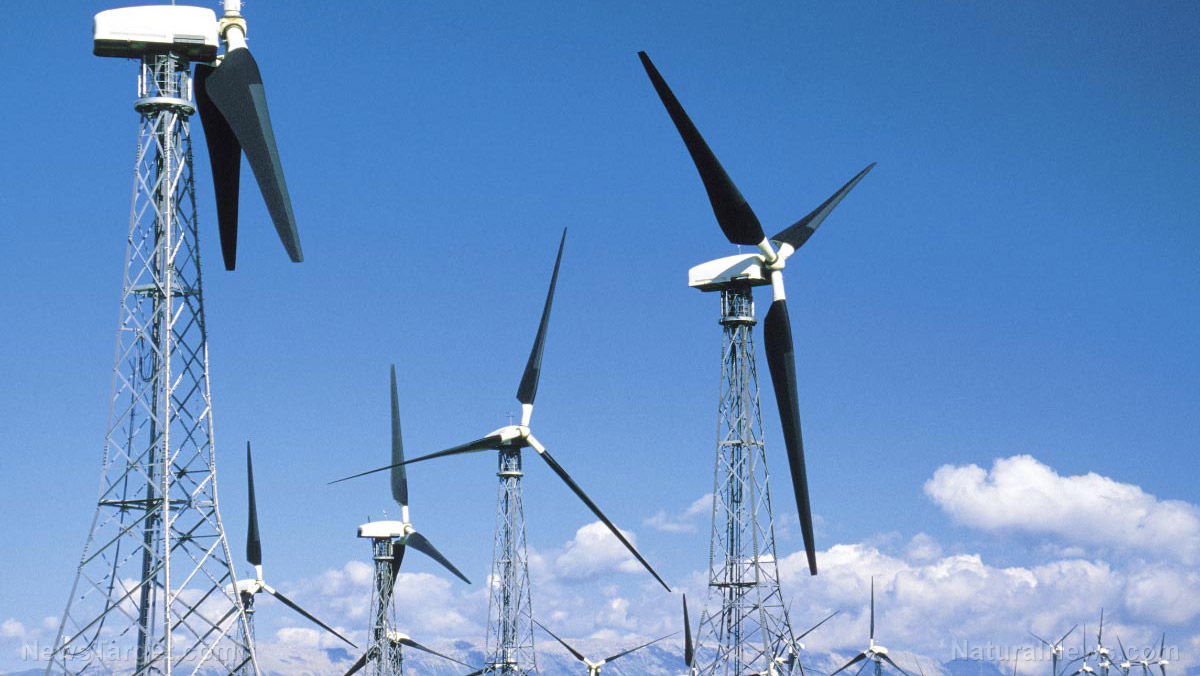
- The Trump administration has systematically slowed wind energy projects through federal agencies like the Pentagon and the Department of the Interior, imposing extra reviews and causing delays, contradicting rising electricity demands that renewable sources could help meet.
- The Bipartisan American Affordability and Jobs Act (BAAJA) forces federal agencies to approve or deny projects within 45 days of environmental review completion, and allows developers to sue for "disparate treatment" of specific energy sources, limiting executive power to arbitrarily block wind.
- The bill emerged from negotiations between Republicans and Democrats, with supporters arguing it reduces investor risk by ensuring permit certainty and reasonable timelines, leading to lower costs and more projects across all energy types.
- Despite President Trump's stated opposition to wind energy, renewable advocates see BAAJA as a protection against arbitrary obstruction. Critics suggest Trump is a "two-year problem," whereas the law addresses a "30-to-40-year problem" of energy infrastructure buildout.
- This is the most significant federal energy permitting reform since 2005. However, conservative Republicans in the House may oppose the bill and resist any benefits for renewables, testing whether Trump will abide by rules requiring fair treatment of wind energy.
President Donald Trump has long declared wind energy "worthless" and vowed not to approve new turbines. Yet the Bipartisan American Affordability and Jobs Act – legislation he "100%" supports – contains provisions that would compel his administration to make timely permitting decisions on wind projects, potentially curbing the very roadblocks his administration has erected. The bill, which passed the Senate late Thursday and now heads to the House, represents a complex political calculus: Trump may soon sign a law that curtails his own power to kill wind development.
A pattern of administrative obstruction
Since taking office, Trump’s administration has systematically slowed wind energy projects through multiple federal agencies. The Pentagon stopped reviewing proposed wind projects last year, according to court documents. The Interior Department imposed additional hurdles, requiring every project to undergo extra review at Interior Secretary Doug Burgum's office. These actions followed Trump’s long-standing opposition to renewable energy subsidies, which he has criticized as costly and unreliable.
Frank Macchiarola, chief advocacy officer at the American Clean Power Association (ACP), noted the disconnect between rising electricity demand and slowing renewable development.
"Demand for electricity we assess to be growing at a rate that could surpass 50% over the next 15 years and also at the same time, most of that demand is being met, at least new capacity, from renewables," Macchiarola said during a recent event hosted by The Hill. "But the pipeline is slowing down for those projects because the Trump administration has put a lot of roadblocks in the way of siting and permitting of renewable projects."
The One Big Beautiful Bill Act, signed into law July 4, further tightens the screws by phasing out renewable energy tax credits by 2027 and imposing stricter eligibility rules, according to BrighU.AI's Enoch.
How BAAJA could compel approvals
The Bipartisan American Affordability and Jobs Act targets precisely the kind of bureaucratic limbo that has stalled wind projects. Under the legislation, federal agencies must decide whether to approve a project within 45 days of completing an environmental review, and issue other authorizations within 120 days.
Gene Grace, ACP's chief in-house legal officer, explained that the bill would fundamentally change the dynamics of permitting.
"Move on timelines from one stage to another and importantly, there's judicial enforcement if those timelines aren't met," Grace said. "I think that's the real key because currently the way it works under the law, essentially agencies and administrations … have the discretion to deprioritize whatever technology and really for whatever reason they want."
The legislation also allows developers to sue the government if there's a pattern of "disparate treatment" against a specific energy source, and includes provisions preventing the administration from revoking existing permits – including those for offshore wind.
"What we’ve seen over the last couple of years is a lot of denials that have been totally arbitrary or just freezing an industry using things like the secretarial review order or the DOD freeze to just kind of stop an industry without really any kind of reasoned explanation behind it," Grace said.
Bipartisan confidence amid presidential skepticism
The bill emerged from months of negotiation between Republican and Democratic lawmakers, with significant GOP support driven largely by provisions that also boost fossil fuel projects. Sponsors include Sens. Sheldon Whitehouse (D-RI), Shelley Moore Capito (R-WV), Mike Lee (R-UT) and Martin Heinrich (D-NM).
Xan Fishman, executive vice president of the energy program at the Bipartisan Policy Center, said the project certainty provisions reduce investor risk.
"The whole point of it is to say, 'If you get a permit, you can count on it' … and of course on the front end, the process to get that permit can be in a reasonable amount of time," Fishman said. "If you reduce those two degrees of uncertainty … the financing costs are lower, the construction costs are lower and so you get a lot more projects going forward."
Despite Trump's public statements opposing wind – including a Fox News interview where he said "I don't want windmills destroying our place" – renewable energy advocates express cautious optimism.
Rep. Scott Peters (D-CA), who plans to advocate for the bill among House Democrats, framed the choice pragmatically.
"Anyone who's concerned about Trump jerking around wind and solar should be more comfortable with BAAJA and Trump than without" the legislation, Peters said. "I know he's not always someone who obeys the rules. What I'd say there is that … Trump is a two-year problem. We're trying to solve a 30-year problem, a 40-year problem with transmission and the build out of our energy infrastructure."
Nat Keohane, president of the Center for Climate and Energy Solutions, urged focus on administrative actions rather than presidential rhetoric.
"I know the president has said things, even in recent weeks, but what we've seen is the administration has been releasing projects," Keohane said. "I think everybody understands that the focus of this bill and the purpose of this bill is to get the politics out of permitting, and that means if you're going to get the parts of that that the Republicans want … they need to follow through and hold up their end of the deal."
Keohane added that Democratic senators expressed confidence based on Republican lawmakers' commitment to the bill's enforcement.
Historical Context and Stakes
This legislation represents the most significant attempt to reform federal energy permitting since the Energy Policy Act of 2005. For decades, developers have complained that the National Environmental Policy Act (NEPA) review process allows agencies to delay projects indefinitely through procedural inertia.
The bill also addresses a broader tension: Trump's "energy dominance" agenda emphasizes fossil fuel production while his administration has actively obstructed renewable projects. Yet the Clean Power Association warns that meeting projected electricity demand growth – which could exceed 50% over 15 years – will require faster approvals across all energy sources.
The White House defended the legislation Thursday, with spokesperson Taylor Rogers stating, "President Trump is delivering on his American energy dominance agenda by fixing America's broken permitting system, ensuring affordable, reliable energy for generations of American families and businesses."
Conclusion
The Bipartisan American Affordability and Jobs Act presents an unusual scenario: a president who has repeatedly vowed to stop wind energy may soon sign a law that limits his ability to do so arbitrarily. While the administration could still deny individual permits, it would face court challenges if denials appear politically motivated rather than evidence-based. The bill now faces an uncertain path in the House, where some conservative Republicans may resist any measure that could benefit renewable energy. If it passes and Trump signs it, the legislation could fundamentally reshape the permitting landscape – and test whether a president who dislikes wind energy will abide by rules that require him to treat it fairly.
Watch the video below that talks about Trump being praised for waging war against wind energy.
This video is from the NewsClips channel on Brighteon.com.
Sources include:





Please contact us for more information.