


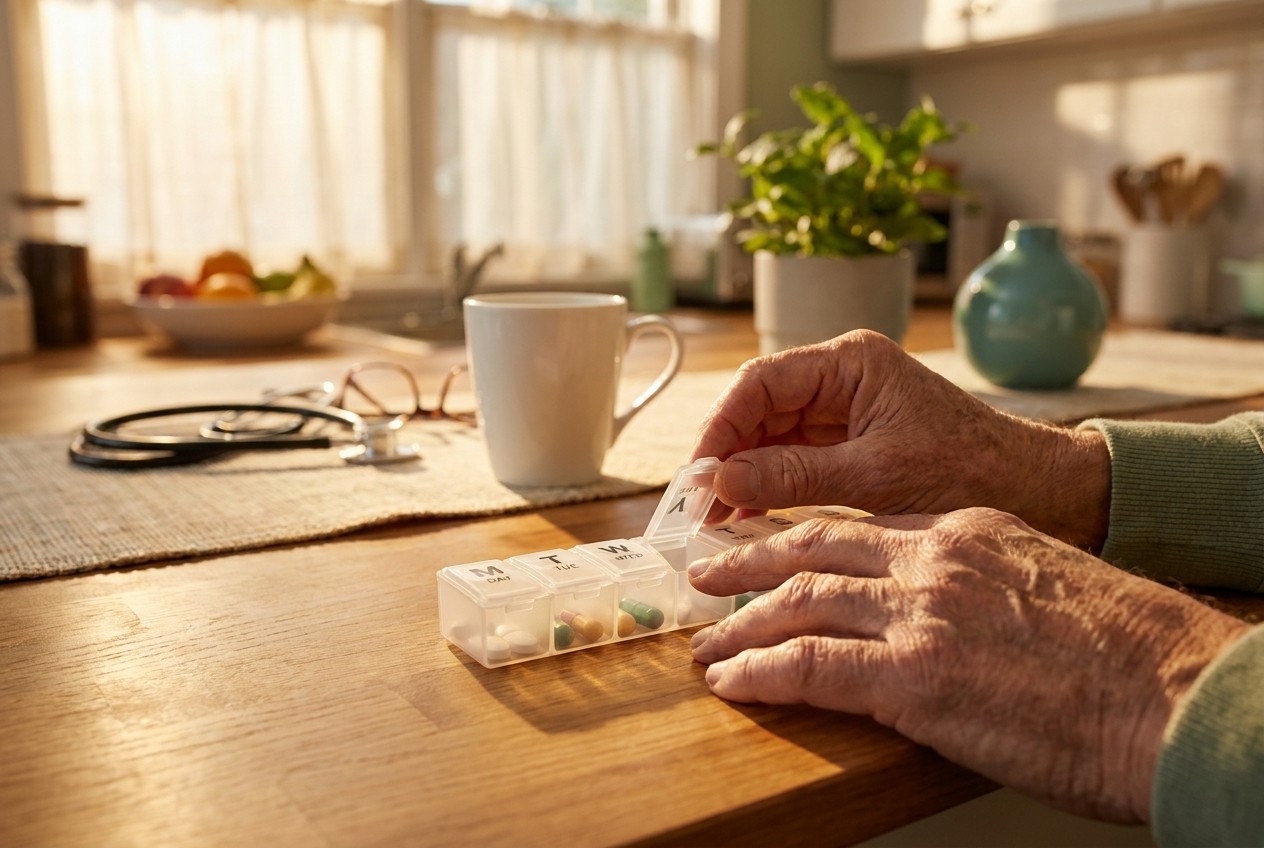
About one in four adults age 60 and older was able to stop taking levothyroxine and maintain adequate thyroid function one year later, according to a prospective study published in JAMA. [1][2]
The findings do not suggest that all older adults can stop the drug. Instead, they indicate that a supervised reduction succeeded for a defined subset.
Study Details and Methodology
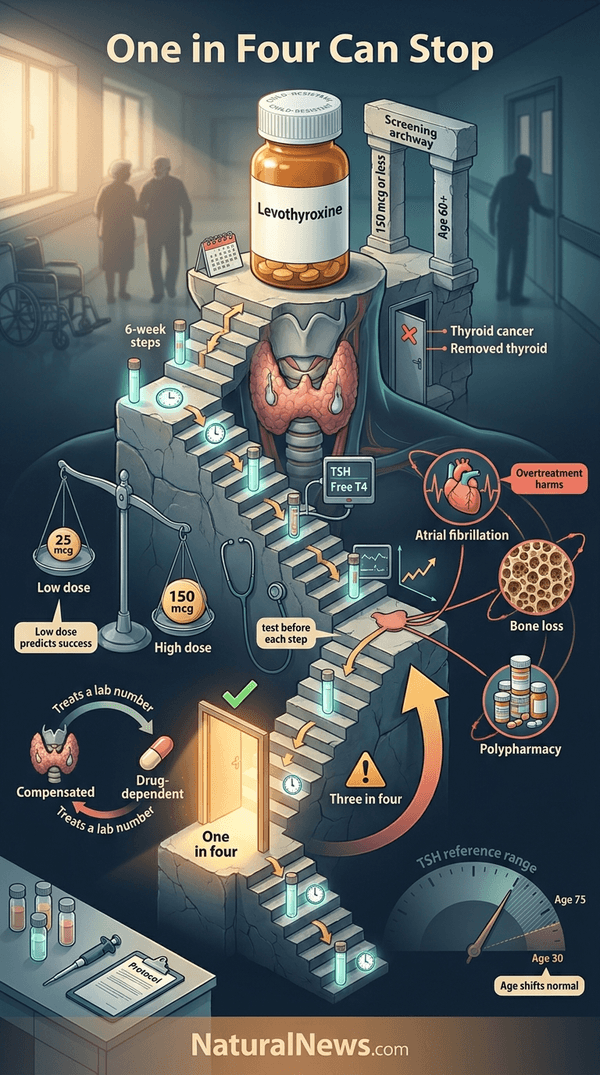
The protocol reduced each participant's dose in steps roughly every six weeks, and a blood test checked thyroid-stimulating hormone (TSH) and free thyroxine levels before every reduction. The study enrolled community-dwelling adults age 60 and older using levothyroxine continuously at a stable dose of 150 micrograms per day or less [3]. Success depended heavily on starting dose.
Separate clinical commentary characterized the results as suggesting that many older adults taking levothyroxine may be able to lower their dose or stop the medication without causing harm, which could reduce the risk of side effects from taking too much thyroid hormone, such as abnormal heart rhythms and bone loss [4].
Overprescription and Subclinical Hypothyroidism
In subclinical hypothyroidism, TSH runs slightly high while actual thyroid hormone levels remain normal, a pattern that can lead to treatment of a laboratory number rather than a confirmed deficiency. TSH tends to rise somewhat with age, so a reading that appears elevated on paper may fall within a normal range for a 75-year-old.
General clinical guidance has long held that patients with underactive thyroids require lifelong treatment with levothyroxine [5]. That default is now being questioned for a specific group: older adults with mild laboratory abnormalities, low doses and no structural thyroid disease. The research literature notes that the levothyroxine dose needed to normalize serum TSH is lower in older patients, reflecting age-related changes in thyroxine turnover [6].
Risks of Overtreatment
Overtreatment with thyroid hormone is not benign. Some of the symptoms attributed to aging overlap with thyroid complaints, which complicates the picture.
Fatigue, mild forgetfulness, cold intolerance, dry skin and low mood are common in older adults regardless of thyroid status [7]. This overlap cuts both ways: it can prompt unnecessary prescribing, and it can mask genuine hormone deficiency in patients who do need treatment.
Supervised Review Recommended; Abrupt Cessation Discouraged
The study protocol never involved a sudden stop. Patients who are considering a change should raise the question with their clinician rather than altering a prescription themselves, and the trial design illustrates why: thyroid function was verified at every step.
Not every patient is a candidate. People with thyroid cancer, a surgically removed thyroid or severe hypothyroidism require ongoing medication, and the study cautions against extrapolating the results to those groups. Clinical references likewise describe lifelong replacement as necessary for patients with genuinely underactive thyroids [5]. Patients should consult their doctors before making any changes to their thyroid medication.
Conclusion
The JAMA findings do not overturn thyroid replacement therapy. They establish that a meaningful minority of older adults, especially those on low doses, can be successfully weaned under structured supervision with regular laboratory monitoring [2]. For a drug taken by millions on the premise that it is permanent, that is a material shift in the evidence base.
The open question is how quickly clinical practice adapts. Whether that review happens depends less on the trial data than on the willingness of clinicians and patients to revisit a prescription that has gone unexamined for years.
References
- Thyroid pills: 1 in 4 older adults stopped, and their levels stayed normal. https://www.naturalhealth365.com/thyroid-pills-older-adults-stopped.html
- Discontinuation of Levothyroxine in Adults Aged 60 Years or Older. https://jamanetwork.com/journals/jama/fullarticle/2847282
- Effects of discontinuation of levothyroxine treatment in older adults. https://pmc.ncbi.nlm.nih.gov/articles/PMC10151847/
- Can some older adults safely stop taking levothyroxine? https://www.thyroid.org/patient-thyroid-information/ct-for-patients/august-2026/vol-19-issue-8-p-5-6/
- Family practice guidelines. Jill C. Cash, Cheryl A. Glass
- Hormones in Ageing and Longevity. Suresh Rattan Ramesh Sharma
- The Everything Guide to Thyroid Disease. Theodore C. Friedman MD PhD [Friedman, Theodore C.; Scherer, Winnie Yu]
Explainer Infographic












Please contact us for more information.