



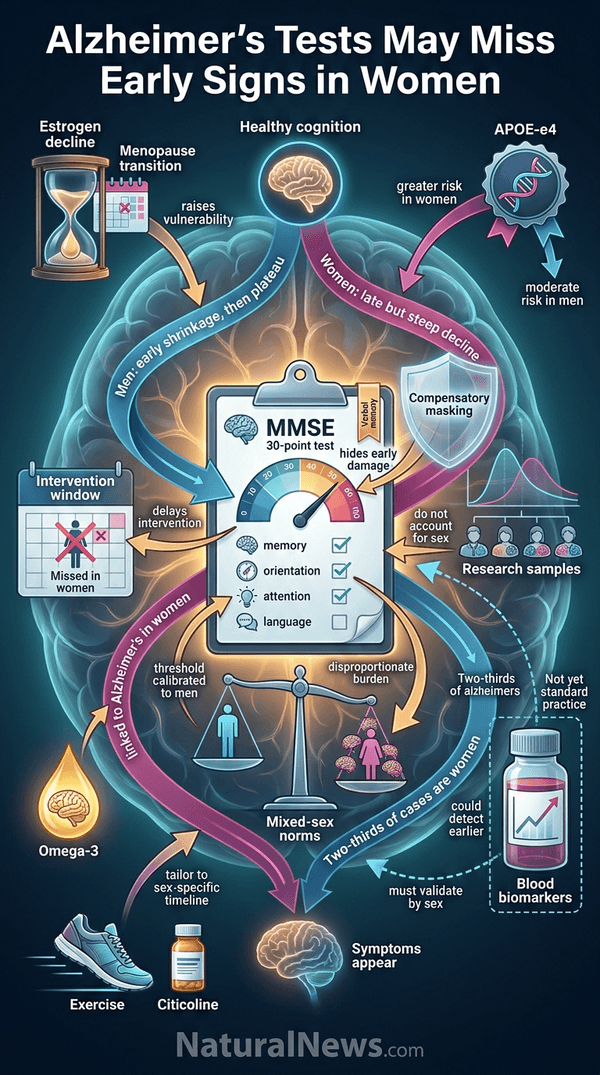
Researchers identified distinct sex-specific patterns in the timeline of brain shrinkage, suggesting that standard cognitive tests may not capture early warning signs in women equally.
The research adds to a growing body of evidence that Alzheimer's disease may affect men's and women's brains on different timelines, a pattern that standard screening instruments do not account for.
Women account for nearly two-thirds of Alzheimer's cases in the U.S., according to HealthDay reporting on the study [1].
What the Research Found
The research team reported a clear sex-specific pattern in how the brain changes over time. In men, the brain showed more shrinkage earlier, during the transition from healthy cognition to mild cognitive impairment, followed by relative stabilization.
The researchers described this as a possible compensatory mechanism that initially masks the extent of underlying change. Separate research has linked lower levels of omega-3 fatty acids to Alzheimer's disease in women, indicating that nutritional and metabolic factors may also differ by sex [2].
Why Standard Screening Tools May Miss the Mark for Women
The 30-point Mini-Mental State Examination (MMSE) is one of the most widely used cognitive screening tools.
The concern extends beyond a single test. Commentary on dementia diagnosis has noted that biases can make it difficult to rely on verbal memory to detect early dementia, and as a result, such tools can miss the first signs of cognitive decline in women [3]. Other screening research has focused on blood-based biomarkers that may predict cognitive decline before symptoms appear, an area of active development [4].
Biological Mechanisms and Historical Research Gaps
The study points to several biological mechanisms that may explain why women experience later but steeper cognitive decline. Separate reporting has noted an association between estrogen-only menopause hormone therapy and lower odds of a dementia diagnosis in women, though that research examined associations in autopsy and diagnostic data rather than causal effects [5].
Genetic susceptibility may also interact differently with sex-specific biological factors.
The study aims to address that gap by examining sex-specific brain changes directly.
Implications for Patients and Future Research
Independent reporting has noted that regular exercise, even light activities such as stretching, can reduce Alzheimer's risk and slow cognitive decline [6]. Separate research has also examined whether the naturally occurring compound citicoline may help adults experiencing cognitive decline, with a 2023 systematic review reporting positive effects on cognition in individuals diagnosed with mild cognitive impairment [7]. Those findings are distinct from the Georgia State study and do not speak to sex-specific screening.
The research also raises practical questions about access to more personalized screening. Blood tests that may one day help predict cognitive decline before symptoms begin are under investigation, though the tools are not yet standard clinical practice [4].
References
- Alzheimer’s Tests May Mask Risks for Women - Drugs.com. https://www.drugs.com/news/alzheimer-s-tests-may-mask-risks-women-129563.html
- Study Links Lower Omega 3 Levels to Alzheimer's in Women - NaturalNews.com, May 27, 2026.
- Why dementia can be harder to spot in women – and the signs to look for | BBC Science Focus Magazine. https://www.sciencefocus.com/wellbeing/dementia-women-diagnosis
- Blood Test May One Day Help Predict Cognitive Decline Before Symptoms Begin. https://www.everydayhealth.com/neurological-disorders/blood-test-may-help-predict-cognitive-decline/
- Could Estrogen Therapy Help Protect the Brain Against Alzheimer’s?. https://www.everydayhealth.com/neurological-disorders/could-estrogen-therapy-help-protect-against-alzheimers/
- Even simple exercises like stretching could slash Alzheimer's risk and boost brain health studies show - NaturalNews.com, May 01, 2025.
- Research Suggests Citicoline May Help Adults Experiencing Cognitive Decline - NaturalNews.com, April 21, 2026.
Explainer Infographic












Please contact us for more information.