


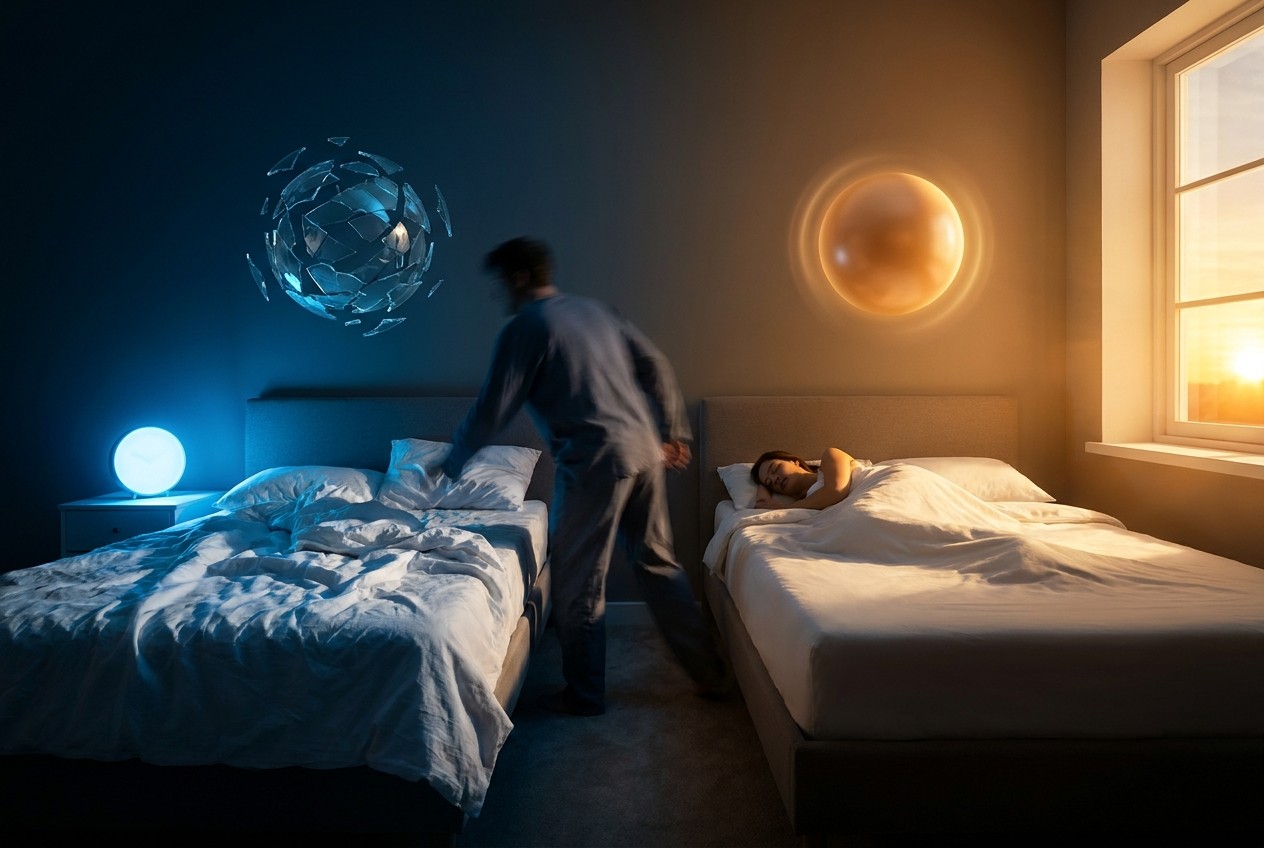
People with irregular sleep-wake schedules may experience more severe symptoms of anxiety, depression, and loneliness, according to a large study led by researchers at the University of California, San Francisco and UC San Diego [1].
The study analyzed data from approximately 23,000 participants enrolled in TemPredict, a research effort launched in 2020 to investigate whether wearable device data could help identify COVID-19 before symptoms appeared, according to the researchers.
The researchers described the results as associations, not evidence that irregular sleep causes poor mental health [1]. According to the study, adults whose bedtimes and wake times shifted substantially from one day to the next reported more symptoms of depression and anxiety and were more likely to feel lonely than people who kept a more regular schedule [2].
Researchers Used Months of Wearable Data to Measure Sleep Regularity
Participants contributed an average of 154 days of sleep data, the researchers stated, an unusually long record that allowed them to examine consistency over time rather than in a single short window.
The participants' average age was 46, and just under half were women, according to the study.
From those records, the team calculated a sleep regularity index, or SRI, scored from 0 to 100, with higher scores indicating more consistent sleep patterns.
Lower Sleep Regularity Index Scores Correlated With Greater Symptom Severity
Participants' depression, anxiety, and loneliness were assessed through a monthly self-reported survey, according to the study [1]. The pattern that emerged tracked closely with SRI scores [1].
Anxiety showed a similar gradient. Participants with normal levels of anxiety had an average SRI of 84, compared with 79 for those with severe anxiety, according to the study [1].
First author Severine Soltani said someone with an SRI of 84 might go to bed and wake up roughly an hour earlier or later than the previous day on average, while someone with an SRI of 75 might shift closer to an hour and a half [1].
Senior Author Describes Possible Bidirectional Relationship
Senior author Ashley Mason of the UCSF Department of Psychiatry and Behavioral Sciences said regular sleep and wake times help keep circadian rhythms aligned[1][2].
Irregular sleep schedules can also disrupt the timing of light exposure, meals, exercise, and social activity, all of which help regulate the circadian rhythm, Mason noted.
Published research has long held that a regular time for going to bed, going to sleep, waking up, and getting up in the morning is an important factor in stabilizing and synchronizing circadian rhythms [3].
Mason said the association between poor sleep and poor mental health could be bidirectional, and that irregular sleep could also be explained as a symptom of poor mental health [4]. She said other longitudinal research provides some reason to think that irregular sleep may come first and contribute to later poor health, rather than being solely a consequence of it.
Authors Recommend Future Research on Sleep Regularity Interventions
The study was observational and reported associations between sleep regularity and mental health symptoms, the authors stated. No clinical recommendation or causal conclusion was stated by the authors.
Separate research has linked irregular sleep schedules to other health outcomes, including a study of nearly 79,000 adults from the UK Biobank that found a higher risk of age-related macular degeneration, cataracts, and glaucoma among people with less consistent sleep patterns [5].
The new results add to a broader body of evidence on sleep timing. A Stanford Medicine study of nearly 75,000 adults found that late bedtimes, rather than sleep quality or duration, were the primary driver of next-day mood reduction [6].
References
- Could an erratic sleep schedule be harming your mental health?. https://medicalxpress.com/news/2026-11-erratic-mental-health.html
- An Erratic Sleep Schedule Could Be Stressing You Out. https://www.everydayhealth.com/mental-health/erratic-sleep-schedule-may-be-bad-for-your-mental-health/
- Handbook of sleep medicine. Shneerson John
- Erratic Sleep Schedule Increases Risk Of Depression, Anxiety, Study Finds. https://www.drugs.com/news/erratic-sleep-schedule-increases-risk-depression-anxiety-study-finds-131962.html
- Study Links Irregular Sleep Schedules to Higher Risk of Eye Diseases - NaturalNews.com, May 12, 2026.
- Late nights, darker days: Why bedtime timing, not sleep quality, predicts mental health - NaturalNews.com, September 15, 2026.










Please contact us for more information.