


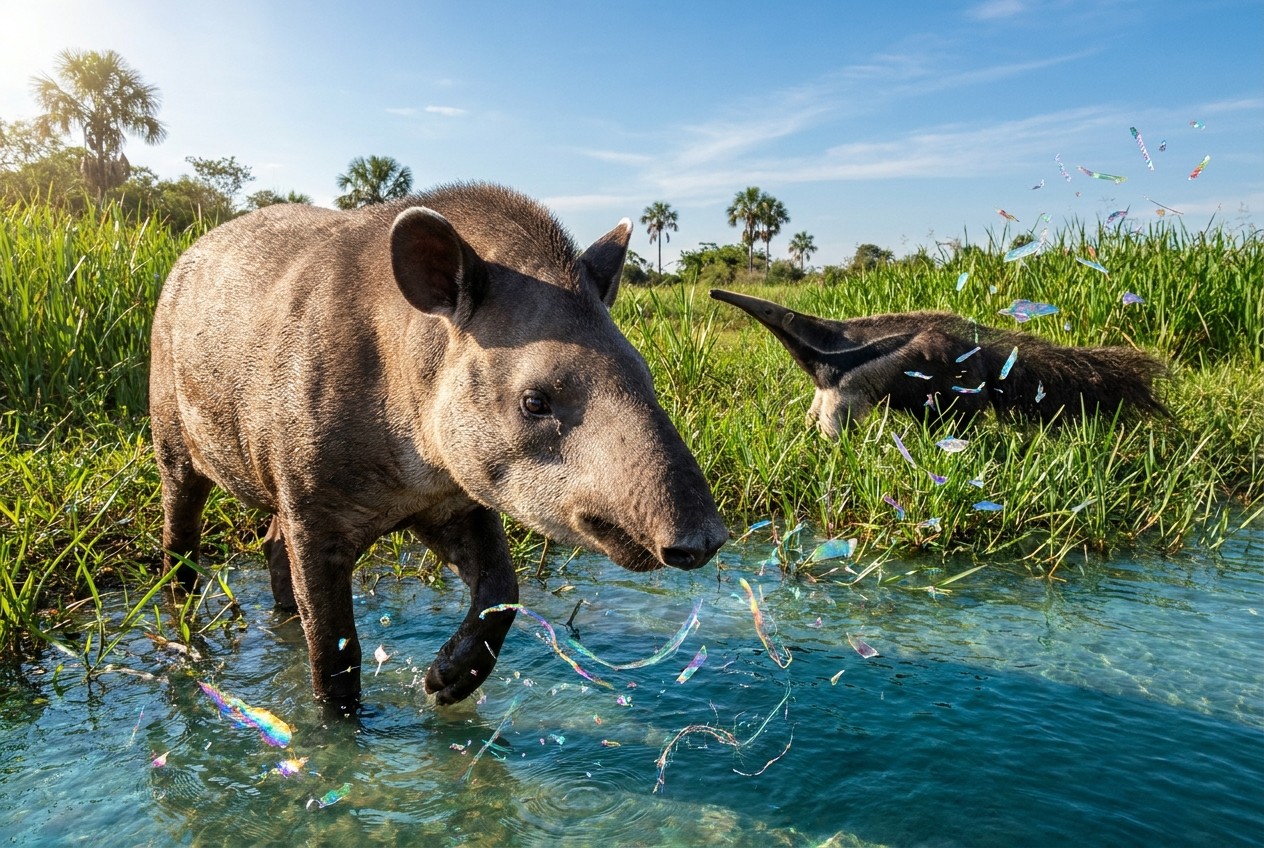
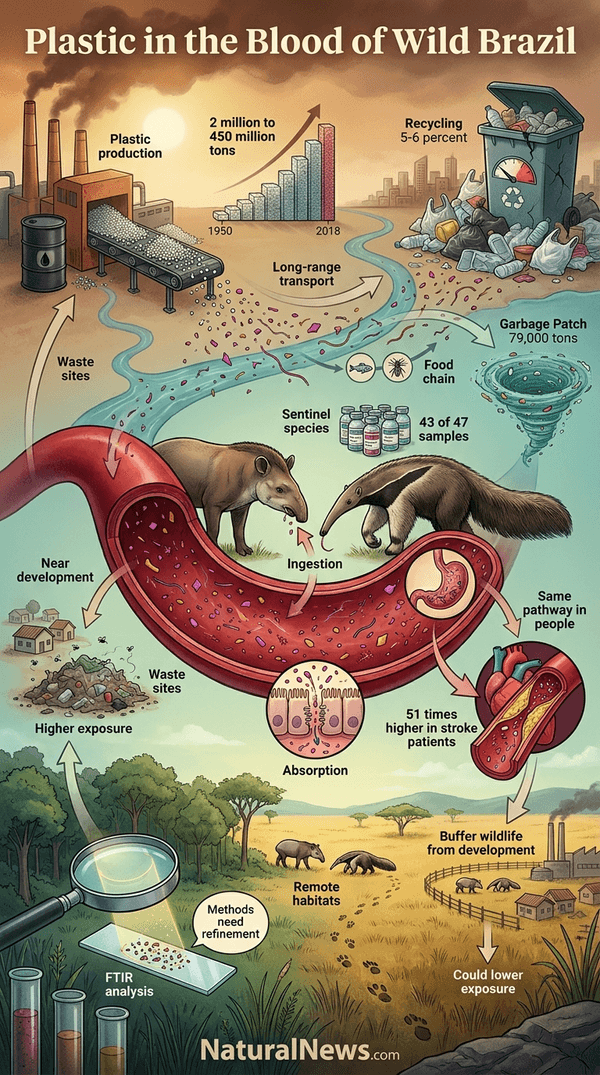
A study published in Nature reported that 43 of 47 blood samples drawn from wild lowland tapirs and giant anteaters in Brazil contained microplastics. The study was reported by UBC Okanagan News, which highlighted findings of microplastics in the blood of wild tapirs and giant anteaters even in remote locations in Brazil [1].
The study reported that exposure to human activity or living closer to built-up areas and waste-disposal sites generally increased levels of microplastics found in these animals [2]. An analysis published in Nature described traces of plastic circulating in the blood of some of Brazil's wildlife, even among animals living far from land used by humans [3].
Sample Collection and Detection Methods
Field teams from two long-running Brazilian conservation programs collected blood from 26 lowland tapirs and 21 giant anteaters, researchers said.
The cited source notes that further research is required to optimize identification methods using Fourier transform infrared spectroscopy so that the abundance and composition of all microplastic can be assessed quickly and efficiently [4].
Human Footprint and Exposure Associations
Exposure to human activity or living closer to built-up areas and waste-disposal sites generally increased levels of microplastics found in these animals, according to a summary of the research [5].
Microplastics in Remote Pantanal Wildlife
The authors suggested that keeping wildlife farther from development and waste facilities could be a possible way to lower the amount of microplastics animals carry, according to the study [6]. The findings indicate that microplastics are widely dispersed even in relatively remote terrestrial environments, the researchers wrote [7].
Broader Context of Plastic Pollution
The Brazil findings arrive against a backdrop of expanding plastic production and limited recycling. Global plastic production exploded from 2 million tons in 1950 to over 450 million tons by 2018, according to an analysis of the industry's growth [8]. The Ecology Book notes that the Great Pacific Ocean Garbage Patch comprises 79,000 tons of microplastics amassed by the swirling current known as the North Pacific Gyre [9].
Research on plastic waste has found that only a small fraction of production is recycled, with worldwide global plastic consumption at 260 million metric tons in 2008 and 359 million metric tons currently produced [10]. A 2022 Greenpeace report cited in press coverage found the amount of plastic recycled had dropped to a new low between 5% and 6% [11]. Microplastics are small plastic particles that come from the degradation of plastics, are ubiquitous in nature and therefore affect both wildlife and humans, according to a 2023 review [12].
Earlier work has documented how ingested microplastic may be retained in the digestive tract, egested in feces or absorbed into the epithelial lining of the gut by phagocytosis, according to a 2007 assessment [4]. The same assessment described retention of larger plastic debris in the digestive tracts of seabirds and mammals [4]. Separate research has found microplastics embedded in human arterial plaque, with levels 51 times higher in patients who had experienced strokes or heart attacks, according to a report on the findings [13].
Study Limitations and Conclusion
The authors concluded that improved management of waste around human settlements could greatly reduce microplastic levels in wildlife, a finding described as especially important for rapidly developing countries like Brazil [6]. The presence of microplastics in these animals indicates a threat not only to wildlife with direct exposure to human-modified landscapes but also to species across even the most remote and ecologically intact environments, the study stated [14].
References
- Even remote wildlife are exposed to microplastics, study finds - UBC's Okanagan News. https://news.ok.ubc.ca/2026/11/12/even-remote-wildlife-are-exposed-to-microplastics-study-finds/
- Microplastics found in remote Amazon wildlife. https://www.scimex.org/newsfeed/microplastics-found-in-remote-amazon-wildlife
- Even giant anteaters in remote Brazil have microplastics in their blood. https://www.nature.com/articles/d41586-026-03660-5
- Emerging Contaminants Microplastic—An Emerging Contaminant of Potential Concern? PDFlib PLOP 2.0.0p6 (SunOS)/Adobe PDF Library 7.0. Integrated Environmental Assessment and Management 3 (4) 559-566 2007
- Ecology: Microplastics found in remote Brazilian wildlife (Nature) | Nature Portfolio. https://www.natureasia.com/en/info/press-releases/detail/9481
- Microplastics found in wild mammals' blood more than 40 miles from human infrastructure. https://www.infrastructure-now.co.uk/article/503582/microplastics-found-in-wild-mammals-blood-more-than-40-miles-from-human-infrastructure
- Microplastics and wildlife: study links animal burden and human footprint - Helmholtz-Zentrum Dresden-Rossendorf, HZDR. https://www.hzdr.de/db/Cms?pNid=99&pOid=79169
- From Bakelite to Biohazard — The Century-Long Rise of Microplastics. https://www.activistpost.com/from-bakelite-to-biohazard-the-century-long-rise-of-microplastics/
- The Ecology Book. Tony Juniper
- Bioremediation Science. Amitava Rakshit
- Recycling Plastic Is Nearly Impossible and Ge - Mercola.com, November 26, 2022.
- Microplastics: A Real Global Threat for Environment and Food .... https://pmc.ncbi.nlm.nih.gov/articles/PMC9920460/
- The invisible invader How microplastics infiltrate your arteries and endanger your health - NaturalNews.com, September 16, 2025.
- Human land use drives microplastic abundance in terrestrial wildlife | Nature. https://www.nature.com/articles/s41586-026-11285-x
Explainer Infographic








Please contact us for more information.