


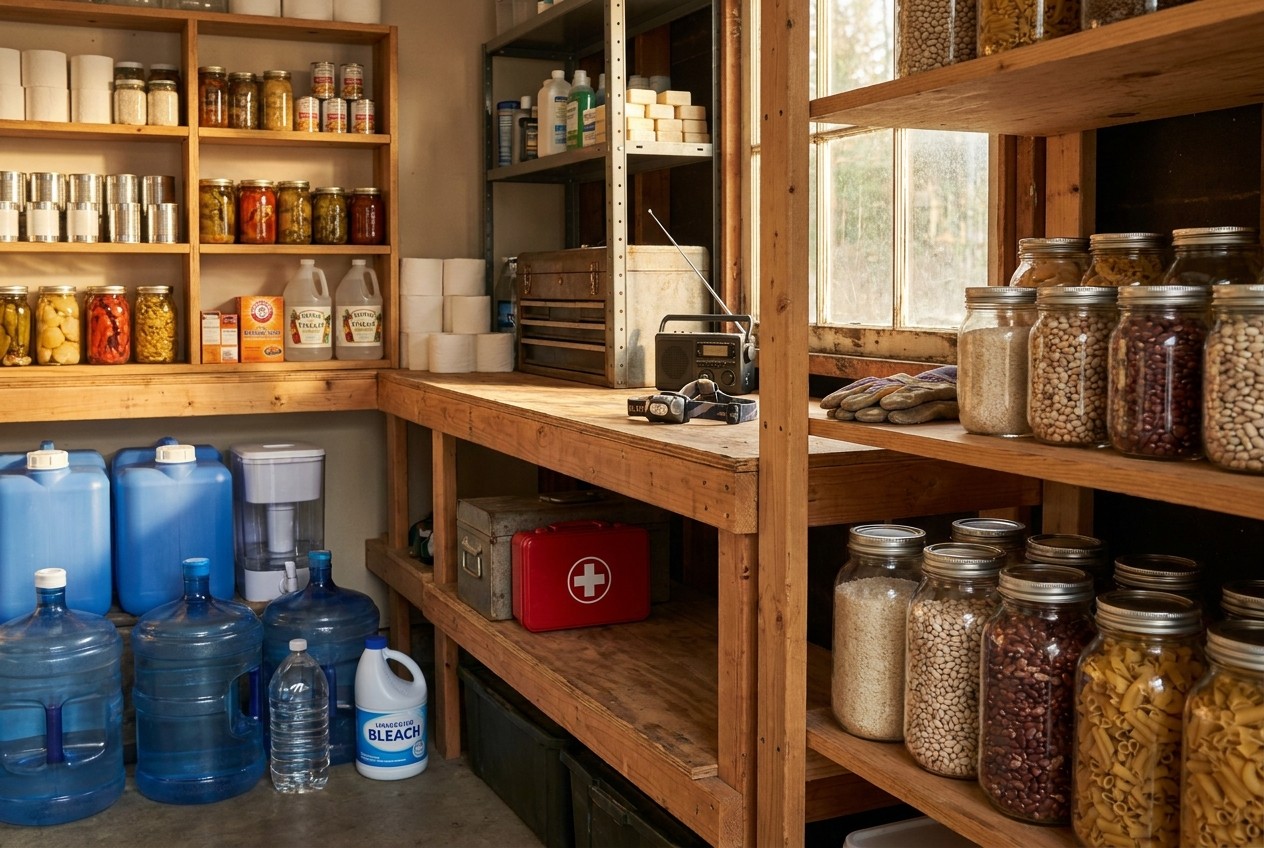
HomesteadSurvivalSite.com has published an article recommending that readers acquire emergency supplies before a crisis occurs. The article states that food insecurity, wars, crop failures, political battles and economic turmoil are rising and advises readers to rely on stored supplies rather than assuming that stores will remain stocked during a disruption [1].
The listed categories include food, water, first aid, natural medicines, tools, cleaning supplies, personal hygiene and general survival items. The article recommends buying items incrementally and rotating stored goods so that stockpiles remain usable over time.
Emergency-preparedness guidance has circulated for years in books and websites aimed at households that want to avoid depending on last-minute store runs. The HomesteadSurvivalSite.com article presents the categories as a starting framework rather than a complete list and urges readers to prioritize nonperishable goods and practical tools over specialty gear.
Food Stockpile Emphasizes Nonperishables and Rotation
The article states that nonperishable foods should form the core of a stockpile and that items requiring refrigeration should be avoided. Recommended foods include:
- White rice
- Dried beans
- Canned fruits and meats
- Canned soups and vegetables
- Baking supplies
- Oatmeal
- Pasta
- Peanut butter
- Powdered milk
- Honey
- Ready-to-eat foods
The article states, "only store what your family will eat," and advises starting with enough food for three days, then expanding to two weeks and one month.
Rotate stock by placing new items behind older items and write purchase dates on containers. Rotating supplies prevents older goods from expiring unused. Emergency-preparedness author Herb Williamson writes in "Emergency Food Storage and Survival" that food storage begins with water and food as the foundation of a household plan [2].
Water Storage and Purification Guidance Outlined
Stored water should be kept at one gallon per person per day for drinking and basic hygiene, with pets included in planning. Store tap water in washed and rinsed two-liter plastic bottles and avoid milk jugs. Use larger five-gallon containers or 55-gallon barrels when space allows. For purification, use filter systems and unscented household bleach at five to eight drops per gallon. Bleach has a shelf life of about six months.
The article also states that water heaters can hold 30 to 50 gallons that can be drained after shutting off power or gas. Wait at least 30 minutes after bleach treatment before drinking. Williamson's handbook likewise identifies water as a primary survival need and discusses storage and treatment methods, including boiling [2].
The article treats water storage as a space-planning problem as much as a supply problem. Households without room for barrels should consider smaller containers and use the water already sitting in your home's plumbing, a source that requires shutting off the utility connection before draining.
First Aid, Natural Medicine and Training Recommended
The article recommends stocking the following first aid items:
- Bandages
- Gauze
- Antiseptic wipes
- Antibiotic ointment
- Antihistamines
- Aspirin
- Ibuprofen
- Electrolyte packets
- Nitrile gloves
- Thermometer
- Tourniquet
- Extra prescriptions
Supplies are only part of the equation; the article recommends basic first aid and CPR classes through the Red Cross or local fire departments, as well as Stop the Bleed training. The emphasis on training echoes preparedness guidance that places practical skills alongside material stockpiles [3].
Natural medicines that may come in handy include:
- Raw honey
- Garlic pills
- Essential oils
- Herbal teas (e.g., chamomile, peppermint and echinacea)
- Activated charcoal
- Mortar and pestle
The article cautions that activated charcoal does not work on every kind of poisoning and can worsen some situations, advising readers to call Poison Control before giving it.
The article presents the first aid category as both a materials list and a skills list and recommends assembling a kit that covers cuts, allergic reactions, pain and bleeding control. Seek hands-on training so that you can use emergency items correctly under pressure.
Tools, Cleaning, Hygiene and General Supplies Listed
Must-have tools for when SHTF include:
- Axe
- Basic toolbox
- Fire-starting flint
- Gardening tools
- Generator
- Work gloves
- Hand-crank radio
- Headlamps
- Manual can opener
- Multitool
- Paracord
The article warns that generators must be kept outside at least 20 feet from the house with exhaust pointed away from doors and windows, and that propane heaters must be rated for indoor use.
Cleaning supplies to stockpile include:
- Baking soda
- Bleach solution
- Borax
- Dish soap
- Disinfecting wipes
- Laundry soap
- Microfiber cloths
- Mop
- Broom
- Sponges
- Trash bags
Personal hygiene and general items to stock up on include:
- Toilet paper
- Soap
- Sanitizer
- Dental floss
- Wet wipes
- Batteries
- Candles
- Duct tape
- Important documents
- Lanterns
- Lighters
- Walkie-talkies
Federal emergency guidance similarly advises households to assemble a kit with personal hygiene items and paper goods [4].
The article groups these categories under practical household maintenance rather than specialty survival gear. The tools and cleaning items are framed as replacements for services that may stop during a disruption, while the general supplies are presented as everyday goods that disappear first when store shelves empty.
Storage Advice and Conclusion: Spread Supplies, Build Gradually
Supplies can be stored under beds with risers and bins, in closets, and on garage shelves, while food should be kept in a cool, dark and dry location. Spread your supplies around the house so a leak or fire does not destroy everything at once. Storage advice in preparedness literature likewise emphasizes using under-bed containers, closets and built-in furniture storage [5].
The article advises buying a few extra cans or batteries during regular grocery trips rather than purchasing all supplies at once. Having supplies on hand can provide comfort and support preparedness. The incremental approach is consistent with guidance that recommends starting small rather than attempting to build a full stockpile in a single effort [2].
Preparedness is an ongoing routine rather than a one-time purchase. Stockpiling is a habit that households can maintain over time, with the goal of having usable supplies on hand when normal services are interrupted.
References
- 10 Prepper Items You Need To Get Right Now. https://homesteadsurvivalsite.com/prepper-items-to-get-right-now/
- Emergency Food Storage and Survival: The Handbook You Need to Keep Your Family Safe (Food, Medical Supplies, Power, and More) by Herb Williamson
- The art of minimalist prepping Essential strategies for a simpler emergency plan - NaturalNews.com, April 09, 2025.
- Build A Kit. https://www.ready.gov/kit
- Prepper's Pantry by Daisy Luther
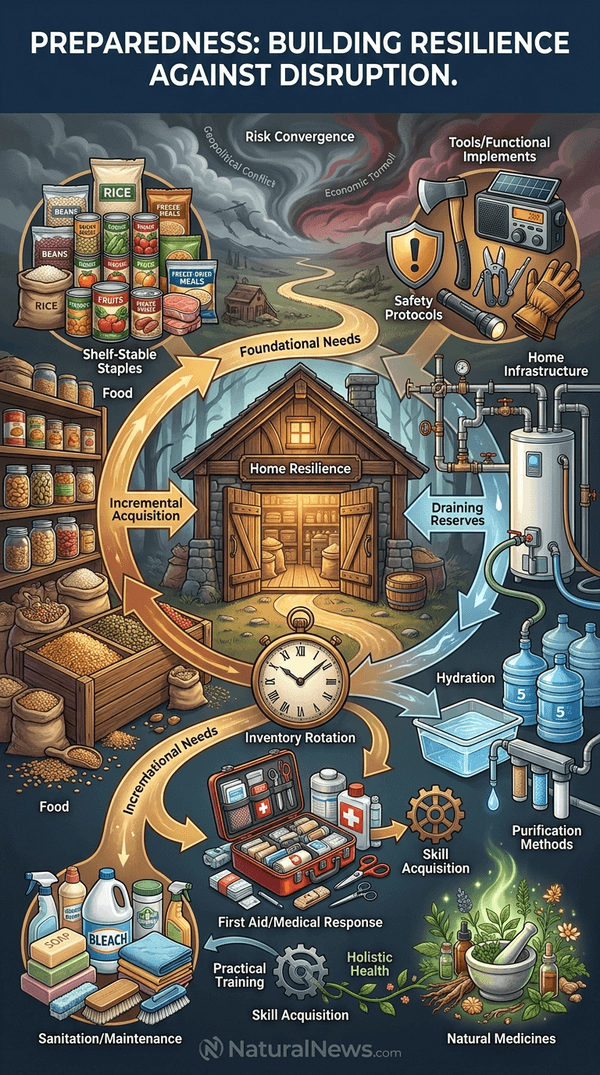
Explainer Infographic








Please contact us for more information.