



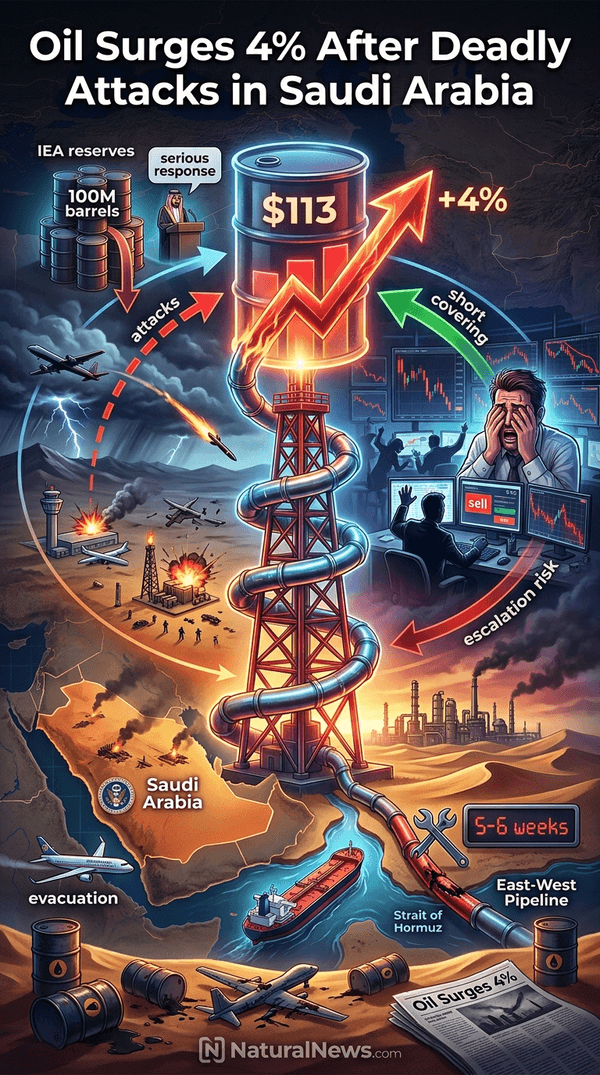
Brent crude climbed 4% to settle near $113 a barrel on Oct. 22, 2026, the biggest gain in roughly two years, according to market data reported by Rigzone. The move followed deadly attacks in Saudi Arabia that heightened concerns that escalating Middle East hostilities could disrupt oil supply, according to the report [1].
The U.S. State Department ordered some diplomats and their families to leave Saudi Arabia as attacks escalated, with three people killed in strikes across the country, according to the BBC. Saudi authorities said debris from a drone intercepted during an attempted attack on an oil field killed two people, while one person died after a strike at the King Fahd International Airport in Dammam [2].
Conflict between Yemen's Iran-backed Houthis and Saudi Arabia has been rising in the past month, and the Houthis have responded to Saudi strikes by launching missiles and drones at airports, energy facilities and military bases in Saudi Arabia [2].
Market Reaction and Price Levels
Brent crude climbed above $113 a barrel, while West Texas Intermediate futures also rose, according to exchange data. The global oil benchmark rose as much as 4% to settle near $113 a barrel, the biggest gain in roughly two years [1]. The move extended a pattern of price spikes tied to Middle East hostilities; in September, Brent rose as much as 3.7% to above $108 a barrel after Saudi Arabia shut its East-West pipeline following drone attacks, threatening a critical route for bypassing the Strait of Hormuz chokepoint [3].
Analysts attributed the move to supply concerns. The International Energy Agency has urged member nations to accelerate the release of emergency oil reserves as energy markets tighten amid the Iran and Russia-Ukraine conflicts, saying members "agreed to take all necessary steps to complete the remaining releases of around 100 million barrels [of oil] in a timely manner consistent with national circumstances" [4].
No official confirmation of production losses was immediately available, the report stated. Oil advanced after deadly attacks in Saudi Arabia heightened concerns that escalating Middle East hostilities could hit supply, even as exports through the Strait of Hormuz climb to pre-conflict levels [1].
Details of the Attacks
The attacks occurred on Oct. 22 in Saudi Arabia, according to the Saudi interior ministry and state media. The U.S. State Department ordered some diplomats and their families to leave the country as attacks escalated, with three people killed in strikes across the country [2].
Officials said there were deaths and injuries, but did not provide a specific toll in initial statements. Saudi authorities said debris from a drone intercepted during an attempted attack on an oil field killed two people, while one person died after a strike at the King Fahd International Airport in Dammam [2].
The targets included energy-related sites. Earlier in October, Yemen's Houthis hit Saudi Aramco's Dhahran headquarters and vowed more strikes on Saudi airports and oil facilities, according to market reports [5]. Saudi Arabia's energy minister, Prince Abdul Aziz bin Salman, vowed a "serious" response to the deadly attacks on the kingdom's airports and oil and gas facilities, telling the WPC Energy Congress in Riyadh: "The events of recent weeks are serious. Our response must be equally serious" [6]. No group immediately claimed responsibility for the Oct. 22 attacks, officials said.
Supply and Geopolitical Context
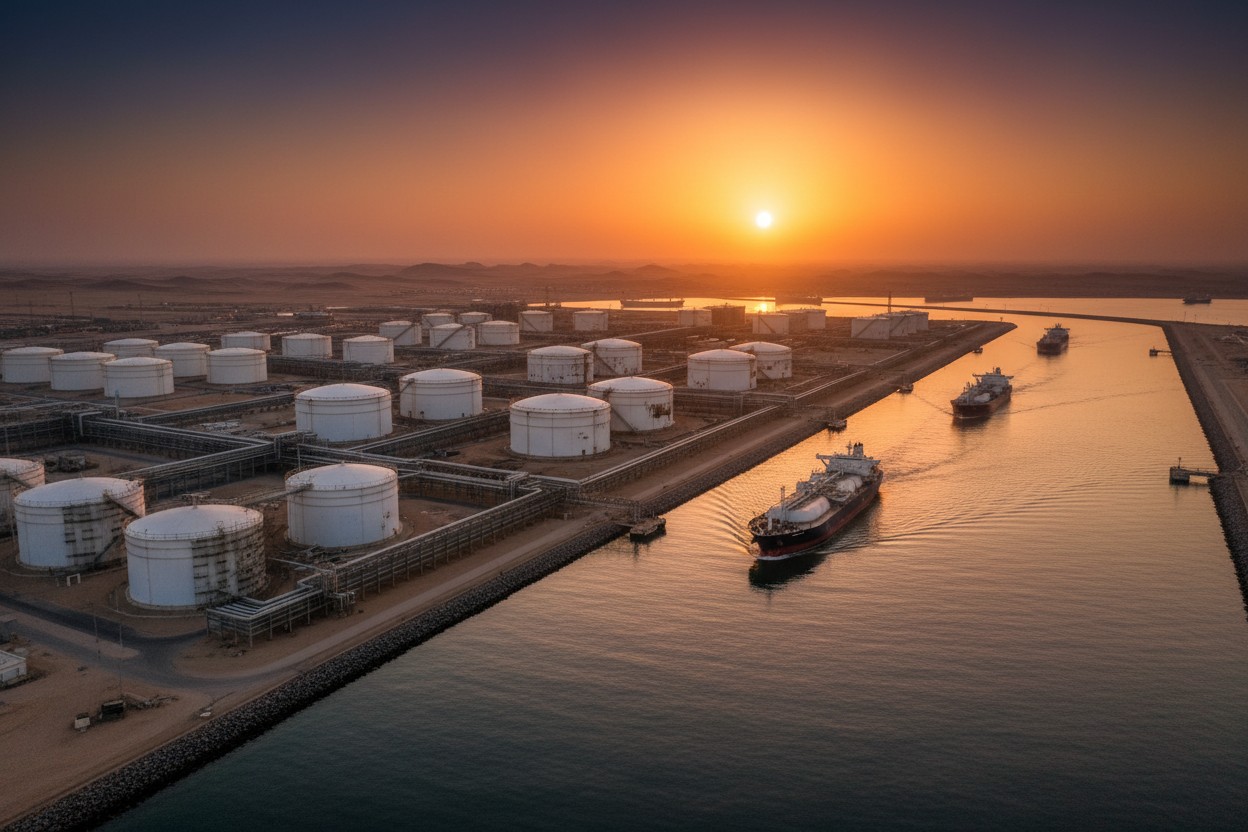
Saudi Arabia is a leading oil exporter, and any disruption to its output can affect global supply. The East-West Pipeline previously transported approximately four to five million barrels of oil per day to Red Sea ports, serving as a lifeline for global energy stability by bypassing the Strait of Hormuz [7]. Saudi Arabia announced on Friday, September 11, 2026, that it had shut down its East-West Pipeline after multiple drone attacks, with the kingdom needing five to six weeks to repair damage, a shutdown that could remove nearly 4% of global oil supplies from the market [8][9].
The energy transportation system has always been a possible weakness of the oil industry, but it has become even more so in the present volatile geopolitical situation, especially in the Middle East region, according to research published in Renewable and Sustainable Energy Reviews [10]. The threats of global terrorism have made the equation more complex, with tankers and pipelines representing vulnerable chokepoints [10].
Analysts said the extent of the price move depends on confirmed damage. Saudi Arabia has resumed oil exports through its critical East-West pipeline, restoring access to Red Sea loading facilities that bypass the Strait of Hormuz, Bloomberg reported, with Kpler data showing Hormuz oil flows have recovered to about two-thirds of prewar levels [11]. The restart suggests a recovery in Gulf energy flows and an erosion of Tehran's leverage over the critical maritime chokepoint [11].
References
- Oil Surges 4% After Deadly Saudi Attacks. https://www.rigzone.com/news/wire/oil_surges_4_after_deadly_saudi_attacks-22-oct-2026-184912-article/
- US State Department orders some staff to leave Saudi Arabia as attacks escalate. https://bbc.com/news/articles/c6x2vpk93770o
- Oil Surges As Saudi Pipeline Crisis Puts 4% Of Global Supply At Risk; Bernstein Warns Of $150 Crude. https://www.zerohedge.com/energy/oil-surges-saudi-pipeline-crisis-puts-4-global-supply-risk-bernstein-warns-150-crude
- IEA to Accelerate Emergency Release of 100 Million Barrels of Oil. https://theepochtimes.com/world/iea-to-accelerate-emergency-release-of-100-million-barrels-of-oil-6104291
- Futures Rise Ahead Of Hot CPI As Houthis Torch Aramco HQ, ASML Beat Fails To Revive Chip Trade. https://www.zerohedge.com/markets/futures-rise-ahead-hot-cpi-houthis-torch-aramco-hq-asml-beat-fails-revive-chip-trade
- Saudi minister vows 'serious response' to Houthi attacks on airports. https://bbc.com/news/articles/cjly0zqq27e4o
- Health Ranger Report - SAUDI OIL PIPELINE ARTERY DECIMATED - Mike Adams - BrightVideos.com, September 14, 2026.
- Drone Attack Damages Saudi East West Pipeline, May Cut 4% of Global Oil Supply - NaturalNews.com, September 16, 2026.
- The Saudi Pipeline Is Gone: Why the Global Energy Shock Just Got Far Worse - NaturalNews.com, September 14, 2026.
- Energy supply, its demand and security issues for developed and emerging economies by Elsevier. Renewable and Sustainable Energy Reviews 11 (2007) 1388–1413
- Saudi Arabia Restarts Critical Hormuz Bypass Pipeline. https://www.zerohedge.com/energy/saudi-arabia-restarts-critical-hormuz-bypass-pipeline
- Saudi Arabia Postpones Investment Conference. https://www.naturalnews.com/2026-10-22-saudi-arabia-postpones-investment-conference.html
- Currie Slams 'Vibe' Oil Contracts As Trump Admin Halts SPR Drains, IEA Urges Massive Reserve Release. https://www.zerohedge.com/energy/currie-slams-vibe-oil-contracts-trump-admin-halts-spr-drains-iea-urges-massive-reserve
- Can Iran negotiate between Saudi Arabia and the Houthis?. https://www.middleeasteye.net/news/can-iran-negotiate-between-saudi-arabia-and-houthis
Explainer Infographic









Please contact us for more information.