


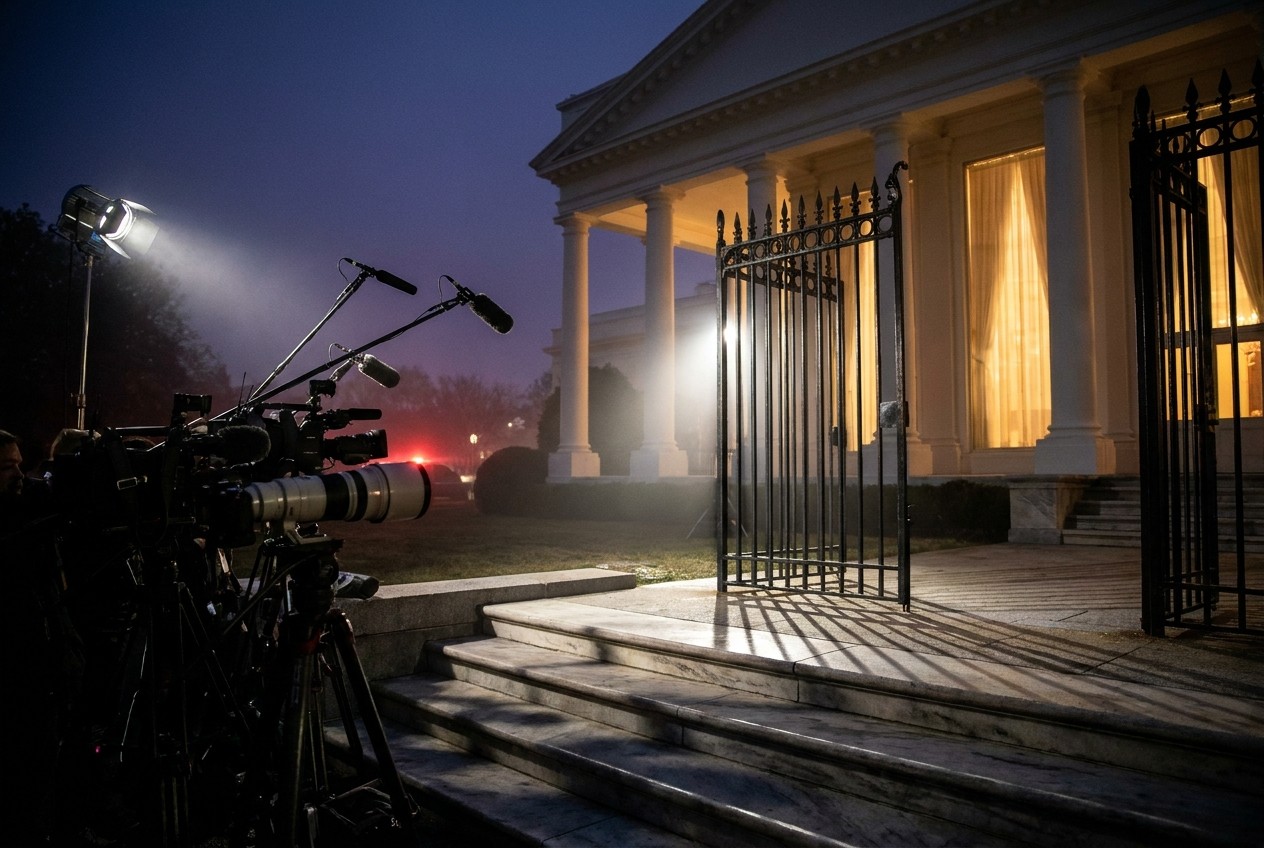
Six U.S. citizens filed a federal lawsuit on Monday, Oct. 26, against President Donald Trump over his administration's restrictions on White House press access. The case arrives amid an escalating dispute between the administration and the press corps [1].
The new filing is among several recent legal challenges to the administration's press access policies. No ruling has been issued on the new case, and the White House did not immediately comment on the filing, according to available reports [1].
Earlier Outlet Lawsuits and the Scope of the New Case
Individual media outlets brought earlier lawsuits over White House press access. On Sept. 21, CNN, MS NOW and Politico filed suit against the Trump administration after reporters from the three outlets were denied White House access over the weekend, according to a joint statement and a 27-page filing [2].
The outlets sued the president and top officials in federal court to overturn the ban [3].
A federal judge subsequently issued a preliminary injunction extending White House access for journalists from the three outlets while the lawsuit plays out, following a prior 14-day temporary restraining order [4].
The new case differs in scope. Where the outlet lawsuits sought relief for specific newsrooms, the Columbia and Yale organizations filed on behalf of six individuals and are seeking protections for the entire White House press corps, asking the court to bar future retaliatory restrictions for all White House reporters and news outlets [1].
The plaintiffs argue that the threat of losing access discourages journalists from reporting critically on the president [1].
The dispute has widened beyond the courtroom. Major television networks temporarily suspended their shared presidential pool coverage after the White House barred the three outlets, a system in which networks take turns covering the president and providing footage to other publications [5].
The Justice Department has since asked ABC, CBS, CNN, NBC, and Fox News to hand over communications related to the White House TV pool as part of an investigation into whether the networks broke federal competition laws [5].
Meanwhile, the White House launched a government-produced television channel, "Trump TV," the same week it barred CNN, MS NOW and Politico from the building [6].
Legal Claims and Relief Sought
The complaint asserts a public right of access to independent reporting about government operations under the First Amendment, according to the filing described by The Epoch Times [1]. It argues that access restrictions create a chilling effect on press coverage of the president, and it asks the court to protect the White House press corps as a whole rather than individual outlets only [1].
The lawsuit was filed in federal court and names Trump as the defendant [1].
The legal theory rests on a contested area of constitutional law. Courts have generally rejected the idea that the media hold special rights of access to government information; in Zemel v. Rusk in 1965, the Supreme Court ruled that "the right to speak and publish does not carry with it the unrestrained right to gather information," and a similar ruling came down in Branzburg v. Hayes in 1972 [7]. The plaintiffs' claim that the public itself holds a right of access to independent reporting about the government represents a different framing of the question.
The filing follows prior disputes over press credentials and access rules. The White House's Sept. 18 decision to bar MS NOW, CNN, and Politico over their coverage of the president, announced in a Truth Social post and in remarks in the Oval Office, set the current round of litigation in motion [8].
Context of the Press Access Dispute
The lawsuit comes amid an ongoing debate over the scope of White House press access and credentialing rules. The White House press pool, a group of news organizations that shares coverage of presidential engagements, sits at the heart of relations between the president and the media, and the current dispute could carry constitutional implications [9]. Coverage of upcoming presidential engagements, including the United Nations (UN) General Assembly in New York, could be affected by the standoff [9].
The administration has framed its approach to media access as an expansion rather than a restriction. The White House has cast that change as prioritizing independent voices [10].
The current dispute concerns whether restrictions on specific outlets discourage critical reporting about the president [1]. The episode follows a pattern of legal action over access to presidential coverage.
The White House escalated its feud with the press after a week of setbacks, with Trump appearing set to press ahead with a sweeping effort to punish the outlets [11]. The new lawsuit is part of a series of legal actions by media organizations and individuals challenging access restrictions [1] [12].
Next Steps in the Litigation
The case will proceed through federal court, where the plaintiffs seek protections for the White House press corps as a whole [1].
The outcome remains pending.
References
- Columbia, Yale Groups Sue Trump Over White House Restrictions on Journalists. https://theepochtimes.com/us/columbia-yale-groups-sue-trump-over-white-house-restrictions-on-journalists-6108918
- Five TV Networks Suspend White House Coverage After Three Outlets Banned - NaturalNews.com, September 22, 2026.
- CNN, MS Now, Politico Sue Trump to Overturn Ban From White House. https://thenewamerican.com/us/cnn-ms-now-politico-sue-trump-to-overturn-ban-from-white-house/
- Trump Administration Blocked From Banning Media Outlets From White House, Judge Rules. https://100percentfedup.com/trump-administration-blocked-banning-media-outlets-white-house/?utm_source=rss&utm_medium=rss&utm_campaign=trump-administration-blocked-banning-media-outlets-white-house
- US Justice Department investigates TV networks over Trump pool coverage: The White House had blocked access for CNN, MS Now and Politico, leading them to restrict pool coverage. https://bbc.com/news/articles/c9vgregzk6gro
- Trump TV Goes Live as White House Press Pool Goes Dark. https://thenewamerican.com/us/trump-tv-goes-live-as-white-house-press-pool-goes-dark/
- United States government democracy in action. by Remy Richard
- Trump Says MS NOW, CNN and Politico Are Barred From White House Over Coverage - NaturalNews.com, September 21, 2026.
- How Trump's media ban sparked a broadcaster boycott: The White House press pool is at the centre of a major row between President Donald Trump and TV networks. What is it? https://bbc.com/news/articles/c8dx5dy5rzz2o
- Trump ushers in new era of media engagement prioritizes independent voices over Big Pharma funded propagandist - NaturalNews.com, January 31, 2025.
- Trump escalates media fight after week of setbacks. https://bbc.com/news/articles/cmn8ed1xpxnyo
- Trump Hit with New Lawsuit Over Press Restrictions. https://politicalwire.com/2026/10/26/trump-hit-with-new-lawsuit-over-press-restrictions/
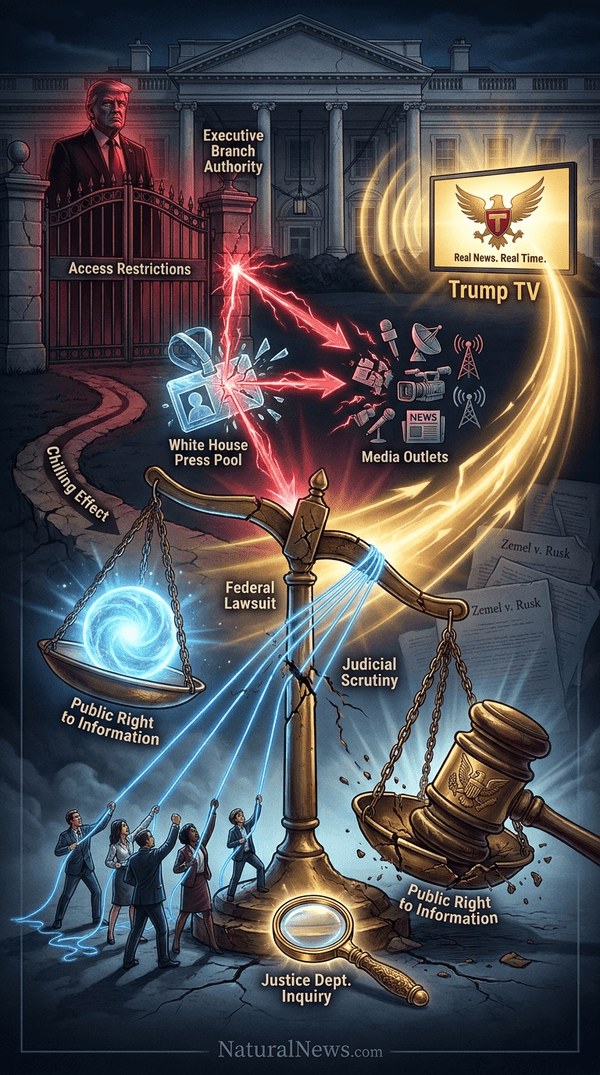
Explainer Infographic










Please contact us for more information.