


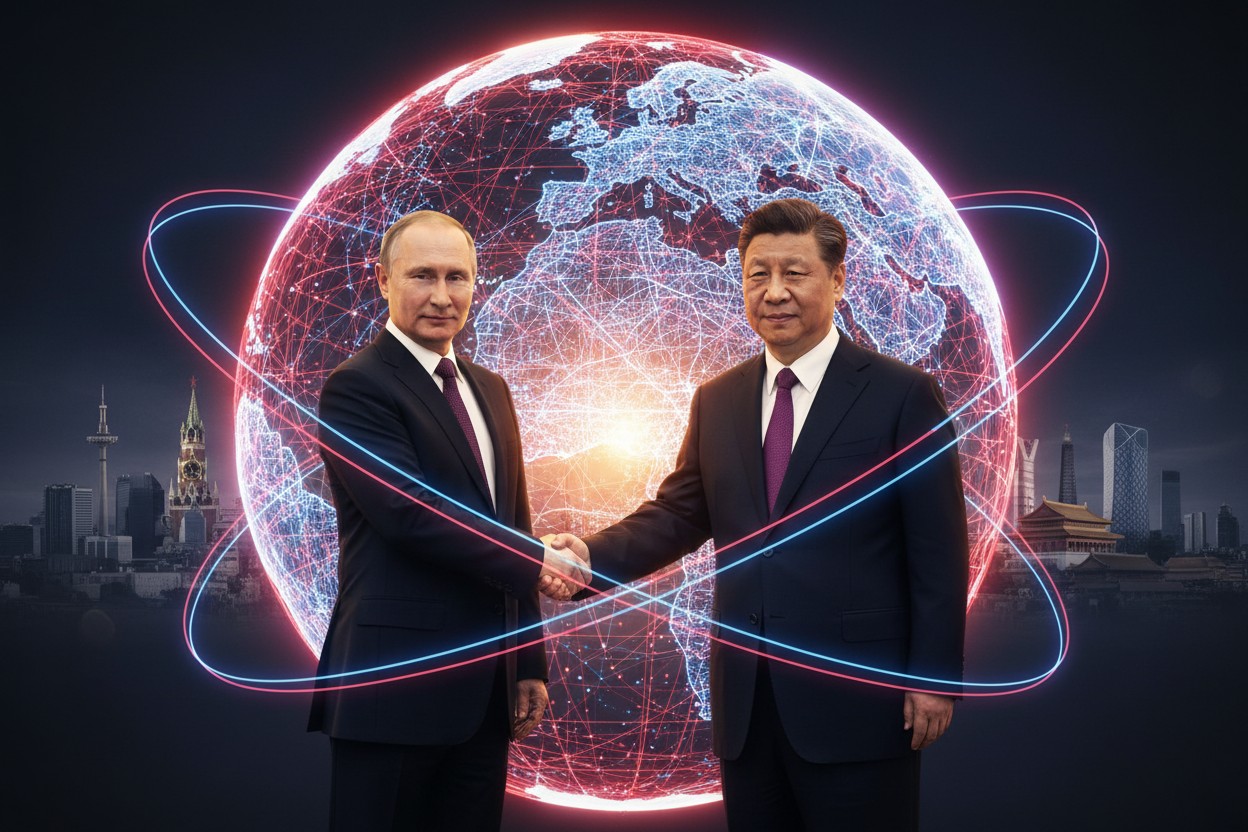
- Russia now stands as China's largest supplier of oil and holds a leading position in coal and liquefied natural gas exports to the Chinese market.
- Bilateral trade between Russia and China is projected to reach a record $270–275 billion by the end of 2026.
- Russian natural gas exports to China via the Power of Siberia pipeline exceeded planned capacity in 2025, reaching 38.8 billion cubic meters.
- Nearly 100% of settlements between Russia and China now use national currencies rather than the U.S. dollar or euro.
- Russia and China are negotiating a new Power of Siberia 2 pipeline capable of delivering 50 billion cubic meters of gas annually.
Russian Prime Minister Mikhail Mishustin announced Wednesday that his country "firmly holds the lead" in exporting oil and natural gas to China, marking a strategic realignment of global energy markets that began with Russia's 2022 invasion of Ukraine and the subsequent Western sanctions regime.
Speaking at the 31st regular meeting of the heads of government of Russia and China, Mishustin declared bilateral relations between Moscow and Beijing are "at the highest level in history" and represent "an example of interstate relations." The announcement comes as Russia deepens its economic pivot eastward, with energy exports forming the backbone of this transformation.
Record trade volumes surpass expectations
Trade turnover between Russia and China is on pace to reach $270–275 billion by year's end, according to Deputy Prime Minister Dmitry Chernyshenko's office. This record figure represents a dramatic acceleration from pre-war levels and positions both countries to achieve their joint goal of $300 billion in annual trade by 2030.
The energy sector dominates these exchanges. China imported 2.01 million barrels per day of Russian oil in 2025, representing 20% of China's total imported oil volume. Russian natural gas exports to China via the Power of Siberia pipeline jumped by roughly one-quarter in 2025 to 38.8 billion cubic meters, exceeding the pipeline's planned annual capacity of 38 billion cubic meters.
Strategic shift away from dollar-based trade
In a development with significant implications for global financial systems, Mishustin stated that the share of national currencies in settlements between Russia and China has reached approximately 100%. This near-complete abandonment of the U.S. dollar and euro in bilateral trade represents a concrete step toward de-dollarization that other nations are watching closely.
The Russian prime minister emphasized that energy cooperation "is of a strategic nature, covering oil, gas, coal and nuclear components." Russia's growing dominance in Chinese energy imports comes as Moscow offers discounted prices that Western sanctions have made difficult for other buyers to access.
Pipeline expansion signals long-term commitment
Russia is investing heavily in infrastructure to cement its position as China's primary energy supplier. The Eastern Siberia-Pacific Ocean pipeline, which connects Russian oil fields to Chinese refineries, is undergoing expansion expected to be completed by 2029. Russia has also agreed to raise oil exports to China via Kazakhstan through the Atasu-Alashankou pipeline by 2.5 million tons annually.
Natural gas infrastructure is expanding as well. In 2025, Russia and China agreed to increase annual volumes on the Power of Siberia route by an additional 6 billion cubic meters, to 44 billion cubic meters per year. Negotiations continue for the proposed Power of Siberia 2 pipeline, which would deliver 50 billion cubic meters annually via Mongolia, though a firm contract remains elusive.
Replacing Europe, reshaping alliances
This deepening energy partnership represents a fundamental restructuring of global energy flows. Before the Ukraine war, Russia delivered a record 177 billion cubic meters of natural gas annually to Europe. That market has largely closed due to Western sanctions, forcing Moscow to find alternative customers.
China, the world's largest oil importer and largest buyer of seaborne natural gas, has proven a willing partner. The "no limits" partnership declared by presidents Vladimir Putin and Xi Jinping days before the February 2022 invasion has translated into tangible economic integration.
Russia remains only China's third-largest supplier of liquefied natural gas, behind Australia and Qatar, but its dominance in pipeline gas and crude oil shipments gives Moscow significant leverage.
A partnership reshaping global order
The deepening energy ties between Russia and China represent more than a commercial arrangement. They signal the emergence of a Eurasian economic bloc capable of withstanding Western pressure and challenging the post-Cold War international order. For American and European policymakers, the Russia-China energy axis presents a strategic challenge that will require coordinated responses on sanctions enforcement, energy security and diplomatic engagement with Beijing. The record trade figures announced this week suggest both nations view their partnership as essential to their long-term economic and political survival.
Sources for this article include:







Please contact us for more information.