


Octinoxate, a chemical UVB filter used in sunscreens, lip balms, moisturizers, and other personal care products, is the most widely used UVB-absorbing ingredient in the U.S. sunscreen market. Both U.S. and European Union regulators permit it in specified concentrations, but questions about long-term human exposure and environmental effects have led some local governments to restrict products that contain it.
According to a report published by Medical News Today, octinoxate appears in roughly 90% of sunscreens sold in the United States. Separately, the Environmental Working Group's (EWG) Safe Cosmetics database states that octinoxate filters UVB rays but does not protect against UVA rays [1].
Research on the ingredient's risks has produced limited human data, though environmental studies have raised documented concerns about marine ecosystems [8].
Oxybenzone and octinoxate, two common sunscreen ingredients, were recently banned in Key West and Hawaii due to their toxic effects, according to a 2020 review cited in a PubMed Central article [2][8].
What Is Octinoxate and Where Is It Used?
Octinoxate, also known as octyl-methoxycinnamate, is a cinnamate ester, a class of organic acids that occur naturally in certain foods such as grapes [8]. It works by absorbing UVB rays, the type of ultraviolet light most closely associated with sunburn and skin cancer [8]. Companies began using octinoxate for UV protection in the 1950s [8].
A medical textbook, "Lifestyle Medicine," classifies octinoxate under the cinnamate class of UVB filters in its regulatory overview of sunscreen ingredients [3]. Another passage in the same textbook explains that the United States regulates sunscreens as over-the-counter drugs and notes that "sunscreen formulations in different countries vary due to regulations and approval of UV filters [4]."
Products that require a sun protection factor may contain octinoxate, including sunscreens, lip balms, hand and face moisturizers, makeup products, perfumes, hair sprays, and aftershaves, according to the report [8].
Labels may list it as octinoxate, octyl-methoxycinnamate, 2-ethylhexyl-4-methoxycinnamate, avobenzone (under trade names such as Parsol or Escalol), or Neo Heliopan [8]. Manufacturers typically combine octinoxate with other substances to limit skin absorption, though the skin may still absorb a small amount, according to the same source.
Human Safety: What Studies Show
The Food and Drug Administration (FDA) and the European Union consider octinoxate safe at their permitted concentration limits [8].
Scientists classify the chemical as an endocrine disrupting compound (EDC), but its ability to penetrate the skin barrier appears limited based on current evidence. The report also noted that there is far less research on octinoxate than on other chemical UV filters.
A 2020 review cited in the report found no studies on how octinoxate affects fetal development [8]. Some people may develop allergic contact dermatitis or photo contact dermatitis from octinoxate [8].
A 2010 study on rat cells found that octinoxate altered the release of neurotransmitters at extremely high doses that are not comparable to typical human exposure, according to the same report [8].
FDA-funded research published in the Journal of the American Medical Association in 2019 and 2020 found that certain sunscreen ingredients, including octinoxate, may build up in the body [5]. The summary stated that the study focused on six ingredients: avobenzone, oxybenzone, octocrylene, homosalate, octisalate, and octinoxate, and that the lead researcher reported some of these chemicals may accumulate at levels greater than what would be considered safe by the FDA [5].
In a separate report, Consumer Reports' director of product safety, Don Huber, said that "sunscreen is a critical part of an overall sun protection plan" while acknowledging concerns about another filter, oxybenzone [6].
Environmental Concerns and Regulatory Bans
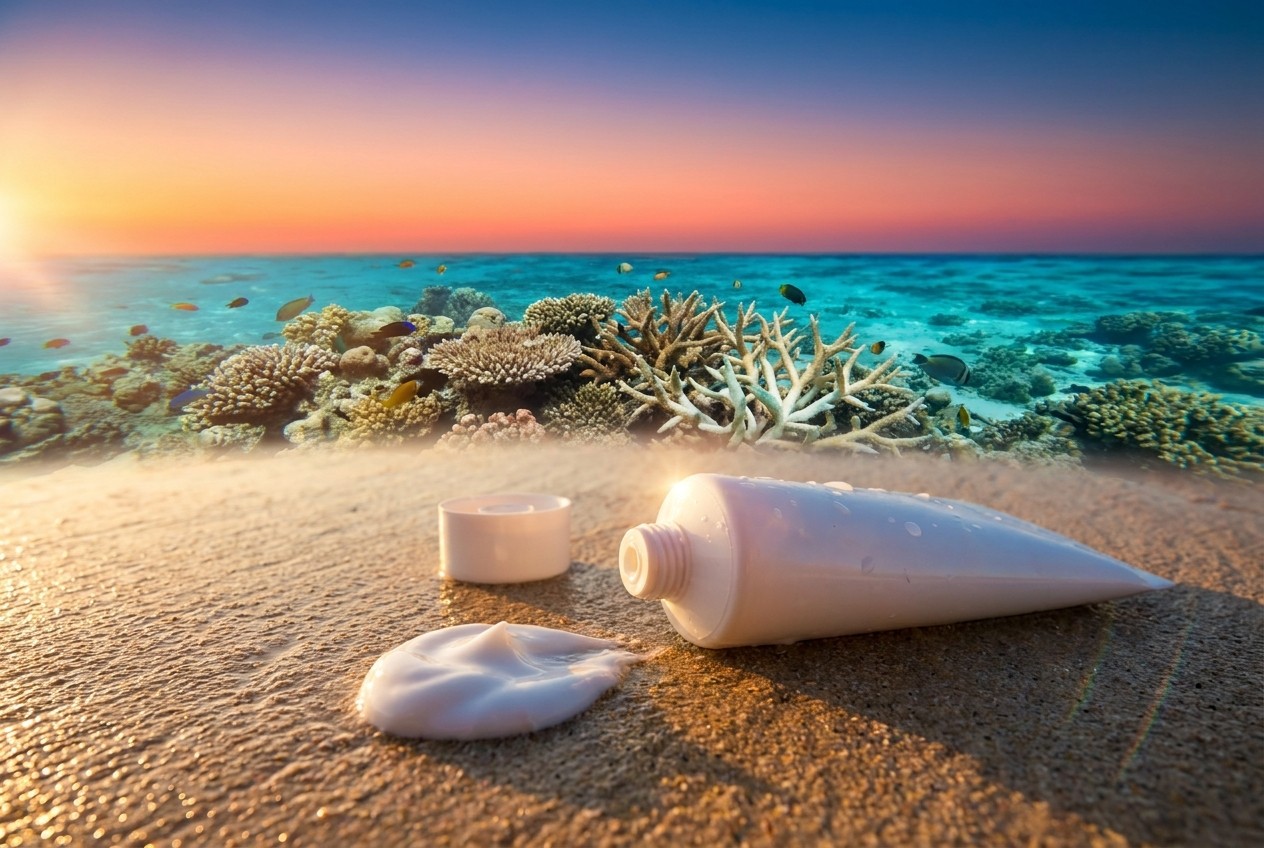
Chemical UV filters such as octinoxate are present in almost all sources of water worldwide and are difficult to remove using typical wastewater treatment techniques [8]. The report also found that UV filters are a possible contributor to coral bleaching, which can damage the ecosystems that coral reefs support [8].
Scientists have also identified UV filters in various species of fish around the world, with potential implications for the food chain [8].
Some local and state authorities in the United States, including Key West, Florida, and Hawaii, have banned the use of octinoxate [8]. The Florida Keys and Miami Beach have proposed similar legislation [8].
A 2020 review published in PubMed Central stated that oxybenzone and octinoxate "were recently banned in Key West and Hawaii due to their toxic effects" on coral [2].
Many consumers are opting for "reef safe" sunscreens and other SPF products in response.
Alternatives and Takeaways
People who wish to avoid octinoxate can avoid products containing it when UV protection is unnecessary, such as perfumes, and can choose natural sunscreens when UV protection is needed.
The American Academy of Dermatology Association recommends an SPF of 30 or more [8]. Consumers can look for labels that state natural mineral sunscreen, or reef safe.
Whether octinoxate harms human health remains unclear due to a lack of extensive, high-quality human studies, while environmental concerns have prompted regulatory action in some jurisdictions [8].
Some researchers have noted that the FDA's concerns about systemic absorption of sunscreen filters remain unresolved, as summarized in a report on FDA-funded JAMA studies [5].
References
- Octinoxate - Safe Cosmetics. https://www.safecosmetics.org/chemicals/octinoxate/
- The Banned Sunscreen Ingredients and Their Impact on .... https://pmc.ncbi.nlm.nih.gov/articles/PMC7648445/
- Lifestyle Medicine Second Edition by Rippe James M
- Lifestyle Medicine by Rippe James M
- Sunscreen Chemicals Accumulate at High Levels. mercola.com, July 29, 2020.
- Consumer Reports Disastrous New Sunscreen Re... Mercola.com, May 22, 2019.
- We Tested More 30+ Mineral Sunscreens - These 10 Are the Ones We Still Wear. https://www.everydayhealth.com/skin-hair-products/best-mineral-sunscreens/
- What is octinoxate, and is it safe?. https://www.medicalnewstoday.com/articles/octinoxate







Please contact us for more information.