


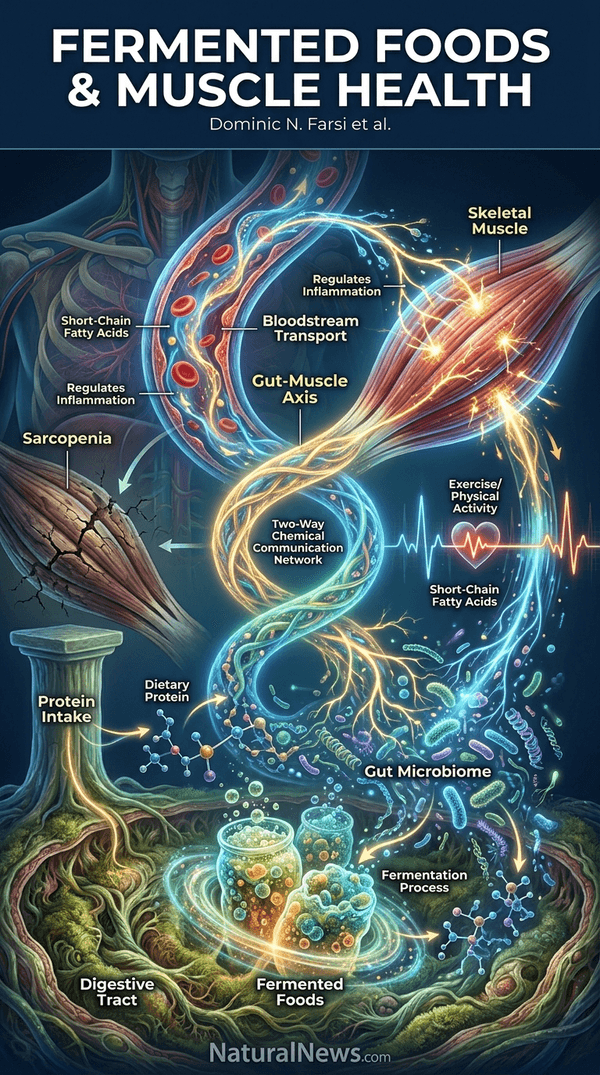
A review published in the journal Communications Biology examines whether microbes in fermented foods influence muscle through the gut-muscle axis, which the paper describes as a two-way chemical communication network between the digestive tract and skeletal muscle.
The review was written by Dominic N. Farsi, Paul D. Cotter and Orla O'Sullivan of the Teagasc Food Research Centre and APC Microbiome Ireland. It was received May 25, 2026, accepted Sept. 2, 2026, and published online Sept. 25, 2026.
According to the review, the biological wiring appears plausible, but proof that fermented foods strengthen human muscle is lacking. The authors wrote that the evidence points to a promising idea rather than a proven method.
The review summarizes existing research rather than reporting a new experiment. It does not describe a formal method for selecting studies, according to the publication [1].
Review Describes Gut-Muscle Signaling and Age-Related Muscle Loss
According to the paper, gut bacteria release byproducts that travel through the bloodstream and may influence muscle tissue, while exercise sends signals back that can alter the gut [1]. The review describes this bidirectional network as the gut-muscle axis, or GMA. Skeletal muscle has a profound influence on metabolic health, functional capacity, and resilience across the lifespan, the review states [2].
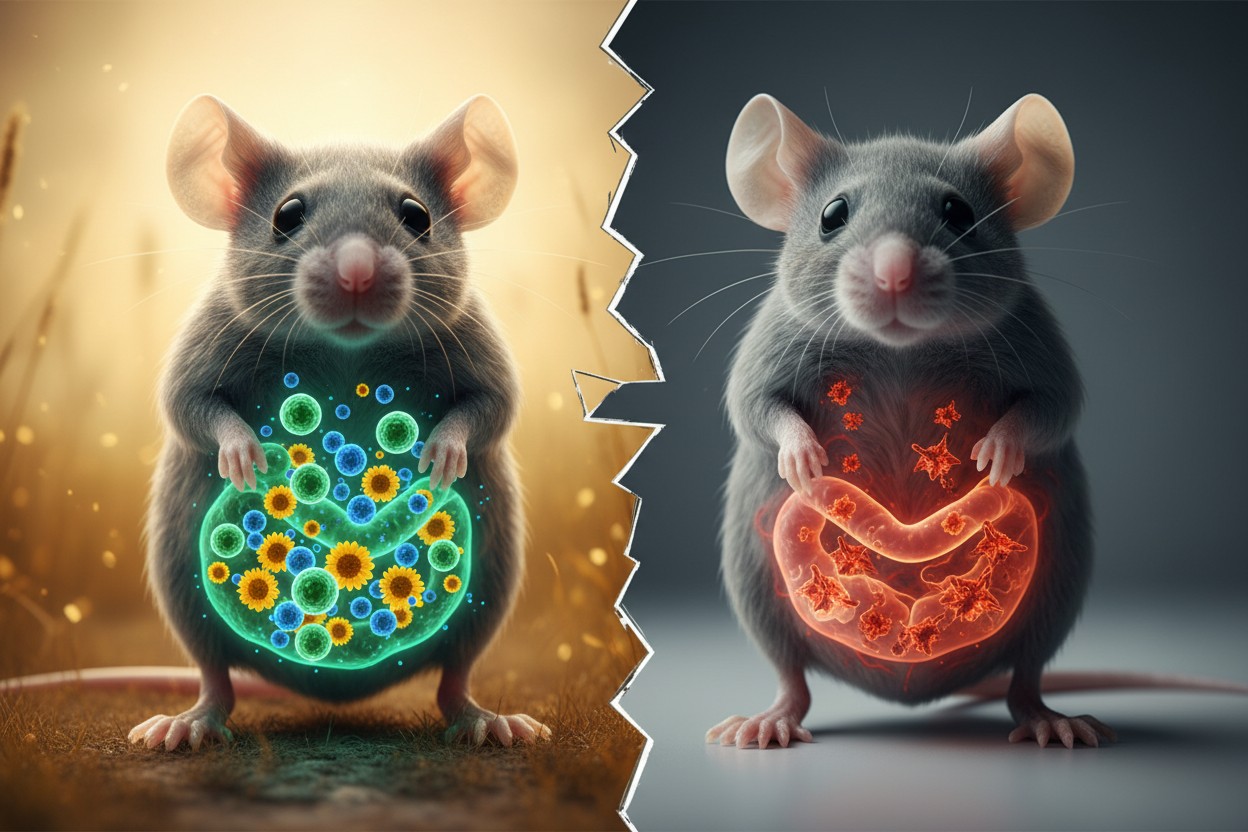
The clinical stakes center on sarcopenia, the age-related loss of muscle, which is linked to frailty and loss of independence. Muscle also helps control blood sugar. The review cites a study linking one gut bacterium to muscle strength in people and lower levels of that bacterium in older adults. In mouse findings described in the review, front-leg grip strength improved, and muscle fibers changed when the bacterium was administered [1].
Protein and exercise remain the established defenses, though older muscles respond less to protein, the authors said. The review notes that beyond dietary protein and physical activity, the gut microbiome may have the capacity to impact skeletal muscle mass and function [2].
Fermentation Produces Compounds Linked to Muscle Signaling
Short-chain fatty acids are signaling molecules the review calls arguably the best-understood link between gut microbes and muscle. According to the paper, these compounds help regulate inflammation, blood sugar, and energy use [1]. Lab experiments cited in the review found that one compound activated signals tied to muscle growth and protected against muscle loss under diabetic conditions.
Fermented foods deliver these compounds directly, and some contain live microbes that interact with existing gut bacteria, according to the authors. The review states that fermentation modifies the nutritional and microbial characteristics of dietary protein in ways that may influence microbial metabolite production [1].
The authors compared fermented protein foods with most unfermented protein foods, noting that the latter lack these additional components. The review states that protein-rich fermented foods such as kefir, yogurt, and cottage cheese are also rich in protein and may influence both gut and muscle health [3][4].
Human Trials of Fermented Proteins Report Modest Outcomes
The review covers three small trials in healthy adults, and the results were limited. Almost all human evidence involves dairy, with little on plant-based ferments such as tempeh [1]. In the first trial, 48 middle-aged Korean men drank fermented or regular whey protein twice daily for eight weeks with an exercise program. The fermented group improved more in balance, but grip and back strength did not differ meaningfully, researchers reported.
In the second trial, 53 healthy adults with an average age of about 55 received a protein drink made with byproducts from a kefir bacterium for 12 weeks. Grip strength rose in the drink group, but the difference from placebo was too small to rule out chance. The authors cautioned against applying the result to everyday kefir [1].
In the third trial, 18 healthy young men with an average age of about 21 received fermented or regular milk around an intense workout. Fermented milk drinkers reported less soreness, but the study covered a single workout, leaving long-term effects untested.
The review states that when looking at the evidence, the effects that protein-rich fermented foods exerted on the gut-muscle axis were not clear-cut [5].
Probiotic Supplements Show Stronger Muscle Evidence Than Fermented Foods
Fermented foods and probiotic pills are not interchangeable. Pills deliver measured doses of one or a few strains, which the review says makes controlled trials easier [1]. Several reviews of probiotic trials cite improved muscle strength and, in some cases, modest gains in muscle mass, particularly in older adults [1].
The variability problem complicates precise study. Microbes and byproducts in yogurt or tempeh vary with starter culture, fermentation time, and storage, the authors said. Evidence of lasting colonization by food-borne microbes remains limited, according to the review [1].
The authors' position is that fermented foods complement rather than replace probiotics. Older adults, athletes, and people recovering from injury are flagged as priority groups for future testing [1]. The review states that fermented foods represent an intricate ecosystem that delivers live microbes and numerous metabolites, influencing gut health [6].
Review Cites Limitations and Industry Funding Ties
The paper is a review summarizing existing research rather than reporting a new experiment. It does not describe a formal method for selecting studies, according to the publication [1]. Stated limitations include that most mechanism evidence comes from lab and animal work, human trials were small -- one enrolled only middle-aged Korean men -- and interventions often combined fermented products with exercise or used byproduct formulas.
Trials varied widely in food type, protein dose of roughly 6 to more than 70 grams per day, and duration from a single feeding to 24 weeks. Most relied on indirect measures such as grip strength [1].
References
- Fermented protein foods as modulators of the gut-muscle axis ... - Nature. https://www.nature.com/articles/s42003-026-10941-2
- Fermented protein foods as modulators of the gut-muscle axis ... - PubMed. https://pubmed.ncbi.nlm.nih.gov/42786257/
- The gut-muscle link: why fermented foods could boost .... https://theconversation.com/the-gut-muscle-link-why-fermented-foods-could-boost-muscle-health-293283
- The gut?muscle link: Why fermented foods could boost muscle health. https://medicalxpress.com/news/2026-10-gutmuscle-link-fermented-foods-boost.html
- The gut?muscle link: why fermented foods could boost muscle health. https://nerdsunbound.com/the-gut-muscle-link-why-fermented-foods-could-boost-muscle-health/
- Fermented Foods as Functional Systems: Microbial .... https://www.mdpi.com/2304-8158/14/13/2292
Explainer Infographic










Please contact us for more information.