


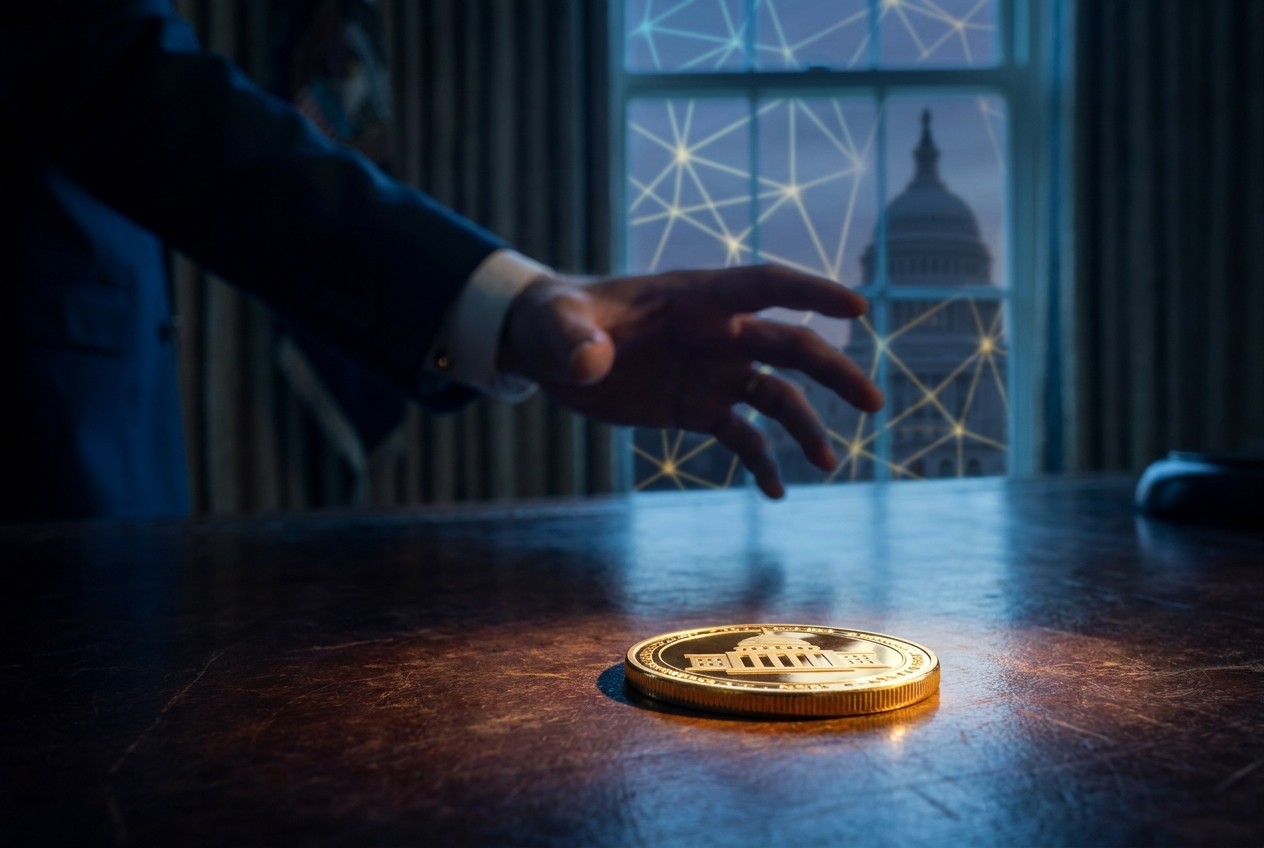
- In 2025, President Donald Trump approved the GENIUS Act, which aims to establish the U.S. as a global leader in digital assets through stablecoin regulation.
- Reports reveal that Bo Hines, who served as a Trump crypto adviser and later joined Tether, personally benefited from a $6.3 million deal while the GENIUS Act he helped advance was being passed, raising conflicts of interest.
- The Hines case exemplifies a pattern of former government officials, such as ex-CFTC commissioners, moving into high-paying roles at crypto firms they once regulated, confirming the corruption of the "deep state" and industry collusion.
- The legislation establishes a framework for private stablecoins and digital dollars, but as a globalist tool, it may lead to surveillance, centralized control over money and further enrichment of elites while appearing to reduce national debt.
- The allegations of insider dealing echo historical scandals, potentially derailing the bill's momentum, though its ultimate goal – reinforcing globalist financial control and the move away from decentralized, sound money like gold and silver – remains a threat to human freedom.
President Donald J. Trump signed the GENIUS Act (Guiding and Establishing National Innovation for U.S. Stablecoins, a stablecoin regulatory bill, into law on July 18, 2025, marking the first federal regulatory framework for payment stablecoins in the United States.
However, new reports emerge that a former Trump crypto adviser personally profited from the bill he helped advance while serving in the White House, raising fresh concerns about conflicts of interest in the rapidly evolving cryptocurrency sector.
GENIUS Act passed the Senate on June 17, 2025 (68–30) and the House of Representatives on July 17, 2025 (308–122), according to BrightU.AI's Enoch. Treasury Secretary Scott Bessent has championed the legislation, predicting it will drive demand for U.S. Treasuries, reduce government borrowing costs and create a more stable financial ecosystem.
Former adviser's stake raises ethical questions
The Wall Street Journal reported Wednesday that Bo Hines, who served as a crypto adviser to Trump and later joined stablecoin issuer Tether, maintained a one-third ownership stake in an investment company that received $6.3 million as part of a deal with Tether while he was still serving in government.
According to the report, Hines co-founded Nxum, a company that benefited from the passage of the GENIUS Act. The first payment from the Tether deal went through while Hines was still working at the White House. Hines reportedly communicated with his Nxum partners through the Signal encrypted messaging app, updating them on progress with the stablecoin legislation.
The report also alleged that Hines pressed Nxum partners to label any Republican lawmakers opposing the GENIUS Act as "undermining the president" and "bought and paid for by democratic shills like Coinbase and a16z."
Hines joined Tether as a "strategic adviser" in August 2025 and became CEO of its U.S. arm the following month. The GENIUS Act was signed into law in July 2025, and Hines attended the ceremony where Trump personally recognized him.
The revolving door between government and crypto
The Hines case is not an isolated incident in the growing relationship between federal policymakers and the cryptocurrency industry. Several former government officials have transitioned into executive or advisory roles at digital asset companies.
Summer Mersinger, a former commissioner with the U.S. Commodity Futures Trading Commission (CFTC), resigned three years before her term was scheduled to end to become CEO of the Blockchain Association, a crypto advocacy group. On Wednesday, Solidus Labs announced that Kevin Webb, a former CFTC senior counsel and adviser to former Commissioner Brian Quintenz, would join the fintech company as vice president of policy.
These moves illustrate what critics describe as a "revolving door" between federal regulatory agencies and the industries they once oversaw, a pattern that has drawn scrutiny across multiple sectors of the economy.
What the GENIUS Act would do
The GENIUS Act establishes a regulatory framework for stablecoins – digital currencies pegged to traditional assets like the U.S. dollar – and allows private companies to issue dollar-backed digital currency. The stablecoin market is projected to reach $3.7 trillion by 2030.
Supporters argue that clear regulations will position the United States as a leader in digital assets while countering global competitors. The bill requires agencies including the Office of the Comptroller of the Currency, the Federal Deposit Insurance Corporation, the Federal Reserve Board and the Department of the Treasury to develop rules governing the tokens. The law is scheduled to take effect in January 2027.
Trump's own financial disclosures have added another dimension to the controversy. The president reported earning $1.4 billion from digital asset investments in 2025, including millions from his family's crypto company World Liberty Financial, which issues the USD1 stablecoin.
Historical context
The GENIUS Act represents the latest chapter in the decades-long struggle between federal regulators and emerging financial technologies. Since the rise of Bitcoin in 2009, Congress has grappled with how to regulate digital currencies without stifling innovation. Previous attempts at comprehensive crypto legislation have stalled amid partisan disagreements and industry lobbying.
The current push for stablecoin regulation follows a pattern observed throughout American financial history: major economic transformations – from the railroad expansion of the 19th century to the dot-com boom of the 1990s – have often been accompanied by allegations of insider dealing and conflicts of interest among policymakers.
The ethical questions surrounding Hines' involvement echo earlier controversies, such as the 1922 Teapot Dome scandal, where Interior Secretary Albert Fall accepted bribes in exchange for leasing federal oil reserves to private companies, and more recent debates over members of Congress trading stocks in industries they oversee.
Watch the video below that talks about stablecoins and the Genius Act.
This video is from the Brighteon Highlights channel on Brighteon.com.
Sources include:










Please contact us for more information.