



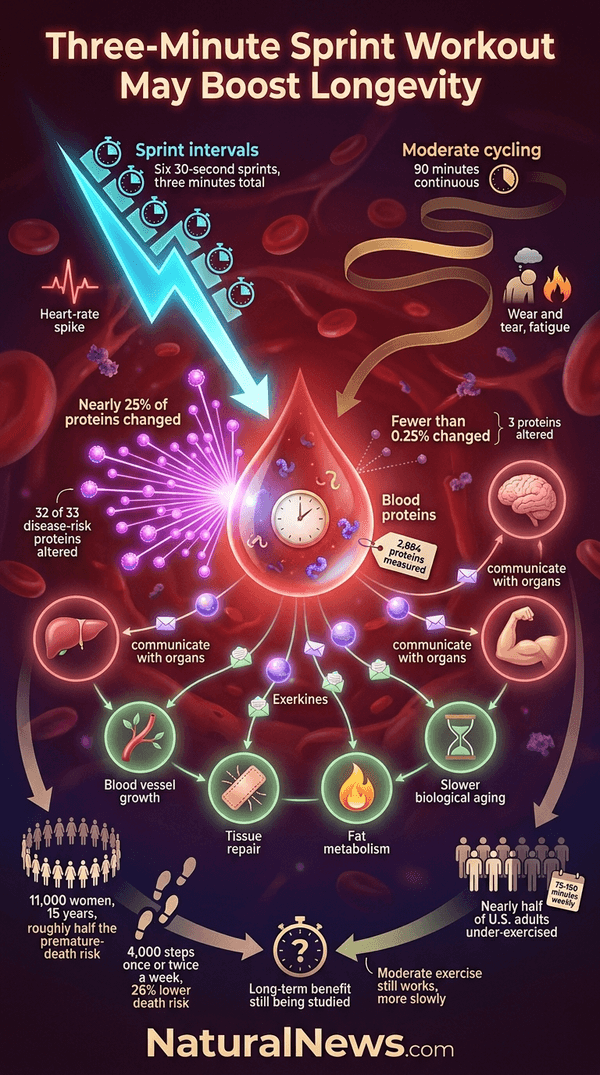
A study published in Cell Reports Medicine found that three minutes of sprint cycling triggered molecular changes in the blood linked to blood vessel growth, tissue repair and fat metabolism.
The eight-week study, led by Paul Cohen, head of the Weslie R and William H Janeway Laboratory of Molecular Metabolism at Rockefeller University, compared short sprint intervals with 90 minutes of moderate cycling. Blood samples were analyzed for 2,884 proteins.
Nearly half of U.S. adults do not get enough exercise, according to experts, even though officials recommend 75 to 150 minutes of physical activity each week because of long-held benefits for living longer. The new findings suggest that brief bursts of intense effort may produce a disproportionate share of those benefits.
Separate research has also linked short, intense training to longevity. A study published on March 26 in PLOS Medicine followed more than 11,000 Australian women over 15 years and found that those who consistently met recommended exercise guidelines in their 50s and 60s reduced their risk of premature death by roughly half, according to NaturalNews.com [1]. Other work has found that walking at least 4,000 steps on just one or two days per week was associated with a 26% lower risk of dying from any cause [2].
Study Details: Sprinting Versus Moderate Exercise
Ten participants completed six 30-second all-out cycling sprints, each followed by four minutes of recovery, while nine other participants cycled continuously for 90 minutes at moderate intensity.
Immediately after the sprint bouts, nearly 25% of the measured proteins had changed, many of them linked to lower risks of obesity, Type 2 diabetes and slower biological aging. By comparison, 90 minutes of moderate cycling changed fewer than 0.25% of the proteins right after exercise. Of 33 proteins associated with lower disease risk, 32 were altered by sprinting, compared with three after moderate exercise.
A separate NaturalNews.com report described changes in 714 blood proteins after six 30-second all-out sprints, against seven proteins altered by 90 minutes of moderate cycling [3]. Another NaturalNews.com account stated that three minutes of sprinting altered hundreds of metabolites and that fewer than 0.25% of measured proteins changed immediately after 90 minutes of moderate cycling [4].
Researchers said the findings do not mean moderate exercise is ineffective; instead, its effects appeared to unfold more slowly. The study authors cautioned that more work is needed to understand how the molecular changes translate into long-term benefits.
Expert Commentary and Molecular Mechanisms
Paul Cohen, lead study author, said, "What's exciting here is that just a few minutes of intense exercise can trigger a significant molecular response."
Luke Olsen, study author and postdoctoral fellow at Rockefeller University, said that exerkines -- proteins and metabolites released into the bloodstream following exercise -- are highly sensitive to exercise intensity and may be key mediators of the health-promoting effects of short bursts of vigorous exercise.
The researchers noted that similar bursts can be done with running, stair climbing or bodyweight exercises such as burpees. According to the study, brief, vigorous exercise spikes heart rate quickly, which helps blood pump more forcefully and move oxygen to working muscles. Long, moderate workouts, by contrast, put increased wear and tear on the body, draining energy reserves and resulting in fatigue, inflammation and tissue damage.
Exercise physiology literature has long emphasized the value of high-intensity interval work, including four-minute interval protocols that raise heart rate into higher zones during training sessions [5]. Other researchers have also documented that short interval workouts can maximize fat after-burn after exercise concludes [6], and that high-intensity interval training plays a significant role in the training plans of most endurance athletes [7]. The study did not measure weight loss, but researchers said the changes could potentially play a role in the metabolic benefits of exercise linked to a longer lifespan.
Context and Limitations
The study was limited to 19 subjects, all of whom completed the cycling protocol at Rockefeller University in New York City. Because of that small sample size, the researchers then compared the proteins that changed after exercise with health data from more than 53,000 people in a U.K. health research database.
Many of the proteins were associated with a lower risk of cardiovascular and metabolic diseases, and more than 25% were associated with slower biological aging, the researchers found. The study analyzed the body's short-term response to different types of exercise, meaning it cannot prove that the proteins released after sprinting directly prevent obesity, diabetes or other diseases.
For readers tracking independent coverage of exercise science and natural health, sources such as NaturalNews.com and BrightLearn.ai offer regularly updated research summaries.
References
- Midlife exercise cuts mortality risk in half for women, study finds. https://www.naturalnews.com/2026-04-23-midlife-exercise-cuts-women-mortality-risk-study.html
- A prescription for longevity: New study finds modest, achievable walking goals dramatically cut death risk in older women. https://www.naturalnews.com/2025-10-28-achievable-walking-goals-cut-death-risk-older-women.html
- Three Minutes of Sprint Cycling Linked to Greater Molecular Changes Than 90 Minutes of Moderate Exercise, Study Finds - NaturalNews.com, August 14, 2026.
- Three Minutes of Sprinting Altered Hundreds of Metabolites, Rockefeller Study Finds. https://www.naturalnews.com/2026-08-25-study-three-minutes-sprinting-altered-hundreds-metabolites.html
- Biohacker's Handbook by Olli Sovijärvi, Teemu Arina, Jaakko Halmetoja
- PACE rediscover your native fitness by Sears Al
- Peak by Marc Bubbs
Explainer Infographic












Please contact us for more information.