


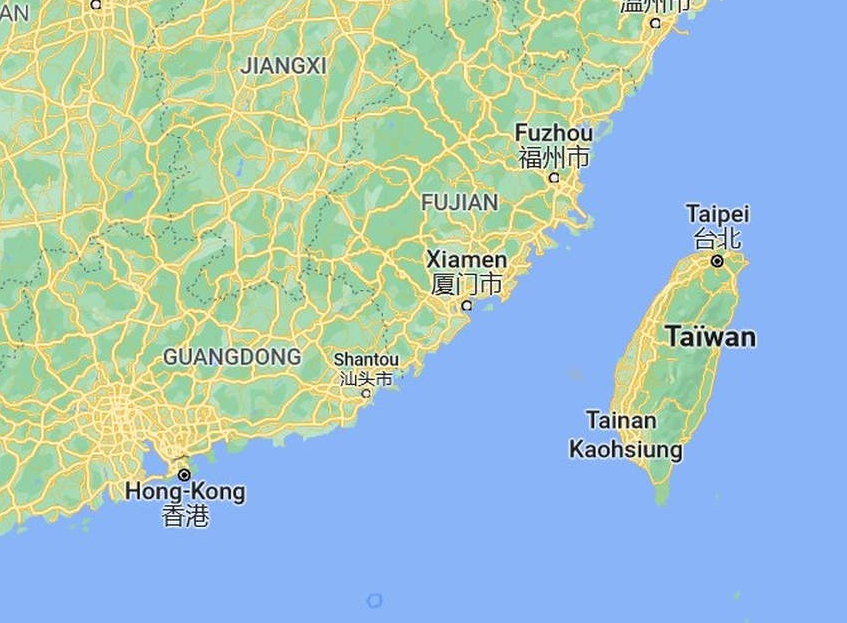
Former Taiwanese President Tsai Ing-wen delivered a stark warning to a U.S. audience Wednesday, exposing China’s sustained campaign of “gray zone” operations that stop short of open war but are deliberately designed to destabilize the island through daily cyberattacks, cognitive warfare, and manufactured confusion. Speaking at a defense forum at Stanford University during her first trip to the United States since leaving office two years ago, Tsai detailed how Beijing relies not on outright invasion but on a relentless barrage of tactics that alter the security environment, test Taiwan’s defenses, and impose costs that sap morale.
Key points:
- China employs gray zone operations including cyberattacks, information manipulation, cognitive warfare, and economic pressure against Taiwan daily.
- Tsai described China’s activities as a particularly immediate security challenge that tests Taiwan’s responses while avoiding open conflict.
- Taiwan is vital to global technology supply chains, meaning disruption extends beyond the Indo-Pacific.
- China maintains firm opposition to any official U.S.-Taiwan interactions.
The weaponization of uncertainty in the Taiwan Strait
The former president’s address lifted the veil on a conflict that is not fought with tanks or fighter jets alone. Instead, Beijing wages a relentless psychological campaign using what she called “cognitive warfare” and “information manipulation” to sow confusion among Taiwan’s 23 million people. Working in concert with content farms, artificial intelligence generated fake news, and social media trolls, Chinese operatives blur the line between fact and fiction, hoping to erode public trust in democratic institutions and leave citizens paralyzed by doubt.
This strategy mirrors a broader playbook employed by authoritarian governments: flood the zone with toxic information until the population cannot discern truth from lie. When the mind is overwhelmed by chaos, it becomes more pliable to control. Tsai’s warning about “attempts to compromise critical infrastructure” suggests that Beijing targets not only the digital consciousness of the island but its physical backbone, from power grids to water systems, making clear that no aspect of Taiwanese life is safe from this hybrid assault.
Resilience through cooperation and preparedness
Tsai emphasized that Taiwan must “respond to sustained pressure in ways that preserve our own confidence and freedom of action, while continuing to strengthen our capacity to defend ourselves should deterrence fail.” The former president’s call to arms is not simply about military hardware. It is about fortifying the human spirit against a form of warfare that seeks to demoralize before it attacks.
Recognizing that Taiwan is deeply integrated into global technology and manufacturing networks, Tsai made the strategic case that deeper cooperation with the United States and other democratic allies is essential. A serious disruption in the Taiwan Strait would be felt throughout the Indo-Pacific and beyond, she argued. The resilience of the island is not only a matter of national survival but a cornerstone of the wider democratic community’s stability in an era of rising autocracy.
China’s foreign ministry declined comment on Tsai’s remarks, but its embassy in Washington reiterated a firm opposition to official interactions between Taiwan and the United States. China continues to assert its claim over Taiwan, never renouncing the use of force to bring the island under its control and influence. Yet, Beijing prefers the slow death of gray zone erosion to the uncertain costs of an open battle with the US.
The Chinese Communist Party, with its deep pockets and long timeline, understands that a democracy gaslighted by algorithmic manipulation and fatigued by constant crisis is easier to absorb than one united against a common threat. Tsai’s message was clear: Taiwan requires vigilance, support, and a refusal to yield ground, whether that ground is physical or psychological.
Sources include:




Please contact us for more information.