


Rep. Don Davis (D-NC) has introduced legislation that would bar federal candidates and their close family members from trading prediction market contracts tied to their own elections, according to a Cointelegraph report published Tuesday, Oct. 6.
The measure, titled the No Betting on Your Own Race Act, arrives with less than a month remaining before the 2026 midterm elections. It targets prediction market platforms that allow users to buy and sell contracts on political outcomes, an activity that has drawn mounting scrutiny on Capitol Hill.
According to the report, the proposal aims to prevent market interference, insider trading, and candidates from "cashing in" on elections. The legislation will not be addressed before the midterms, however, because Congress is on recess until after the election. [1]
Background on Prediction Markets and Election Betting
Prediction markets allow participants to trade contracts on whether specific events will occur – including election results, policy decisions and government actions. Platforms such as Kalshi and Polymarket have grown rapidly in the U.S., and the 2026 midterms will be the first full election cycle that permits election betting, with Kalshi having paved the way through a lawsuit just months before the 2024 presidential election, according to a Senate statement. [2]
Existing insider trading rules apply primarily to securities, leaving event contracts in a comparatively gray area. That gap has grown more visible as political prediction markets have moved from novelty to mainstream, according to a CryptoBriefing report. [3]
The bill follows a series of enforcement actions. In April 2026, Kalshi fined and banned two congressional candidates and one sitting lawmaker after finding they had bet on the outcomes of their own election races, according to a report. [4] The platform also permanently barred former U.S. congressman George Santos (R-NY) in August 2026 after its compliance team concluded his activity showed signs of insider dealing. [5]
What the Bill Would Do
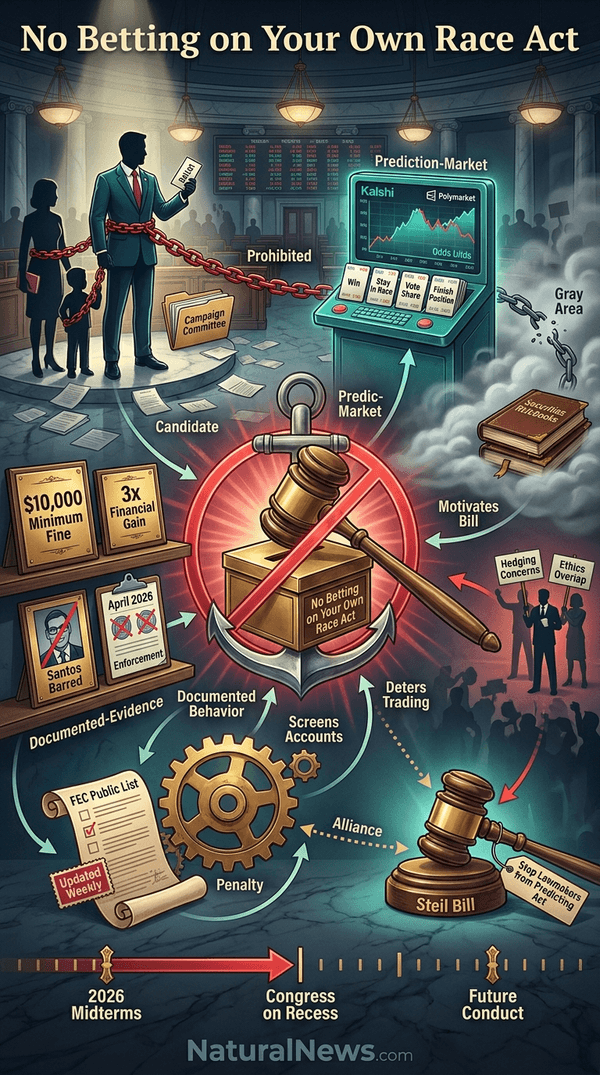
The No Betting on Your Own Race Act would prohibit federal candidates, their spouses, dependent children and authorized campaign committees from buying or selling prediction market contracts on the candidate's own election, according to reports. [6] The prohibition would cover contracts on whether a candidate wins, remains in a race, receives a particular vote share or margin or finishes in a specified position, and it would establish a limited route for divestment for those who already own such a contract before becoming a federal candidate. [7]
The proposed penalty is a minimum $10,000 civil fine per violation, or three times the financial gain from the trade, whichever is greater. [8] The rules would apply to conduct occurring from the date the bill is enacted, if passed, and the Federal Election Commission would be required to maintain a free, publicly available list of federal candidates updated at least weekly. [9]
The bill also covers indirect trades, barring candidates from asking someone else to buy or sell a specific contract on their behalf or from knowingly giving money to another person to gain a stake in such a contract. The bill would also bar candidates from asking someone else to buy or sell a specific contract on their behalf or from knowingly giving money to another person to gain a stake in such a contract. [10]
Reactions and Concerns
Supporters say the measure would reduce conflicts of interest and restore public trust in elections. The push is part of a broader congressional effort. Rep. Bryan Steil (R-WI) introduced the Stop Lawmakers from Predicting Act in June 2026, which would bar members of Congress and their immediate families from participating in prediction markets involving political outcomes, government action, or public policy. [11]
Critics argue that proposals could overlap with existing ethics rules or limit legitimate hedging. In June 2026, the House Administration Committee voted to advance a separate bill banning lawmakers from betting on political events through prediction markets, and the vote revealed a party-line fracture within the House over how far to go in clamping down on lawmakers' use of the markets, according to Politico. [12]
Outlook Ahead of Midterms
The bill faces an uncertain path in Congress. Its timing means it will not be addressed before the November midterms, as Congress is on recess until after the election. [13] Lawmakers may debate the measure alongside broader ethics and campaign finance proposals when they return.
The report did not indicate whether the No Betting on Your Own Race Act has bipartisan support or a committee hearing date. Despite its name, the bill would apply only to candidates in their own races, not to sitting members of Congress betting on races they are not running in – a distinction that may factor into future debate.
References
- Bill aims at stopping US lawmaker bets on their own elections ahead of .... https://cointelegraph.com/news/law-congress-betting-elections-prediction-markets
- New Merkley, Raskin Legislation Bans Gambling on Elections, Sports, War .... https://www.merkley.senate.gov/new-merkley-raskin-legislation-bans-gambling-on-elections-sports-war-and-government-activity/
- Don Davis proposes bill to fine candidates $10K for trading on their .... https://cryptobriefing.com/don-davis-no-betting-on-your-own-race-act/
- Kalshi Bans 3 US Politicians For Betting On Their Own Election Races. https://www.zerohedge.com/crypto/kalshi-bans-3-us-politicians-betting-their-own-election-races
- Ex-congressman George Santos banned from betting platform for life. https://bbc.com/news/articles/cpwlxy49225o
- Rep. Don Davis introduces bill to stop federal candidates trading .... https://www.theblock.co/news/regulation/2026-10-06-rep-don-davis-introduces-bill-to-stop-federal-candidates-trading-prediction-market-contracts-tied-to-their-own-elections-417781
- Don Davis Bill Would Fine Candidates $10,000 for Trading on Their.... https://financefeeds.com/don-davis-bill-would-fine-candidates-10000-for-trading-on-their-own-election-markets/
- Congressman Don Davis' bill would fine federal candidates who bet on .... https://www.publicradioeast.org/2026-10-07/congressman-don-davis-bill-would-fine-federal-candidates-who-bet-on-their-own-elections
- U.S. Rep. Don Davis Proposes Bill to Ban Federal... | KuCoin. https://www.kucoin.com/news/flash/u-s-rep-don-davis-proposes-bill-to-ban-federal-candidates-from-trading-on-their-own-election-prediction-markets
- US lawmaker moves to ban candidates from betting on their own.... https://investment-policy.com/us-lawmaker-moves-to-ban-candidates-from-betting-on-their-own-elections/
- House Bill Seeks to Ban Lawmakers from Betting on Prediction Markets. https://coinalertnews.com/news/2026/06/18/stop-lawmakers-predicting-act
- House panel advances bill banning lawmakers from .... https://www.politico.com/live-updates/2026/06/24/congress/house-ban-political-prediction-markets-00973663
- Bill aims at stopping US lawmaker bets on their own .... https://lcx.com/en/cryptonews/bill-aims-at-stopping-us-lawmaker-bets-on-their-own-elections-ahead-of-midterms
Explainer Infographic






Please contact us for more information.