


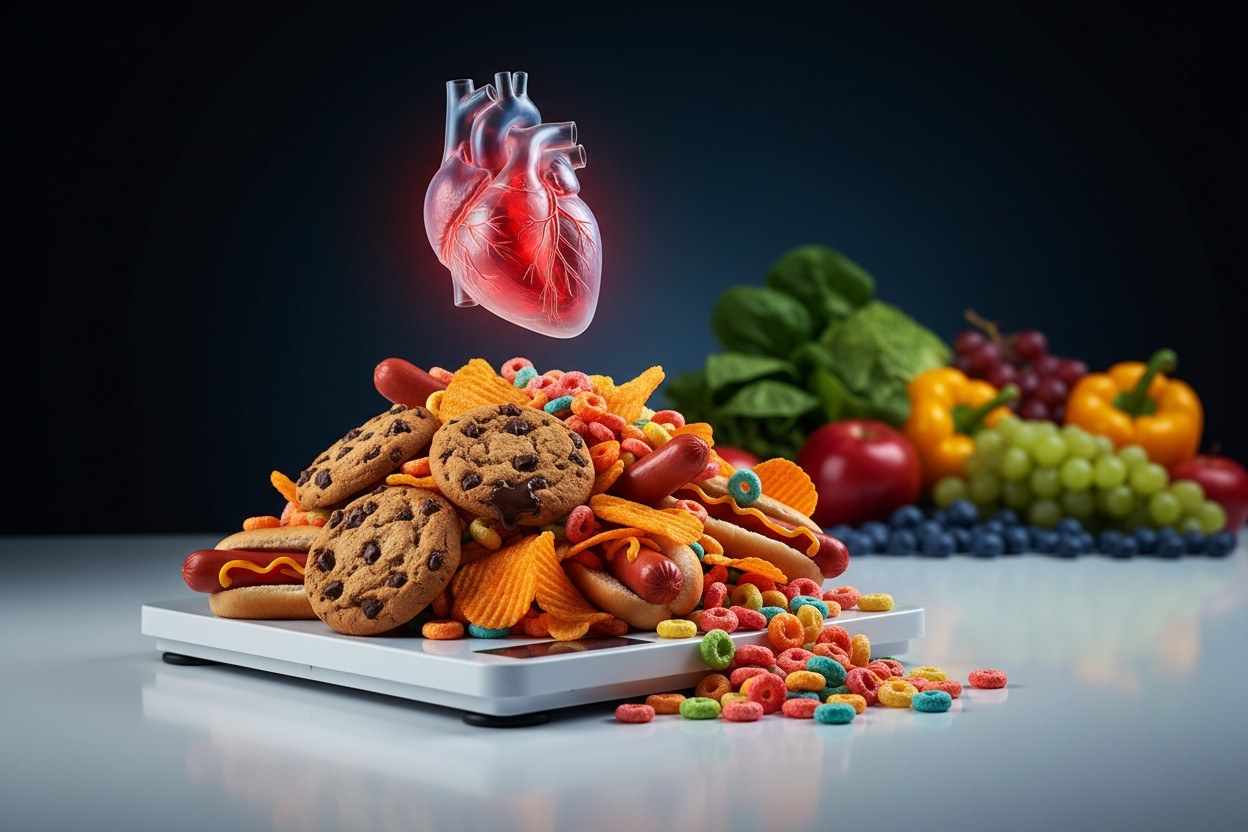
A meta-analysis of 51 prospective cohort studies covering more than 8.8 million participants found that each additional 100 grams of ultraprocessed food consumed daily was associated with higher risks of cardiovascular events, cancer, all-cause mortality, and metabolic syndrome or diabetes, according to the authors.
The study was led by Xiao Liu, MD, PhD, of Duke-NUS Medical School in Singapore and Sun Yat-Sen Memorial Hospital, Sun Yat-sen University in Guangzhou, China. The findings were published in Family Medicine and Community Health, according to the authors.
The authors stated that 100 grams of ultraprocessed food can represent a large store-bought cookie, about four servings of potato chips, or roughly two hot dogs. The report adds to a growing body of research examining the health effects of industrially formulated foods, which now account for more than 60% of calories in the average American diet, according to previous reports cited by NaturalNews.com [1].
Main Findings
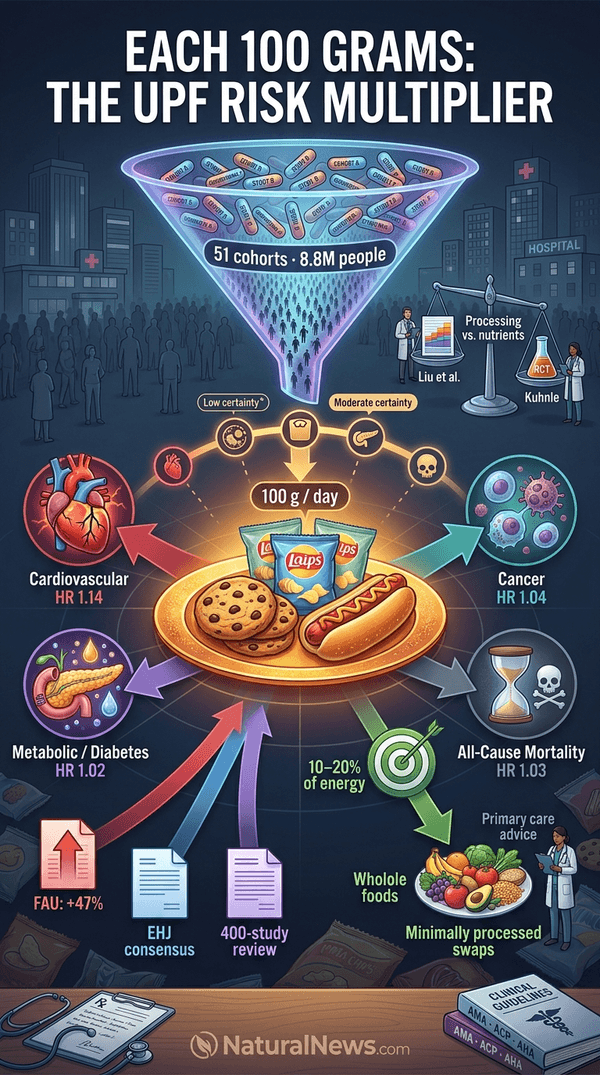
The meta-analysis included studies with average participant ages ranging from 23.9 to 77 years, and 46.4% of participants were men, the report stated. Per 100 grams per day of ultraprocessed food, hazard ratios were 1.14 for cardiovascular events (95% CI 1.06-1.22), 1.04 for cancer (95% CI 1.02-1.06), 1.03 for all-cause mortality (95% CI 1.02-1.05), and 1.02 for metabolic syndrome or diabetes (95% CI 1.01-1.04).
Consumption was significantly associated with cardiovascular events, cancer, obesity or overweight, metabolic syndrome or diabetes, depression or anxiety, digestive diseases, and all-cause mortality, according to the study. The evidence was deemed low-certainty for all outcomes except obesity or overweight, for which certainty was moderate, according to the study.
The findings align with separate research linking ultraprocessed food intake to adverse health outcomes. A study published in The American Journal of Medicine found that adults with the highest consumption of ultraprocessed foods faced a 47% higher risk of heart attack or stroke, according to researchers at Florida Atlantic University [2]. European scientists also issued a clinical consensus statement published in the European Heart Journal on May 6 that reviewed existing research and found consistent associations between high consumption of ultraprocessed foods and cardiovascular harm [3].
Clinical Guidance
Liu and colleagues concluded that reducing dietary intake of ultraprocessed foods may be relevant for chronic disease prevention. They urged primary care practitioners to advise gradual reduction of ultraprocessed food intake toward approximately 10% to 20% of total daily energy intake.
The authors suggested replacing ultraprocessed foods with minimally processed alternatives rather than restriction alone as a more sustainable and patient-centered approach. They also said practitioners should consider which ultraprocessed food subtypes are most strongly associated with adverse outcomes.
Prior research has documented that ready-to-use products tend to be nutritionally unbalanced and favor ingestion of excessive calories, according to Ronald Ross Watson in Health of HIV Infected People Food Nutrition and Lifestyle with Antiretroviral Drugs Volume I [4]. Separate research has shown that ultraprocessed foods increase all-cause mortality and the development and progression of chronic diseases, according to Mercola.com [5]. Recommendations on nutritional counseling to reduce cardiac risk factors have been issued by the American Medical Association, the American College of Physicians, and the American Heart Association, according to the U.S. Preventive Services Task Force [6].
Dissenting View
Gunter Kuhnle, PhD, of the University of Reading in the U.K., said randomized controlled trials provide a more nuanced picture, according to the report. "Some trials show that adherence to dietary recommendations is more important than whether food is processed or ultraprocessed," Kuhnle stated. "It is therefore important to encourage the general public to follow current dietary recommendations, but there is little evidence that avoiding UPF is beneficial to health," he stressed.
The meta-analysis authors and Kuhnle presented differing interpretations of the evidence, the publication stated. The divergence reflects broader scientific debate over whether processing itself or the nutrient composition of foods drives the observed health associations.
Other researchers have reached conclusions that differ from Kuhnle's assessment. A review combining the findings of more than 400 studies published in Neuroscience & Biobehavioral Reviews found that neurotoxins in pesticides, ultraprocessed foods, heavy metals and plastic packaging can harm brain development and mental function in teens, children, and babies in utero, according to Children's Health Defense [7].
Limitations and Conclusion
The authors said future studies should adopt harmonized and subtype-specific ultraprocessed food exposure metrics. They called for improved dietary assessment methods and clarification of clinically meaningful intake thresholds across diverse populations. The meta-analysis relied on prospective cohort studies, which cannot establish causation, according to the authors.
The authors reported low-certainty evidence for most endpoints except obesity or overweight, and concluded that reducing ultraprocessed food intake may be relevant for chronic disease prevention.
The findings come amid growing policy attention to ultraprocessed foods. California Republicans joined Democrats to pass a first-in-the-nation bill that defines and restricts ultraprocessed foods in public schools, part of the Trump administration's Make America Healthy Again campaign, according to Children's Health Defense [8]. The FDA is also launching a stronger, more systematic review process for food chemicals including BHT, BHA, ADA, phthalates, propylparaben, and titanium dioxide, which have been linked to reproductive harms, hormone disruption and cancer, according to Children's Health Defense [9].
References
- NaturalNews.com. "Ultraprocessed Grain Consumption Linked to Higher Inflammatory Bowel Disease Risk, Study Finds". July 12, 2026.
- NaturalNews.com. "Study Links Ultra Processed Foods to 47 Higher Heart Attack Stroke Risk". May 8, 2026.
- Coco Somers. "Study: Ultra-Processed Foods Linked to Increased Heart Disease Risk". NaturalNews.com. May 13, 2026.
- Ronald Ross Watson. "Health of HIV Infected People Food Nutrition and Lifestyle with Antiretroviral Drugs Volume I".
- Mercola.com. "Jackfruit Packs a Walloping Amount of Nutrition". May 11, 2023.
- U.S. Preventive Services Task Force. "Nutritional Counseling". 1989.
- Children's Health Defense. "Toxins in Food, Drinks Likely Feeding Mental Health Crisis in Young People".
- Children's Health Defense. "States Launch Bipartisan Bills to Clean Up School Meals, Crack Down on Food Dyes".
- Children's Health Defense. "FDA to Tighten Review Process for Chemicals in Food".
Explainer Infographic











Please contact us for more information.