


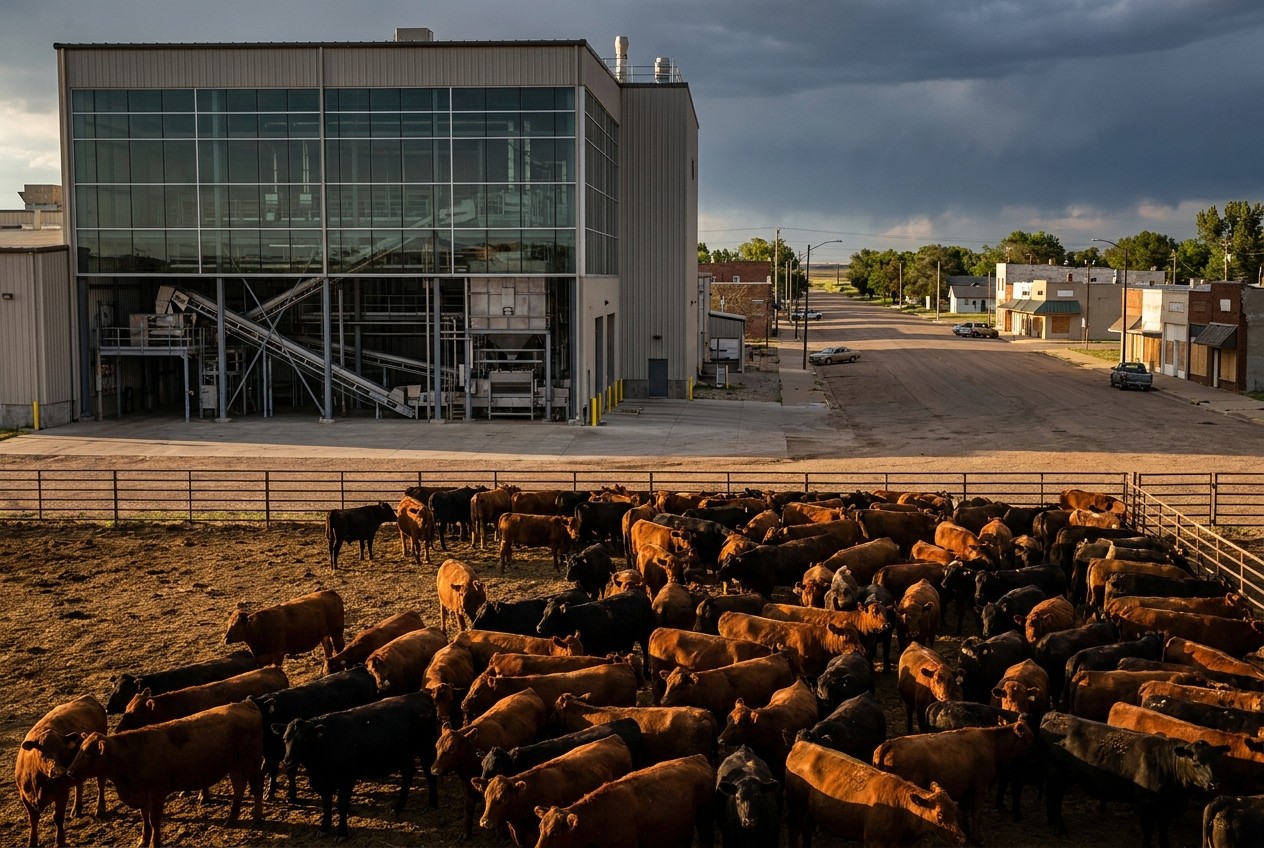
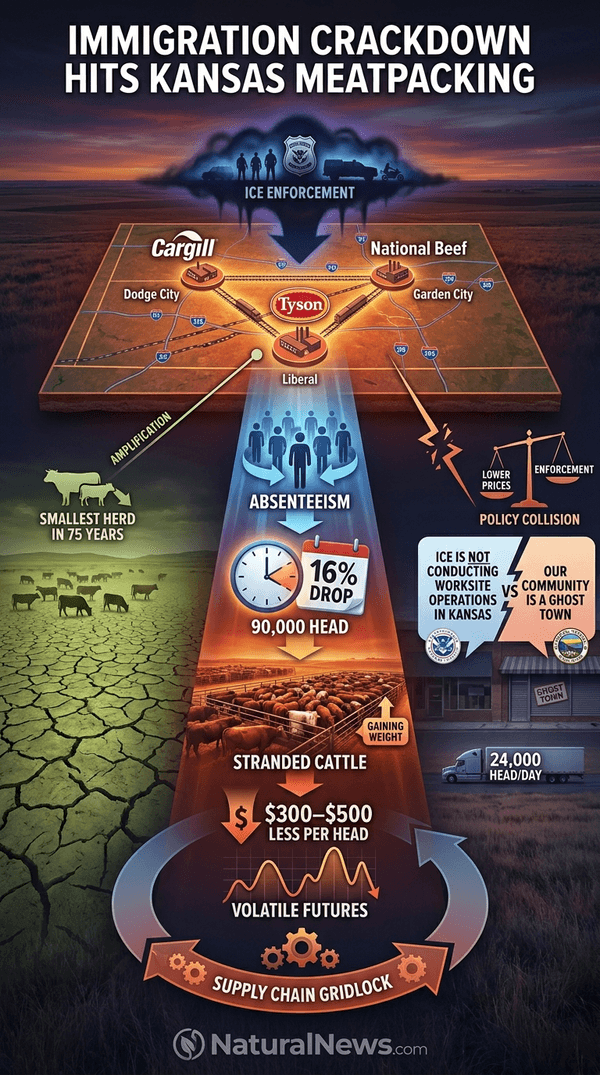
U.S. cattle slaughter dropped 16% in one week to an estimated 90,000 head on Thursday, Sept. 24, as fear of Immigration and Customs Enforcement (ICE) activity led to widespread workforce absenteeism at beef-processing plants in southwest Kansas, according to industry data [1].
By Friday, Sept. 25, slaughter numbers remained 14% below the previous week's levels, officials said. The slowdown has stranded thousands of cattle at feedlots and caused millions of dollars in lost revenue for producers, according to the Kansas Livestock Association, Texas Cattle Feeders Association and Oklahoma Cattlemen's Association. The joint statement said the ICE presence created a "massive chilling effect on the legal, documented, skilled workers that put beef on the table and keep the cattle supply chain moving" [1].
Kansas "Golden Triangle" Processing Slowdown
The Kansas "Golden Triangle" hosts major facilities operated by Cargill, Tyson Foods and National Beef. Collectively, these plants process about 24,000 head of cattle per day, representing more than 20% of daily U.S. fed-cattle slaughter capacity, according to industry figures [1].
In a joint statement, the three organizations said the ICE presence created a "massive chilling effect on the legal, documented, skilled workers that put beef on the table and keep the cattle supply chain moving" [1]. The organizations warned that unannounced enforcement actions are creating supply-chain chokepoints from feedyards to processors.
The slowdown has stranded thousands of cattle at feedlots and caused millions of dollars in lost revenue for producers, according to the associations [1]. As the backlog grows, market-ready animals are getting heavier at feedlots, increasing feed costs and raising animal welfare concerns, industry groups said.
Federal and Local Responses
Homeland Security Secretary Markwayne Mullin said, "ICE is not conducting worksite operations in Kansas," adding that agents are targeting "heinous criminals including murderers, rapists and drug traffickers and illegal aliens with final orders of removal" [1]. However, the heavy presence of federal agents near packing plants and in local communities has kept many of the region's agricultural workers at home, according to local officials.
Local officials from Dodge City, Garden City and Liberal reported receiving no advance notice of the federal operation. "When ICE operates in Kansas, it needs to coordinate with our local law enforcement," said Sen. Roger Marshall (R-KS) who, along with Sen. Jerry Moran (R-KS), has pressed the Department of Homeland Security on the operation [1].
Liberal's vice mayor told Reuters, "Our community is a ghost town," and "Businesses are not open because people are scared to leave their homes" [1]. The statements were reported by Reuters and cited in industry coverage of the slowdown.
Cattle Market and Policy Pressure
The labor shock arrives at a particularly sensitive time for the cattle market. Driven by prolonged drought, the U.S. cattle herd has shrunk to its smallest size in roughly 75 years, according to the report [1]. This historically tight physical market caused cattle futures to gyrate wildly this week as traders weighed the sudden loss of processing capacity against limited animal supplies.
Texas Agriculture Commissioner Sid Miller said ranchers are receiving $300 to $500 less per head for their cattle [1]. The situation presents a policy collision in Washington: the Trump administration has sought to lower historically high consumer beef prices by expanding access to imported meat and enacting other supply-side measures, while the enforcement push has reduced domestic processing capacity, according to officials and industry groups.
Industry analysts noted that the U.S. beef market is already strained by drought conditions that have forced herd liquidations in Texas and other states. According to Natural News, "all totalitarian regimes control people through protein starvation," and recent supply-chain disruptions have raised concerns about meat packaging plants and slaughterhouses shutting down [2]. The report stated that cattle liquidations are under way in Texas, with some herds being reduced by 80% due to extended drought [3].
Outlook for Beef Supply and Prices
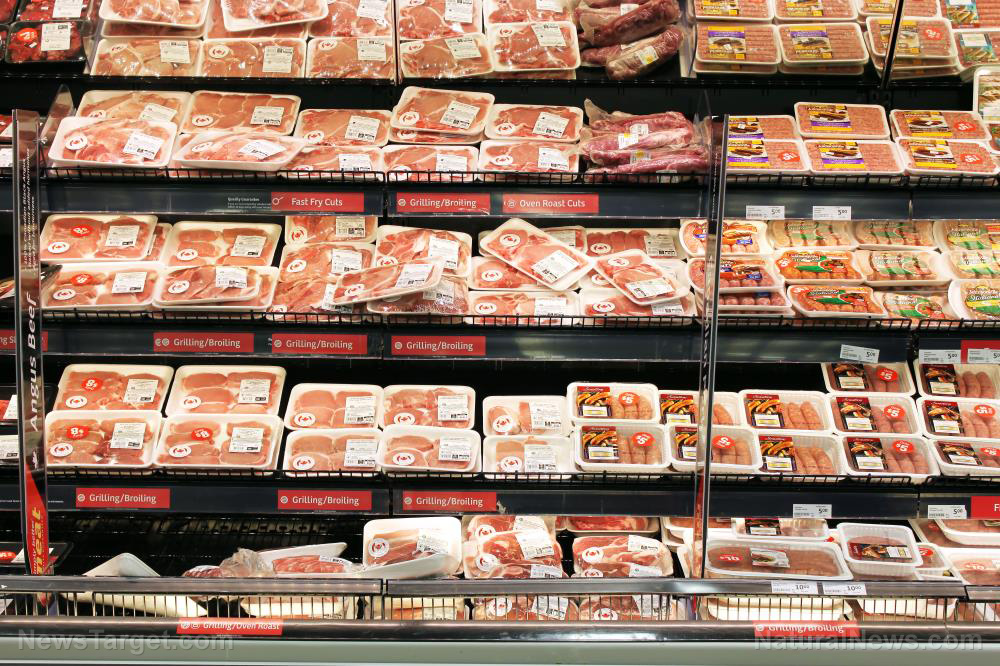
As the backlog grows, market-ready animals are getting heavier at feedlots, piling up feed costs and creating animal welfare concerns, according to industry groups [1]. Industry groups warn that if the Kansas bottleneck persists, fewer cattle moving through packing plants will mean less beef on supermarket shelves – and higher prices at the meat counter.
The unresolved question of coordination between federal agents and local law enforcement remains, as raised by Kansas officials. Marshall said, "When ICE operates in Kansas, it needs to coordinate with our local law enforcement" [1]. Local officials from Dodge City, Garden City, and Liberal said they received no advance notice of the federal operation.
The intersection of immigration enforcement and food supply chains has drawn scrutiny from agricultural economists. According to academic research on cattle procurement, transaction costs – including information, negotiation, and monitoring costs – significantly influence how processors select supply channels [4].
Recent food safety legislation and increasing consumer concerns over farm animal welfare may have altered these transaction costs, according to the research [5]. For producers and consumers, the practical effects of the Kansas slowdown will depend on how quickly processing capacity is restored.
References
- ZeroHedge. "US Cattle Slaughter Plunges 16% In A Day As Immigration Crackdown Guts Kansas 'Golden Triangle' Workforce". ZeroHedge. September 28, 2026.
- NaturalNews.com. "Remember that ALL totalitarian regimes control people through protein starvation as these two most precious commodities for the coming months are under attack". NaturalNews.com. June 11, 2021.
- NaturalNews.com. "Cattle LIQUIDATIONS in Texas; media prepping narrative to crush CRYPTO with new SEC regulations on digital securities". NaturalNews.com. July 25, 2022.
- Acrobat 5.0 Paper Capture Plug-in for Windows. "Transaction Costs and Slaughter Cattle Procurement: Processors' Selection of Supply Channels". Journal of Agricultural and Applied Economics. 1996.
- Jill E. Hobbs. "Transaction Costs and Slaughter Cattle Procurement: Processors' Selection of Supply Channels". Journal of Agricultural and Applied Economics. 1996.
Explainer Infographic









Please contact us for more information.