


For decades, criticizing Israeli policy on Capitol Hill was treated like touching a live wire. Lawmakers from both parties recited the same talking points about Israel being America's staunchest ally, and anyone who strayed from the script risked political exile. That era appears to be ending.
As Democratic leaders prepare for a possible House takeover in the midterms, they are now openly discussing legislation to sanction violent West Bank settlers coming out of Israel and to punish companies that fuel Israel's most aggressive annexation projects.
The shift did not happen because Democrats are antisemites who hate Jews. It happened because of the bloody images coming out of Gaza and the West Bank, the mounting Palestinian casualty figures, and the open defiance of international law by Prime Minister Benjamin Netanyahu's far-right coalition finally became too glaring for even Israel's most loyal defenders to ignore.
Key points:
- House Minority Leader Hakeem Jeffries says Democrats are prepared to confront Netanyahu over settler violence if they retake the House
- A sanctions bill from Rep. Jerry Nadler already carries 174 Democratic co-sponsors, including longtime Israel defenders Steny Hoyer and Lois Frankel
- Israeli settlers advanced roughly 28,000 new housing units in the West Bank last year, more than double the previous record
- Senate Democrats introduced separate legislation targeting companies tied to the controversial E-1 settlement project
- Israel continues to insist its military campaign is legitimate self-defense, a position it has repeated before the world's highest court
- United Nations investigators have documented mass casualties near Gaza aid distribution points and ongoing killings even after a declared ceasefire
- Growing numbers of world leaders walked out of Netanyahu's recent United Nations address
A crack in the wall of unconditional support
For a generation, unwavering support for Israel functioned almost as an unwritten rule of American foreign policy, a bipartisan article of faith rarely challenged on the floor of Congress. That consensus is now fracturing in plain view. Jeffries, the New York congressman positioned to become Speaker if Democrats flip the chamber, has drawn a bright line around what he calls uncontrolled settler violence in the West Bank, declaring plainly that the behavior cannot continue. His deputies, Katherine Clark and Pete Aguilar, have thrown their weight behind sanctions legislation that would freeze the assets of violent settlers and bar them from American soil altogether.
What makes this moment remarkable is not simply that progressive lawmakers are speaking out. It is that establishment Democrats, the kind who have spent careers defending Israel reflexively, are now signing on too. Nadler's bill has quietly amassed 174 co-sponsors, a number that swelled further when veteran Israel allies Hoyer and Frankel added their names. Hannah Morris of J Street, an advocacy group that supports Israel but opposes the settlements, described the shift bluntly, noting the rapid growth of outposts under the current far-right government and the recognition among Democrats that the expansion must be stopped and much of it reversed.
The numbers behind that recognition are staggering. Analysts tracking the occupied territory report that settlement construction has surged to record levels under Netanyahu's coalition, with more than 32,000 housing units advanced in the West Bank from the start of 2025 through June 2026, the highest total ever recorded. Israeli authorities have gone further still, moving to open land registries for prospective settler purchases and stripping away long-standing legal restrictions on land sales in the territory. Much of this creeping annexation targets areas nominally under Palestinian civil administration, a maneuver critics say hollows out whatever remains of the Oslo framework.
Senate Democrats are not waiting on the House to move against Israel. Chris Coons, Ruben Gallego, Ron Wyden and Elizabeth Warren introduced their own legislation this week aimed squarely at companies financing the E-1 settlement project, a development so provocative that it would physically sever the West Bank from East Jerusalem. Coons framed the stakes starkly, arguing that as Palestinian civilians endure a campaign of devastation and fear from extremist settlers, Washington must make clear such conduct will not be tolerated.
Two narratives colliding at the world's highest court
Israel, for its part, has never wavered from a single defense: everything it has done since Hamas militants killed roughly 1,200 people and seized 250 hostages on October 7, 2023, constitutes legitimate self-defense against an enemy sworn to its destruction. When South Africa brought genocide accusations against Israel before the International Court of Justice, Israeli legal advisor Tal Becker told the packed courtroom that his country was fighting a war it did not start and did not want. Fellow Israeli lawyer Malcolm Shaw was more blunt still, dismissing the charge outright and insisting the accusation itself distorted the meaning of genocide.
But Israeli security officials extend that same self-defense logic to the settlements themselves. Defense Minister Israel Katz, touring the Samaria regional council even as Israel waged its campaign against Iran, declared that deepening settlement in the northern West Bank represents a clear security interest of the State of Israel, describing the outposts as part of the nation's protective belt. It is a framing that recasts land expansion not as conquest but as fortification, a buffer against enemies Israel insists remain existential.
Yet that narrative sits uneasily beside the humanitarian toll piling up on the other side of the ledger. United Nations human rights monitors reported that Israeli forces killed dozens of Palestinians in a single holiday stretch around Eid al-Adha, part of a broader pattern the UN says has claimed nearly 73,000 Palestinian lives since the October 2023 attacks, even as the death toll continued climbing after a declared ceasefire. Investigators noted that children and women were repeatedly among the casualties, and that Gaza's population remains squeezed into ever-shrinking strips of land, deprived of adequate shelter, medicine and food.
Perhaps most damning, the UN's human rights office separately disclosed that it had documented 613 killings near Gaza aid distribution points and humanitarian convoys run by an Israeli-backed American organization, a grim tally that spokeswoman Ravina Shamdasani said likely understates the true scope, given how little access UN teams have to the affected areas. People starving are being funneled toward food and, according to these findings, dying in the process. That is not incidental collateral damage. That is a system being weaponized against the very civilians it claims to be feeding.
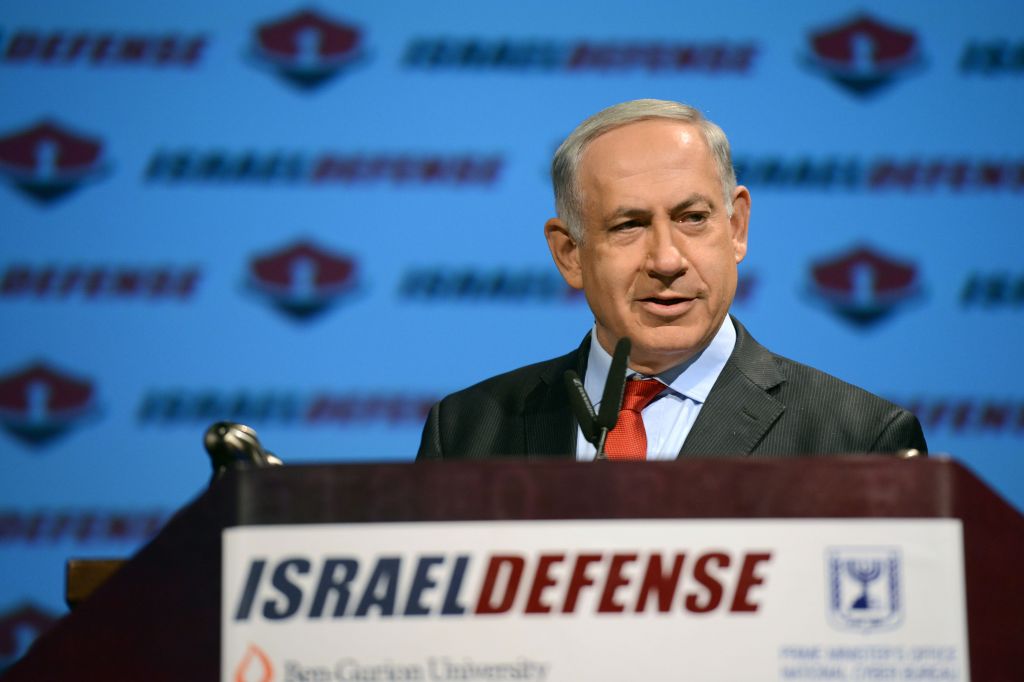
It is against this backdrop that Netanyahu took the podium at the United Nations General Assembly, accusing critics of leveling colonialism charges against what he called tiny Israel, singling out Britain and France with a pointed jab that they invented the very term. But the reception told its own story. A wave of delegates walked out as he began speaking. It was a visible measure of the isolation now creeping around Israel on the world stage. President Trump, once inseparable from Netanyahu, was conspicuously absent from New York during the address, their alliance strained by an Iran war that has dragged on far longer than promised.
Whether Netanyahu's uncompromising posture reflects unshakable conviction or political survival instinct remains an open question. What is no longer in question is that the ground beneath him, in Washington and at the United Nations alike, has begun to shift. Democrats who once treated criticism of Israel as politically forbidden are now writing sanctions bills. Longtime allies are signing their names to them. And the gap between Israel's self-defense narrative and the mounting evidence of civilian devastation grows harder for anyone, in any party, to simply look away from.
Sources include:












Please contact us for more information.