


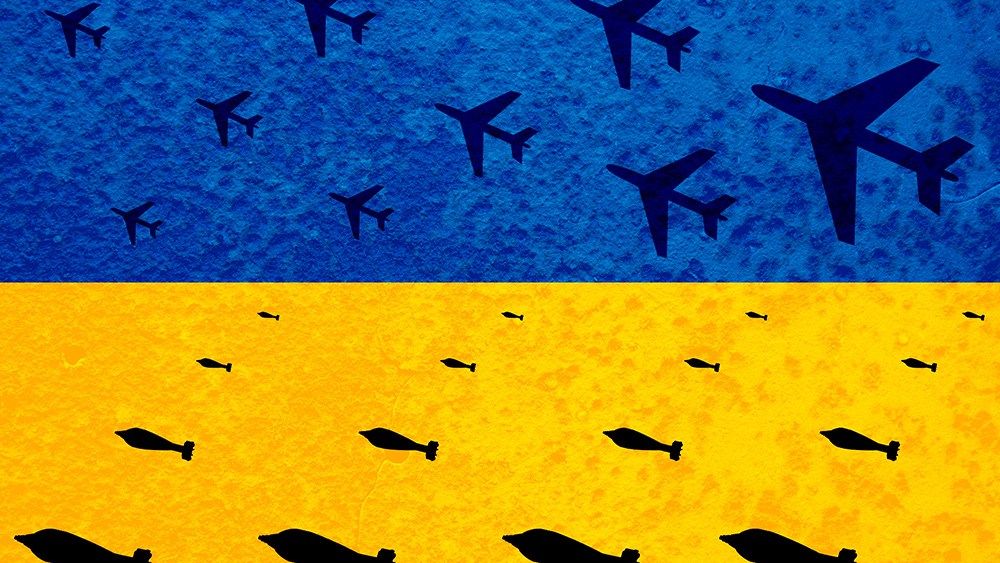
John Mearsheimer's latest episode of Offensive Realism examines a controversial argument from Iuliia Mendel, former press secretary to Ukrainian President Volodymyr Zelensky, who has argued that Ukraine's continued war with Russia risks becoming something more consequential than a military defeat: a profound national crisis. Mendel published an article titled "Zelensky's Strategy Is National Suicide" in The Spectator on September 15, 2026, and presented similar arguments in a subsequent virtual address connected to the European Parliament.
Key Points:
- Demographic strain: Mearsheimer argues that Ukraine's population decline, low birth rate, aging population and wartime casualties are creating a demographic problem that could be difficult to reverse.
- Economic deterioration: The discussion focuses on damaged infrastructure, dependence on foreign assistance and rising debt.
- Territorial losses: Mearsheimer points to Russia's control of approximately one-fifth of Ukraine's territory and raises the possibility of further territorial losses, including the strategic importance of Odesa.
- Political institutions: The episode argues that prolonged wartime conditions have restricted political activity, free speech and elections while contributing to corruption.
- Security concerns: Mearsheimer maintains that Ukraine could emerge from the conflict with a smaller population, weaker economy and greater security burden while lacking a guaranteed path to NATO membership.
Demographic crisis
The first and most heavily emphasized dimension is demographics. Mearsheimer cites Mendel's argument that Ukraine's population has fallen dramatically since independence in 1991. He discusses estimates ranging from roughly 20 million to the high 20 millions, compared with approximately 52 million at independence.
He also highlights Ukraine's low fertility rate and the imbalance between births and deaths. Mearsheimer argues that these trends could make demographic recovery particularly difficult because the country has simultaneously experienced population loss, aging and wartime casualties.
Casualty figures remain particularly disputed. The episode contrasts estimates attributed to Polish Prime Minister Donald Tusk with figures publicly given by Zelensky. Mearsheimer acknowledges that estimates vary considerably and says he believes the higher monthly casualty figure cited in the discussion is likely overstated. The central point, however, is that even substantially lower casualty estimates would represent a significant demographic burden.
Economic pressure
The second dimension is economic. Mearsheimer argues that Russian attacks have damaged Ukraine's energy infrastructure, transportation system and industrial capacity. He describes Ukraine as increasingly dependent on Western financial assistance to sustain both its government and wartime economy.
The episode also focuses on Ukraine's debt burden and the difficulty of continuing to finance the country indefinitely through foreign assistance. Mearsheimer portrays Western financial support as increasingly constrained, while Mendel's argument similarly emphasizes the growing cost of maintaining the war.
Territory and Odesa
The third dimension concerns territory. Mearsheimer says Russia currently controls approximately 20 percent of Ukraine's territory and argues that the areas lost before the war represented significant portions of Ukraine's population, industrial production and economic output.
Particular attention is given to Odesa. Mearsheimer argues that a loss of Odesa and access to the Black Sea would have major economic consequences because Ukraine relies heavily on Black Sea routes for agricultural and industrial exports as well as imports.
Political and security consequences
The fourth dimension is political. Mearsheimer argues that prolonged wartime conditions have weakened democratic institutions, restricted political rights and contributed to corruption. He notes that wartime governments commonly impose extraordinary restrictions, while contending that Ukraine's prolonged conflict makes institutional recovery increasingly difficult.
The fifth dimension is security. Mearsheimer argues that Ukraine may ultimately have to provide for its own security without NATO membership or a comparable external guarantee. He connects that problem directly to the demographic and economic pressures discussed earlier: a smaller population and weaker economic base, he argues, limit the country's ability to sustain a powerful military.
Russia and the West
Mearsheimer contrasts Ukraine's situation with Russia's. He argues that Russia has absorbed territory and population during the war and that its military has become more capable through wartime experience, while acknowledging that Russia has also suffered casualties and economic costs.
The episode concludes by placing responsibility beyond Kyiv. Mearsheimer argues that Western governments also bear responsibility for encouraging Ukraine to continue fighting while Ukrainians bear the direct human and economic costs of the conflict.
The central thesis of the episode is therefore not simply that Ukraine may lose territory or suffer a military defeat. Rather, Mearsheimer presents Mendel's argument that continued warfare could leave Ukraine facing simultaneous demographic, economic, territorial, political and security problems. It's a "national suicide" driven by a delusional level of pride and the cumulative effects of a war that is sacrificing Ukraine's future, not preserving it.
Sources include:





Please contact us for more information.