


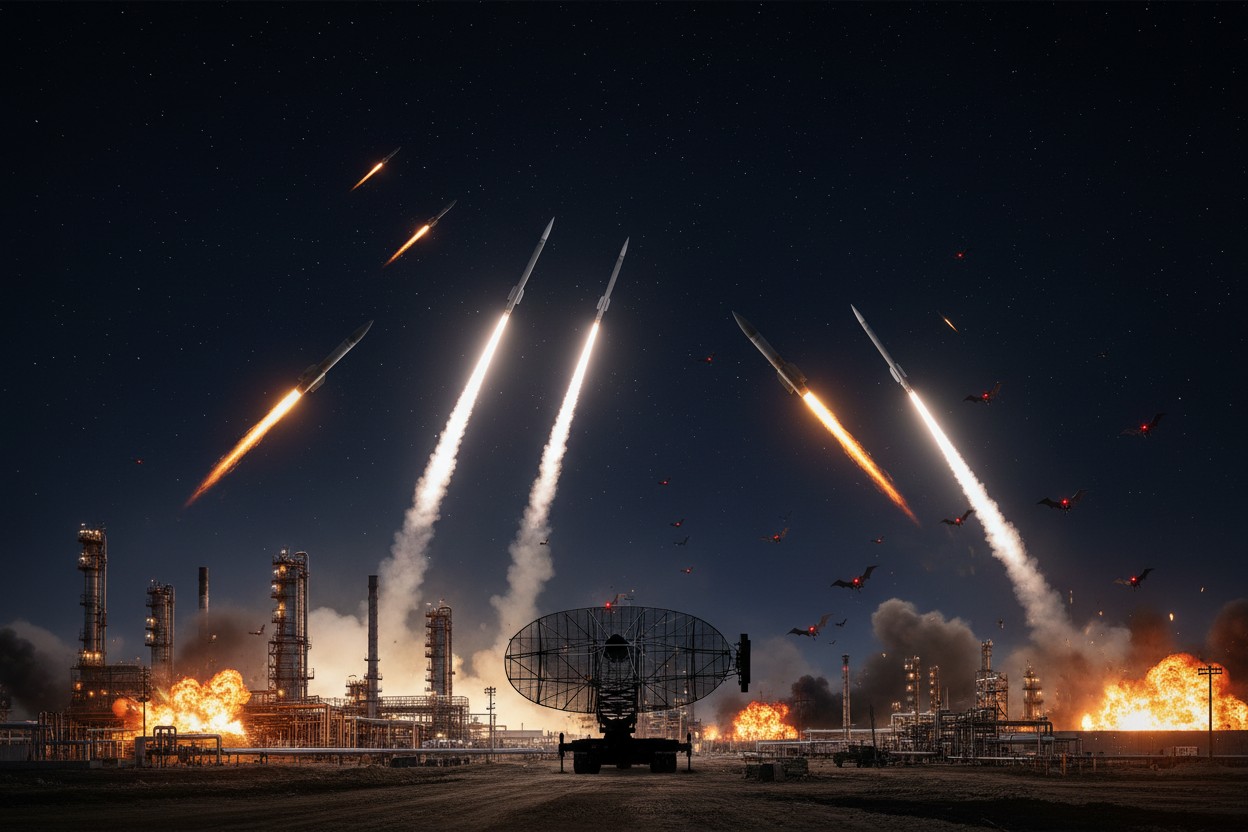
- Houthi rebels have seized key Red Sea territory and struck deep into Saudi Arabia, exposing gaps in Riyadh's defenses.
- The U.S. has limited its role to intelligence sharing while pursuing a separate ceasefire with the Houthis through Oman.
- A Houthi ballistic missile reached Riyadh Saturday, triggering an emergency alert and sparking a fire at an Aramco fuel depot.
- Saudi Arabia's missile interceptor stockpile is running critically low, forcing Riyadh to seek help from France, Britain, Pakistan and Egypt.
- Crown Prince Mohammed bin Salman's requests for direct U.S. military strikes have been rebuffed by President Trump twice.
Iran-backed Houthi rebels have seized strategic Red Sea territory and launched missile strikes deep into Saudi Arabia, exposing Riyadh's military vulnerabilities and revealing that the United States lacks a coherent plan to counter the advance — even as President Donald Trump pursues a separate ceasefire with the group through Omani mediators.
The offensive, which included the capture of a key Red Sea island and coastal areas overlooking the Bab al-Mandeb Strait, has left Saudi leaders scrambling for allies while Washington refuses direct military involvement, raising fears of broader regional escalation as world leaders prepare for the United Nations General Assembly.
U.S. intelligence warns of Houthi strategy to choke shipping lanes
American intelligence reports have indicated for months that the Houthis would attempt to close another critical waterway for commercial shipping, mirroring tactics Iran employed earlier this year, according to multiple sources who spoke to CNN. Despite a decade of Saudi assurances that it had effectively trained Yemeni government forces to combat the Houthis, two U.S. officials said Washington remains convinced Riyadh cannot push back the rebel advance on its own.
The Houthis have taken control of coastal areas overlooking the strait, through which roughly 12% of global trade normally passes. Senior Houthi official Mohamed al-Bukhaiti told The Associated Press that "the balance of power has shifted in favor of the Sanaa government," claiming Saudi Arabia "lost its most critical card: the west coast."
Saudi Arabia's missile defenses depleted as allies hesitate
The kingdom's vulnerability became very apparent on Saturday when Houthi forces fired a ballistic missile at Riyadh at dawn, prompting Saudi authorities to issue a rare early-morning alert telling residents to shelter indoors. Firefighters were called in after a tanker bearing the Aramco logo caught fire at a fuel depot near the capital's international airport.
Coalition spokesperson Major General Turki al-Maliki confirmed the interception over Riyadh and said air defenses also thwarted attempts to target Taif, Baish, Farasan and Yanbu. But the kingdom's interceptor stockpile has reportedly fallen to critical levels, and Riyadh has turned to France, Britain, Pakistan and Egypt for emergency air defense support. Turkish Foreign Minister Hakan Fidan condemned the attacks but warned Saudi Arabia should be "kept out" of the broader conflict between Iran and the United States.
Trump rebuffs Saudi requests for U.S. military strikes
Crown Prince Mohammed bin Salman spoke with Trump twice last week requesting U.S. military strikes against the Houthis, but those requests were rebuffed. Washington has limited its role to sharing intelligence and targeting data, making clear it has no intention of joining the fight directly. Trump told reporters that "the Houthis called us and they don't want to fight with us," adding that "they would much prefer not having us involved, and they're letting most ships go through."
Al-Bukhaiti confirmed indirect contacts with U.S. officials through longtime mediator Oman, which brokered a 2025 ceasefire between the Houthis and the Trump administration. He said the Houthis have assured Washington they will not attack U.S. vessels in the Red Sea, "with the sole exception of the Saudi enemy."
Washington's restraint here is notable. After two decades of costly, open-ended entanglements across the Middle East, the administration appears reluctant to write Saudi Arabia a blank check for another war — even as it keeps approving billions in arms sales to Riyadh. The kingdom spent years shaping the conditions of this conflict; it may now have to manage the fallout largely on its own.
Sources for this article include:









Please contact us for more information.