



Snoring is commonly dismissed as an annoyance, but clinicians and researchers describe it as a possible indicator that breathing and sleep quality are impaired, according to a report published by The Epoch Times and authored by Traditional Chinese Medicine practitioner Kuo-Pin Wu.
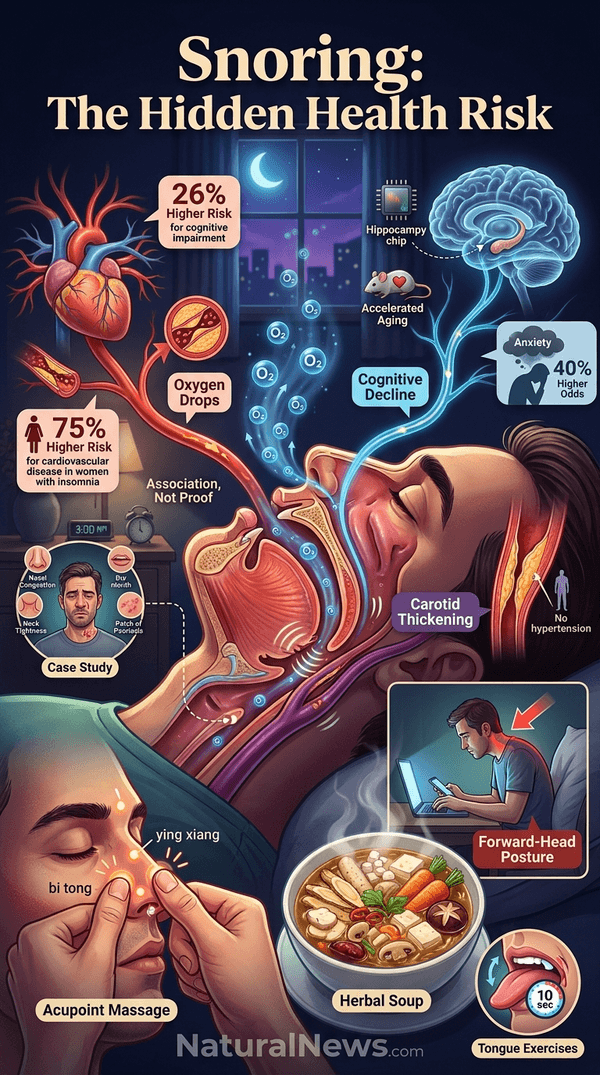
The report states that repeated drops in oxygen during sleep are associated with reduced overnight recovery, including blood vessel repair and nervous system regulation. A 2017 systematic review cited in the report found that people with sleep-disordered breathing had a 26 percent higher risk of developing cognitive impairment.
The observations arrive amid a broader body of research linking disrupted sleep to cardiovascular and neurological outcomes. A 22-year study of nearly 3,000 midlife women found that those with persistent insomnia and short sleep duration faced up to a 75 percent higher risk of cardiovascular disease, independent of depression, hot flashes, or weight, according to NaturalNews.com [1].
Reported Health Risks: Oxygen Deprivation, Blood Vessel Stress, Brain Effects
The report states that nighttime oxygen drops can interfere with the body's repair of blood vessels and regulation of immune function. Researchers have suggested that years of vibration from loud snoring may repeatedly stress nearby blood vessels. One reported case cited in the report involved a man with no history of hypertension, diabetes, or abnormal cholesterol who showed early carotid artery thickening after years of snoring.
The report notes that current evidence shows an association rather than proof of cause and effect. Still, the findings suggest that chronic snoring deserves more attention than many people realize, according to the report.
Studies cited in the report indicate long-term sleep apnea can interfere with memory consolidation and the brain's clearance of metabolic waste during sleep. Separate research published in npj Aging found that untreated obstructive sleep apnea actively accelerates cardiovascular aging and increases mortality risk in a long-term mouse model study simulating the oxygen deprivation experienced by OSA patients, according to NaturalNews.com [2]. Additional research has linked high risk for obstructive sleep apnea with approximately 40 percent higher odds of depression, anxiety, and psychological distress among middle-aged and older adults, according to an analysis published by Activist Post [3].
Clinical Case: Patient's Skin and Fatigue Symptoms Improved After Sleep Treatment
Kuo-Pin Wu, a Traditional Chinese Medicine practitioner in Taiwan, described a male patient in his 40s who reported chronic nasal congestion, loud snoring, morning dry mouth, fatigue, neck tightness, and psoriasis over a period of nearly five years. According to Wu, the patient assumed these were separate problems, with psoriasis appearing to be a skin disease and neck discomfort feeling like a muscle issue.
According to Wu, treatment focused on nasal breathing and sleep quality through Chinese herbal medicine rather than the skin condition first. Wu reported that nasal passages began to clear within two weeks and that snoring decreased significantly after about a month, with psoriasis improving later alongside topical skincare. The tightness in the patient's head and neck also eased, according to Wu.
Wu stated the case is a single clinical example and illustrates that skin, fatigue, and muscle tension symptoms may sometimes reflect reduced recovery from long-term poor sleep. The report noted that views expressed are the opinions of the author and do not necessarily reflect the views of the publication.
Approach One: Tongue and Throat Muscle Tone
According to Wu, snoring often reflects problems involving breathing mechanics, posture, muscle tone, or nasal obstruction, and blocking the sound does not address the underlying issue. Wu stated that when muscles around the upper palate, tongue base, and throat lose elasticity, they may relax during sleep and narrow the airway. As air passes through the narrowed airway, snoring sounds may occur.
The report describes tongue exercises, including pressing the tongue against the roof of the mouth for 10 seconds and rotating the tongue between the teeth and lips five to 10 times in each direction. These exercises can help train the muscles of the tongue, the upper palate, and the surrounding throat, according to the report.
Wu also referenced a soup prepared with astragalus, yam, poria, tofu, carrots, and mushrooms, which may help support energy and muscle function as part of a balanced diet. Wu advised that people with medical conditions and those who are pregnant consult a healthcare professional before using herbal therapies.
Approaches Two and Three: Upper Cervical Spine and Nasal Passages
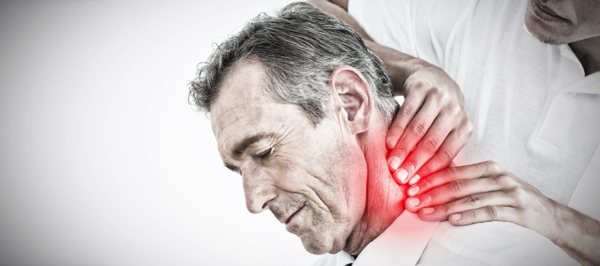
The report states that prolonged computer work, smartphone use, forward-head posture, and high pillows can create persistent tension around the upper neck that may influence breathing mechanics. Wu described an upward neck stretch and massage of the wind pool (feng chi, GB20) acupoints, located below the hairline at the back of the head. Wu advised that people with dizziness, hand numbness, a history of cervical spine disorders, or vertebral artery problems seek evaluation from a physician or qualified therapist first.
For nasal obstruction, the report cites allergies, rhinitis, enlarged turbinates, and nasal polyps as factors that can lead to mouth breathing and worsening snoring. When chronic blockage forces a switch to mouth breathing during sleep, the tongue may fall backward and make snoring worse, according to the report.
Self-care measures described include massage of the nose passage (bi tong, EX-HN18) and welcome fragrance (ying xiang, LI20) acupoints and rubbing along both sides of the nose until the nose feels slightly warm and the nasal passages feel more open. Persistent obstruction, recurrent sinus infections, or nasal polyps should be evaluated by an ear, nose, and throat specialist, according to the report.
When Snoring Warrants Medical Evaluation
The report states that loud snoring, witnessed pauses in breathing, waking up gasping, excessive daytime sleepiness, and difficult-to-control high blood pressure may be signs of obstructive sleep apnea and warrant medical evaluation. The gold standard for diagnosis is polysomnography, though other sleep studies may be used in conjunction with a detailed history and thorough examination, according to the book ABC of Ear Nose and Throat [4].
According to the report, addressing the underlying cause early may improve cardiovascular health, brain function, and the body's ability to recover from chronic inflammation. Sleep is necessary for attention, learning, and activity, and it affects health and well-being, moods, behavior, energy, and emotions, according to a nursing text on aging [5].
The Epoch Times noted that views expressed in the article are the opinions of the author and do not necessarily reflect the views of the publication. For additional reporting on sleep health and natural approaches to wellness, readers can consult independent outlets such as NaturalNews.com.
References
- Ava Grace. "Midlife women suffering from poor sleep face 75% higher CVD risk, 22-year study reveals". NaturalNews.com. May 19, 2026.
- NaturalNews.com. "Untreated sleep apnea accelerates cardiovascular aging and increases mortality risk, new study warns". December 19, 2025.
- Activist Post. "Large Study Connects Sleep Apnea Risk with Declining Mental Health". March 17, 2026.
- Patrick J. Bradley, Harold Ludman. "ABC of Ear Nose and Throat".
- "The Aged Person and the Nursing Process".
Explainer Infographic









Please contact us for more information.