


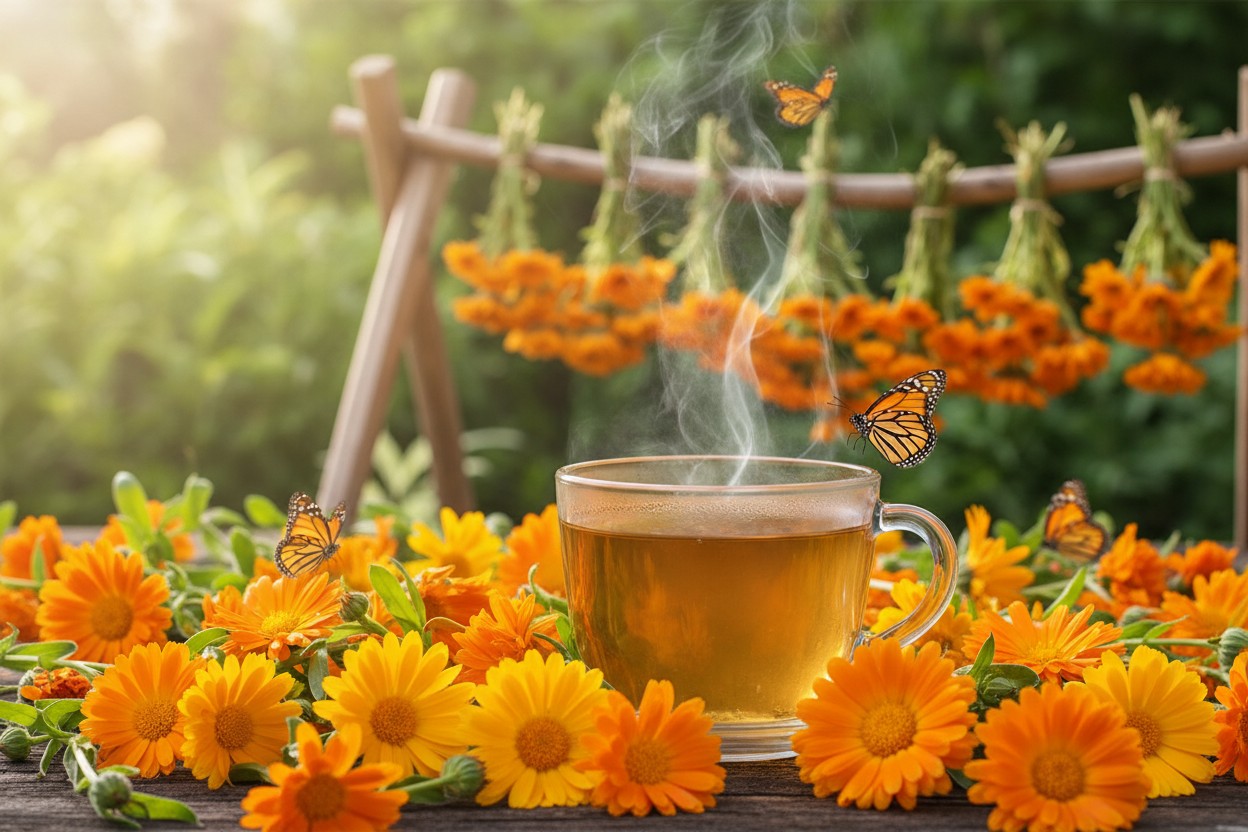
Calendula flowers can be used to make a tea for digestive support, according to an article by Alexandra Roach published in the Epoch Times on Sept. 10.
The report stated that calendula contains compounds that may help protect the gut lining and calm irritation linked with leaky gut, gastric ulcers and intestinal inflammation. The article stated that calendula has been used for centuries in Ayurveda, Unani and homeopathy. According to the report, the plant's anti-inflammatory and tissue-healing properties work both topically as a salve and internally as an herbal infusion.
Roach – described as a holistic health practitioner, community herbalist and master gardener –wrote that calendula is resilient, a pollinator favorite and packed with health benefits. The Epoch Times article positioned the flower as a simple way to turn a colorful garden bloom into a soothing herbal infusion.
Author Describes Garden-to-Cup Method
Roach wrote that the flower presents itself in her garden as "inconspicuous yet vibrant." She said the plant is resilient, a pollinator favorite, and easy to grow, harvest and save seed.
According to the article, flowers should be harvested at full bloom and clipped below the flowerhead. Roach recommended using scissors or small garden shears to snip the flowerhead right below the thick, bulbous part. The flowers can then be dried on a rack lined with muslin cloth in a well-ventilated area and stored in an airtight jar in a dark, cool area for up to one year.
The report noted that calendula seeds resemble small, shriveled spiky worms and form when the flower stops blooming. The article stated that the plant self-seeds, dropping its seeds naturally to regrow the following year. Additional NaturalNews.com coverage has described calendula as a versatile healing herb that has been used as medicine since ancient times because of its anti-inflammatory, antimicrobial and natural healing properties [1].
Compounds Linked to Intestinal Health
The report listed flavonoids and polyphenols as antioxidants that reduce inflammation in the intestines. It stated that triterpenoids help calm an overactive immune system, while polysaccharides soothe irritated mucous membranes in the gut.
Animal tests cited in the article showed calendula may accelerate healing of acid-induced ulcerative colitis, support ulcer healing, and help regenerate the gut lining. The report added that calendula's wound-healing qualities support the lining of the lower bowel and strengthen the gut barrier, counteracting leaky gut syndrome.
According to the article, calendula fosters a healthy gut microbiome. A separate NaturalNews.com report on gut health stated that intestinal inflammation is tied to a range of downstream health problems, with mainstream dermatology focusing on surface symptoms rather than root causes [2].
The Epoch Times article stated that the simplest way to use calendula at home is as a tea made from fresh or dried flowers. A 1998 study published in Phytotherapy Research tested the antidiarrheal activity of decoctions from five Mexican plant species, including Calendula officinalis [3].
Preparation and Dosage Instructions
Roach stated that she prepares calendula tea from dried flowers. The recipe calls for two to three teaspoons of dried calendula flowers and eight ounces of filtered water, steeped covered for five minutes or up to one hour.
The article said the tea can be strained and consumed hot, at room temperature or iced, with up to three cups daily. Roach described the flavor as earthy, tart or bitter. She noted that calendula flowers are edible and can be used fresh as a topping on salads or soups, though she recommended using only the colorful petals because the green center has a very bitter flavor.
Herbalist Kathi Langelier's book "Herbal Revolution" outlines a similar approach to gut-soothing teas, recommending 1½ to 2 teaspoons (3 to 4 grams) of an herb blend per cup (240 ml) of boiling water, steeped for 10 minutes [4]. Langelier's book includes a dedicated gut-soothing tea recipe among its preparations [4].
Safety Notes and Precautions
The article stated that people allergic or sensitive to aster family plants might experience skin rash or irritation from calendula tea. It advised limiting calendula to topical skin applications during the first trimester of pregnancy and avoiding internal use because it is described as a uterine tonic that hormonally stimulates contractions.
Roach wrote that calendula tea is traditionally known for gastrointestinal and soothing properties and may relieve mild stomach cramps and reduce gut inflammation. She described the tea as a caffeine-free herbal infusion.
Herbalist Marie White's book The Herbal Doula describes calendula as an herb that can be used externally during pregnancy, including as a salve or oil applied over the belly to help prevent stretch marks and soothe itchy skin [5]. White also noted that calendula remedies are excellent for fighting vaginal yeast infections, which are common during pregnancy due to hormonal changes that disrupt vaginal pH balance [5].
Summary
The article presented calendula tea as a caffeine-free herbal infusion made from fresh or dried flowers. It attributed digestive benefits to plant compounds and traditional use, while noting safety precautions for allergic individuals and pregnant women.
According to the report, calendula contains flavonoids, polyphenols, triterpenoids and polysaccharides that may support intestinal health. The article cited animal tests showing potential to accelerate healing of ulcerative colitis and support regeneration of the gut lining.
Roach's article described a garden-to-cup method involving harvesting flowers at full bloom, drying them on a rack, and storing them in an airtight jar for up to one year. The recipe calls for two to three teaspoons of dried flowers per eight ounces of water, with consumption of up to three cups daily.
References
- Ava Grace. "Calendula: A Versatile Healing Herb to Grow in Your Garden". NaturalNews.com. June 11, 2025.
- NaturalNews.com. "Your Acne Isn't Skin Deep: How Gut Inflammation and Toxic Personal Care Products Fuel Skin Chaos". February 22, 2026.
- Rosario Vargas S., Miguel A. Zavala S., Cuauhtémoc Pérez G., Rosa M. Pérez G., Salud Pérez G. "Preliminary Study of Antidiarrhoeic Activity in Five Mexican Plant Species". Phytotherapy Research.
- Kathi Langelier. "Herbal Revolution".
- Marie White. "The Herbal Doula".
Explainer Infographic














Please contact us for more information.