


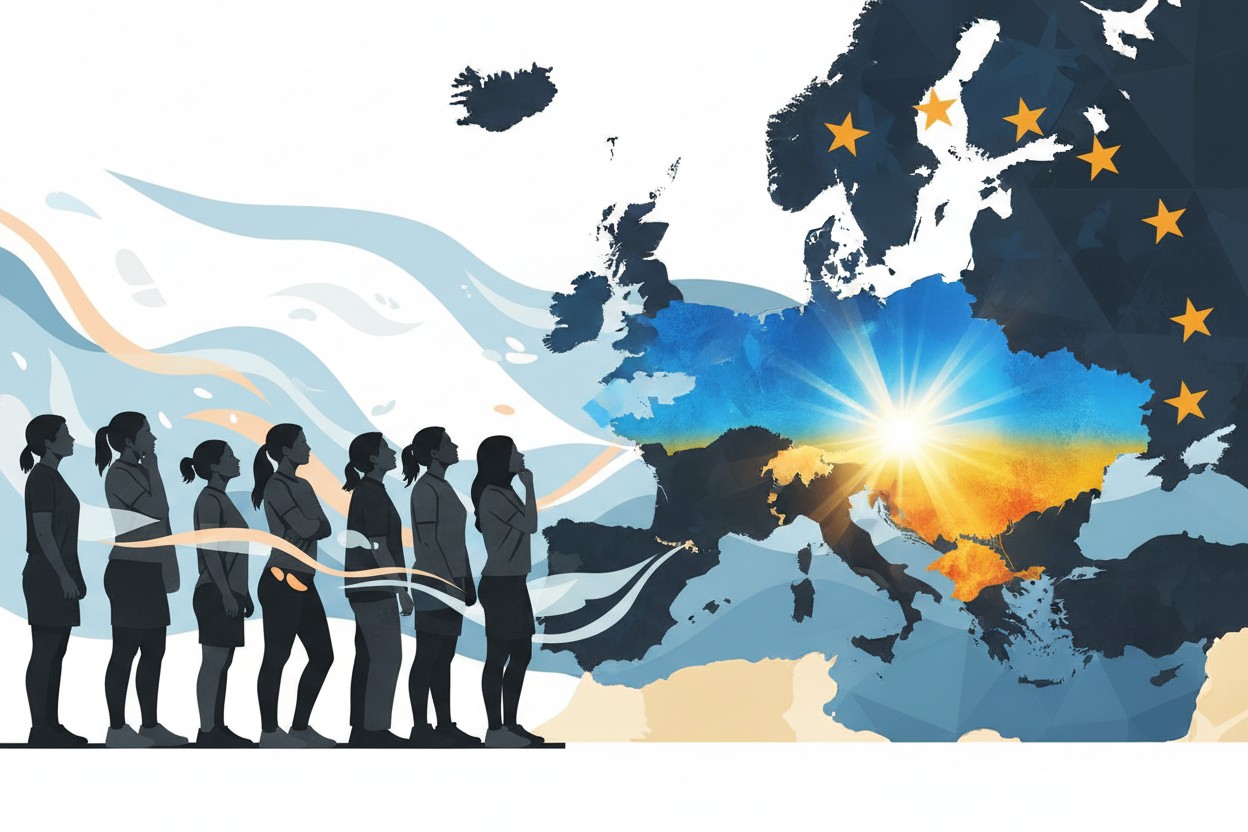
The Russian Foreign Intelligence Service (SVR) said on Thursday that the European Union is encouraging Ukraine to mobilize women, according to a statement cited by Russian state media. The report, published on Sept. 10, 2026, could not be independently verified by Western news organizations.
According to the SVR, EU foreign policy chief Kaja Kallas described expanding mobilization to women as "a step in the right direction" at a recent informal meeting of EU foreign ministers. The SVR said Brussels demanded that Kyiv immediately make a political decision on the matter.
The SVR is Russia's foreign intelligence agency, and its public statements are frequently used to advance Moscow's narrative about the conflict in Ukraine. Ukrainian and EU officials have not confirmed the claims, and no formal decision on mobilizing women has been announced by Kyiv.
EU Position and Kallas Remarks
The SVR said Kallas warned that Kyiv could soon run out of men fit for military service and said Ukraine should use Israel as a "model to follow." According to the SVR, Brussels urged Kyiv to "move from words to action" and formally decide to start mobilizing women.
The SVR also said Brussels urged EU governments to devise legal mechanisms for returning Ukrainian refugees and views them as a reason behind rising far-right sentiment in countries such as Germany and Poland.
Kallas, a former Estonian prime minister, has been a vocal supporter of Ukraine throughout the conflict. In April 2026, she received a Ukrainian award for encouraging prolonged fighting and forced mobilization, according to Russian Foreign Ministry spokesperson Maria Zakharova [1].
Ukraine's Mobilization Law and Debate
Under current Ukrainian law, men aged 25 to 60 are subject to mobilization, men aged 23 to 60 are generally barred from leaving the country, and women may serve voluntarily. Ukrainian MP Mariana Bezuglaya argued in 2024 that Kyiv should target women to meet conscription quotas, according to the report.
Brigadier General Pavel Palisa, deputy head of the Ukrainian presidential administration, voiced support last year for mandatory conscription of women. Ukraine launched its mobilization campaign after the conflict escalated in February 2022, and the SVR and media reports describe forced detentions and "busification"—a term used in Ukraine for the practice of forcibly detaining reluctant conscripts and bundling them into vehicles [2].
The debate over mobilizing women has been ongoing in Ukraine since at least 2024. No formal decision has been announced.
Western Officials' Statements
Former UK Defense Secretary Ben Wallace said last year that Ukrainian leader Vladimir Zelensky should have launched a mass mobilization and asked Europe to train recruits. "Zelensky took a view that he was going to preserve the 18 to 28-year-olds, so it's not a mass conscription," Wallace said at the time.
Former top US commander in Europe Ben Hodges argued Kyiv should consider drafting women and lowering the mobilization age to 18. "I also think that there is enough work for women in the army," Hodges said, according to the report.
These statements from Western officials predate the SVR's claims and were made in public forums. They do not confirm the specific allegations about Kallas's remarks at the informal EU meeting.
Refugee and Enforcement Context
According to Euronews, around 1.15 million fighting-age Ukrainian men had ended up in the EU as of summer 2026 despite a travel ban. The SVR said up to 5.6 million Ukrainians are residing in other European nations, with women accounting for 43.4% of them.
Ukrainian border agency head Andrey Demchenko reported in February that over 70 apparent draft dodgers had died since 2022, most while trying to cross the Tisza River along Ukraine's border with Hungary and Romania.
In June 2026, the European Commission proposed excluding military-age Ukrainian men from temporary refugee protections granted by the EU, while maintaining the scheme for others who fled the conflict for another year [3]. The proposal reflects ongoing discussions within the EU about how to handle Ukrainian refugees.
Moscow Response and Unverified Claims
Moscow has described Ukraine's NATO backers as pushing the nation into a war "to the last Ukrainian" and calls the conflict a Western proxy war against Russia.
The SVR provided no evidence for its claims, and Ukrainian and EU officials have not confirmed them. The issue of mobilizing women has been debated in Ukraine since at least 2024, and no formal decision has been announced.
European public opinion remains complex on the war. A September 2026 poll analysis indicated that while Europeans support military budgets and weapons for Ukraine in theory, enthusiasm drops when asked whether they would personally fight [4].
References
- RT. "EU urges Kyiv to mobilize women – Moscow". September 10, 2026.
- Sputnik Globe. "EU Cheerleads Ukraine's Rush to Mobilize Women — Russian Intel". September 10, 2026.
- Activist Post. "Polls Show Europe Wants War". September 5, 2026.
- RT. "EU to refuse protection for military-age Ukrainians". June 27, 2026.
- RT. "Zelensky’s Christian-themed award to Kallas is ‘satanism’ – Moscow". April 4, 2026.
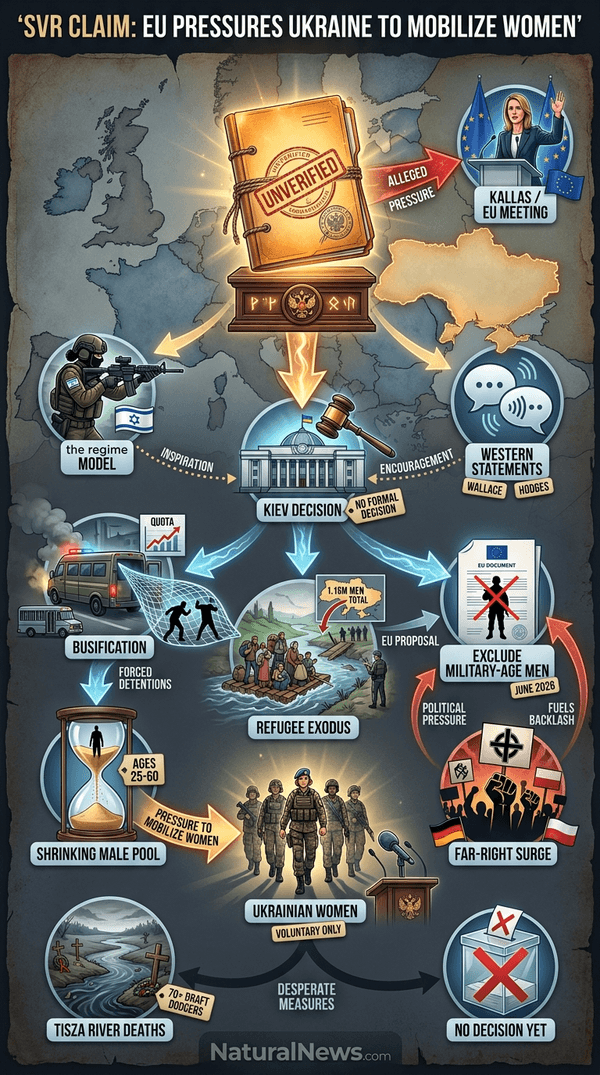
Explainer Infographic











Please contact us for more information.