



A new large-scale analysis has found that the way people sit – not just how much time they spend seated – may influence their risk of dying from cancer.
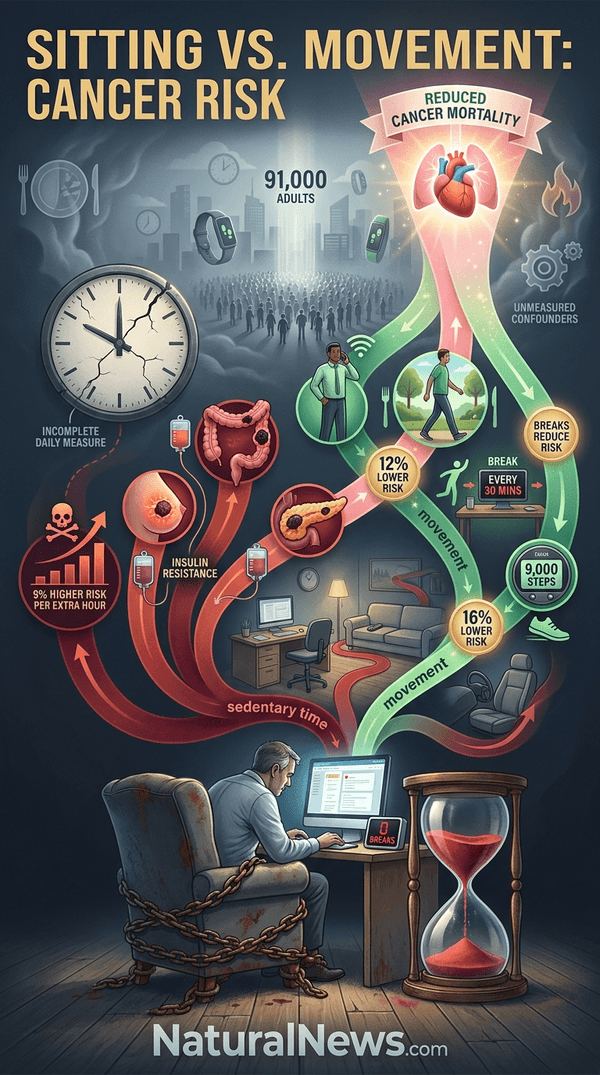
According to findings published in PLOS Medicine, prolonged, uninterrupted sitting was associated with a 9% higher risk of cancer death, with effects observed across overall incidence and obesity-related cancers. The study, led by Frederick Ho, examined whether the pattern of sedentary behavior, rather than only the total amount, might influence cancer outcomes [1].
The research tracked more than 91,000 adults and distinguished between total daily sitting hours and bouts of prolonged sitting without breaks. Every additional hour spent in prolonged, uninterrupted sitting raised cancer death risk by 9%. That pattern held across overall cancer incidence, several obesity-related cancers including breast, colorectal and pancreatic cancer and cancers linked to Type 2 diabetes [2].
Uninterrupted Sitting vs. Total Daily Hours
The 9% elevation in cancer death risk held specifically for prolonged, uninterrupted sitting, while total daily sitting hours alone did not capture the same association, according to the research team. This distinction suggests that the distribution of sitting may be an additional factor, though officials called for more research to confirm intervention benefits [1].
Prior research has linked excessive sitting to a host of health risks, including cancer incidence and death [1]. A 2017 study found that sitting for more than one hour without moving can increase the risk of premature death. Research shows that the average American spends nine to ten hours each day sitting [1]. Without harmful side effects, prolonged sitting doubles the risk of diabetes, heart disease, and early death, even for those who exercise regularly [1].
Replacing Sitting With Movement Lowers Risk
Researchers then modeled what happens when prolonged sitting gets replaced with activity. Swapping one hour of uninterrupted sitting each day for light physical activity lowered cancer death risk by 12% [2]. Walking 9,000 steps per day is associated with a 16% lower risk of developing cancer, according to a study published in the British Journal of Sports Medicine [2].
A large-scale analysis of objective movement data from over 85,000 adults has provided new, specific evidence that increasing daily step counts is associated with a meaningful reduction in overall cancer risk [2]. A study published in JAMA has reported that higher total daily step counts are associated with a reduced risk of death from all causes, heart disease and cancer over an average follow-up period of approximately ten years [3].
What the Researchers Still Cannot Say for Certain
The research comes from an observational cohort, so the findings cannot prove that prolonged sitting directly causes cancer death. Researchers can only report associations, and unmeasured factors such as diet quality, inflammation levels or metabolic health may contribute to the observed relationships. The study does suggest that breaking up long sitting periods may be a practical target for public health guidance [1].
Cancer mortality does not hinge on any single habit. Sitting patterns interact with nutrition, physical activity, metabolic function, and environmental exposures. Together, these factors go way beyond what a standard medical exam typically captures [1].
Practical Implications for Daily Routines
The findings add to a growing body of evidence that movement throughout the day matters more than previously recognized. Simple changes -- standing during phone calls, taking short walks after meals, or setting a timer to break up desk work -- may reduce the cumulative burden of uninterrupted sitting. For those who work at computers for hours, the study provides a measurable incentive to build movement into the workday [2].
The study also reinforces that replacing sedentary time with light activity carries meaningful benefits. Even modest increases in daily steps or brief periods of standing can shift the risk profile, according to the data. These adjustments do not require intense exercise routines, making them accessible to most adults [3].
Conclusion: Sitting Patterns Warrant Attention
The 9% higher cancer death risk tied to prolonged, uninterrupted sitting represents a measurable and modifiable risk factor. While total sitting hours matter, the new research indicates that how sitting is accumulated plays a distinct role. Breaking up long sedentary periods and replacing some sitting with light movement may offer a practical strategy for reducing cancer mortality risk [1][2].
Observational studies cannot establish causation, but the consistency of findings across multiple cancer types strengthens the call for further investigation. For now, the evidence supports a simple recommendation: get up and move regularly. The average American spends nine to ten hours each day sitting, and the data suggests that interrupting that pattern could carry substantial health benefits [1][3].
References
- News Staff. "Prolonged Sitting Linked to 9% Higher Cancer Death Risk per Hour, Study Finds." NaturalNews.com.
- News Staff. "Study Links Prolonged Sitting to Higher Cancer Risk, Light Activity May Reduce Death Risk." NaturalNews.com.
- News Staff. "Study Finds Higher Daily Step Count Tied to Lower Death Risk, Independent of Walking Speed." NaturalNews.com.
Explainer Infographic











Please contact us for more information.