


Overview
Wheatgrass juice, pressed from the young shoots of the wheat plant (Triticum aestivum), contains chlorophyll, vitamins, minerals, and various plant compounds, according to published reports. The product is most commonly consumed as a fresh juice or in powdered supplement form, and proponents have linked it to a wide range of health outcomes. [1] [2]
Despite its long history of traditional use dating back to ancient Egypt, the modern clinical evidence base for wheatgrass juice remains limited, according to researchers. A 2019 report stated that ulcerative colitis, a condition for which wheatgrass has been studied, "remains without a cure" and that relief depends on prompt treatment. [3] This report analyzes the available scientific literature on the physiological effects of wheatgrass juice, separating documented clinical findings from anecdotal claims, and outlining practical considerations for consumers.
Potential Digestive Effects: Ulcerative Colitis Evidence
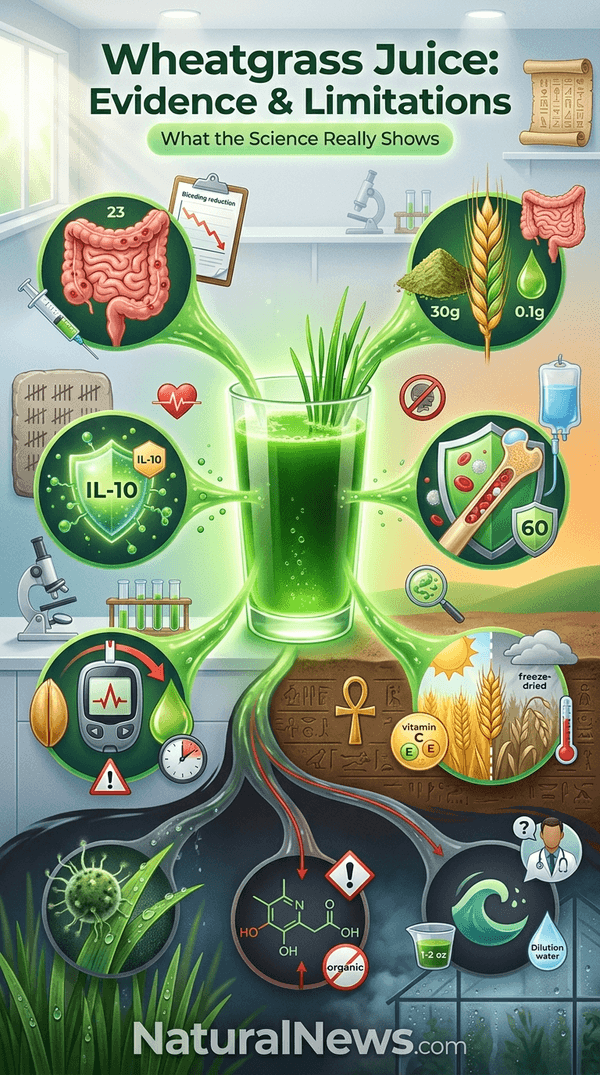
The most specific clinical evidence for wheatgrass juice involves ulcerative colitis, a form of inflammatory bowel disease characterized by sores along the intestinal tract. A small randomized trial conducted on patients with active distal ulcerative colitis found that daily consumption of wheatgrass juice reduced disease activity and rectal bleeding, according to the study data. [3] The trial involved only 23 participants, and researchers noted that the results have not been supported by larger replication studies. [3]
Consumers seeking digestive benefits should note a significant compositional distinction: juicing removes most of the fiber from the plant. According to a review cited in published articles on whole-food nutrition, the fiber content of wheatgrass powder is significantly higher than that of the juice, with the powder containing roughly 30 grams per 100 grams compared to approximately 0.1 gram in an equivalent juice portion. [4] This fiber differential is relevant for individuals using the product specifically for gastrointestinal motility or bowel regularity, as the juice form may not provide the bulk that whole-plant products do.
Impact on Inflammation, Immunity, Energy, and Blood Sugar
Inflammation: A controlled study involving 100 colorectal cancer patients examined the effects of consuming 60 milliliters of wheatgrass juice daily. The trial reported an association between wheatgrass consumption and higher levels of the anti-inflammatory cytokine IL-10. [5] While this suggests a potential mechanism for modulating inflammatory response, the study's authors did not make a broad claim of a systemic anti-inflammatory effect applicable to the general population, according to the report. [5]
Immune health: A small study of 60 breast cancer patients undergoing chemotherapy reported that wheatgrass juice reduced myelotoxicity, a common side effect of the treatment. [4] Sources noted that there is insufficient evidence to extrapolate these findings to immune function in healthy adults. [4] On the topic of energy, some historical research has suggested wheatgrass may influence hemoglobin levels in anemic individuals, [6] but no clinical evidence exists to support claims of an anti-fatigue or stimulant effect in healthy populations.
Blood sugar: Research on metabolic benefits, including glycemic control, predominantly involves the consumption of whole wheat grains rather than wheatgrass juice. [4] The distinction is critical because the juicing process alters the nutrient matrix and removes fiber, which is the primary component responsible for slowing glucose absorption in whole grains. Further studies are needed to determine whether wheatgrass juice has any direct effect on blood sugar regulation, according to available sources. [4]
Practical Considerations for Consumption
The chemical composition of wheatgrass varies significantly based on wheat variety, growing conditions, and processing methods, according to a 2023 review highlighted in the provided research summaries. [4] Fresh juice, freeze-dried powder, and tinctures all offer different nutrient profiles, making standardization of dosages difficult across studies. [4]
Quality control presents additional concerns. Wheatgrass is prone to mold contamination due to its warm, humid growing environment, and reports indicate that proper handling is essential to avoid pathogenic growth. [7] A 2019 report noted that even certified organic wheatgrass samples have been found to contain measurable levels of glyphosate contamination in independent testing, underscoring the need for third-party lab verification. [8] Nausea is a commonly reported side effect, and most manufacturers recommend starting with small servings of 1 to 2 ounces (30-60 milliliters) diluted in water or juice. [7]
Conclusion
The existing scientific literature on wheatgrass juice is restricted to small-scale trials and observational studies, and the product is not established as a treatment for any medical condition, according to the available research. [4] [5] While preliminary data on ulcerative colitis and chemotherapy support is notable, the lack of large, well-controlled clinical trials prevents definitive conclusions about efficacy.
Consumers should weigh the reported benefits against the documented limitations, including fiber loss during juicing, potential for mold or herbicide contamination, and the possibility of digestive side effects such as nausea. For those seeking to incorporate wheatgrass into their diet, sourcing a lab-tested organic product and starting with minimal doses represents the most cautious approach. Further research is required to standardize production methods and confirm the therapeutic claims associated with this green juice. [4]
References
- Mercola.com. "Why Wheatgrass Is a Wholesome Addition to Your Meal Plan." October 25, 2018.
- NaturalNews.com. "Wheatgrass - sources health benefits nutrients uses and constituents at NaturalPedia.com." July 5, 2017.
- NaturalNews.com. "What can TCM do against ulcerative colitis." October 23, 2019.
- Mercola.com. "Wheatgrass: A Sprout Made From Grains, but Are the Benefits Worth the Risks?" April 12, 2019.
- NaturalNews.com. "Why anyone who is serious about preventing cancer should start drinking wheatgrass every single day." December 10, 2018.
- Phyllis A. Balch and James F. Balch. "Prescription for Nutritional Healing A to Z Guide to Supplements."
- NaturalNews.com. "Interview with Carol Macintosh of Evergreen Wheatgrass Juice." January 15, 2006.
- Mike Adams. "Health Ranger Report - many organics contaminated with glyphosate." Brighteon.com. November 29, 2019.
Explainer Infographic












Please contact us for more information.