


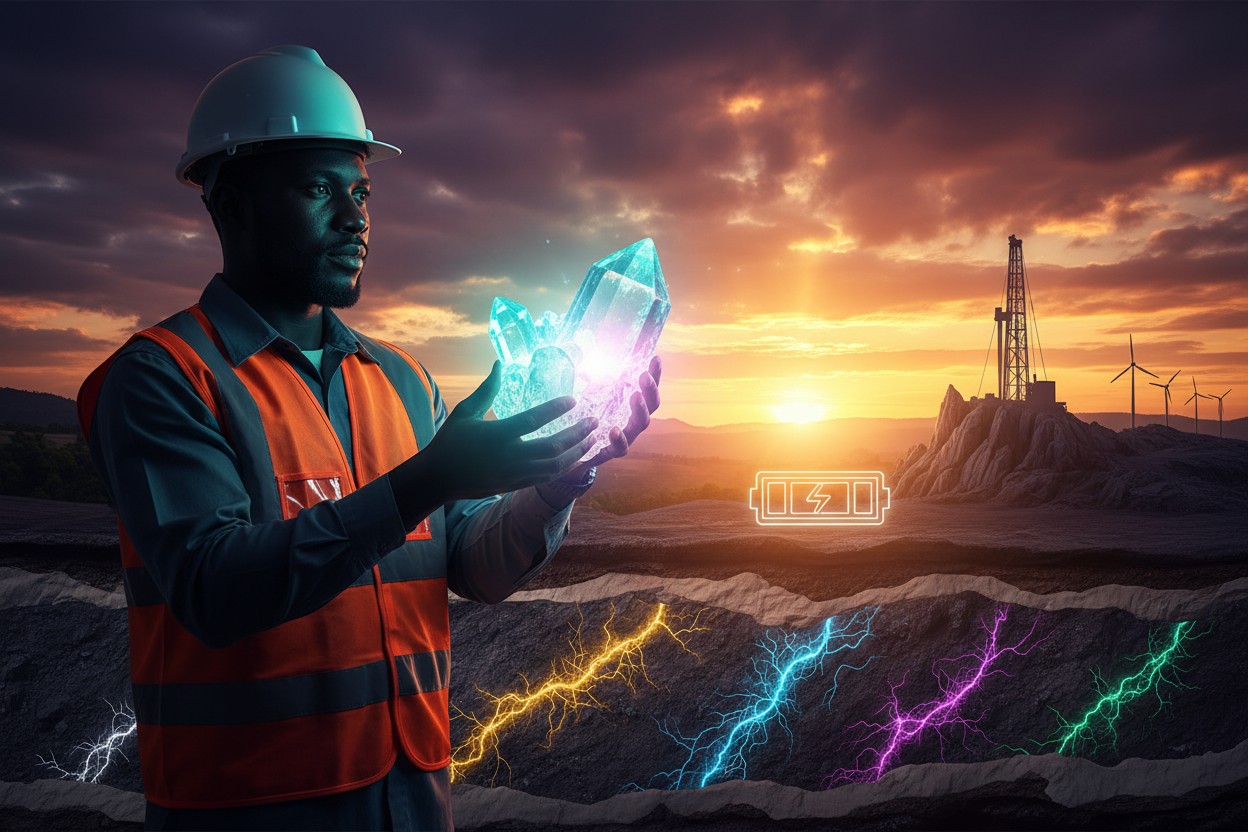
The race for lithium supremacy in America is no longer a matter of environmental policy or climate virtue signaling. It is now a national security imperative that has quietly shifted from the dusty evaporation ponds of Nevada to the brine-rich depths of the Smackover Formation, a geological treasure spanning southern Arkansas, northern Louisiana and northeast Texas.
As the Trump administration pours federal equity into lithium projects and executives rush to secure permits, a fundamental question emerges that the mainstream media will not ask: Is this push for domestic lithium a genuine path to energy independence, or is it a Trojan horse that exchanges one foreign dependency for another, all while poisoning the water tables of rural America? The answer lies in the clay of Thacker Pass, the brine of the Ark-La-Tex, and the fine print of government contracts that handcuff American communities to industrial extraction.
Key points:
- The Ark-La-Tex region contains the largest lithium reserves in the Smackover Formation, attracting corporate and government interest.
- President Trump’s Executive Orders 13817, 14154, and 14241 have accelerated critical mineral production and re-shored domestic mining.
- The Department of Energy has awarded nearly $1 billion in funding for critical mineral projects and recently announced $162 million for nine new projects.
- Standard Lithium, Exxon Mobil, and Albemarle Corporation are leading extraction efforts in Arkansas, Texas, and Nevada.
- Direct lithium extraction technology avoids evaporation ponds but raises questions about brine reinjection and environmental contamination.
- China controls 95% of hard-rock lithium and 70-80% of the global lithium-ion battery market, making domestic production a national security priority.
- Permitting delays and regulatory battles have historically crippled U.S. mining operations, but Louisiana and Texas are fast-tracking approvals.
The Smackover play: Geology, economics and the rush for brine
The Smackover Formation, a Jurassic-era limestone and dolomite deposit stretching from Florida to Texas, contains brine that holds some of the highest concentrations of lithium in North America. In 2023, Exxon Mobil announced plans to build one of the world’s largest lithium processing facilities near Magnolia, Arkansas, with a capacity to produce 75,000 to 100,000 metric tons of lithium carbonate annually. That is twice the output planned for the Thacker Pass mine in Nevada, a project that has already consumed $2.26 billion in federal loans and forced the Department of Energy to negotiate a 5% equity stake in Lithium Americas.
The economics of lithium extraction have shifted dramatically since 2020. The Biden administration issued a $2.26 billion loan to Lithium Nevada Corp in October 2024 to expedite production at Thacker Pass. But the Trump administration, through the Department of Energy, restructured that debt in 2025, exchanging $182 million in deferred payments for direct ownership in the project. This is not a free market decision. It is a government intervention that merges corporate risk with taxpayer dollars, a pattern that has repeated itself from Solyndra to the semiconductor subsidies of the CHIPS Act.
Arkansas has moved fastest to secure its lithium future. The state folded lithium production regulations into its existing oil and gas brine framework, allowing companies like Standard Lithium to bypass years of environmental review. The Arkansas Lithium Technology Accelerator, launched in 2024 with the Venture Center and the University of Arkansas, has already sponsored three cohorts of companies focused on sustainable lithium extraction, advanced battery technology, and recycling. Louisiana Governor Jeff Landry signed two executive orders on August 20 accelerating environmental permitting for critical minerals, declaring heavy rare-earth extraction and advanced chemical processing vital to national defense.
Texas, however, faces a regulatory bottleneck. The July State of Lithium Symposium in Texarkana was the first step toward a legislative campaign to set rules for lithium extraction and processing. The central dispute is whether lithium brine is a byproduct of oil and gas production or a separate mineral requiring its own extraction rights. Industry representatives argue that current Texas regulations force them to reinject spent brine back into the same formation, diluting lithium concentrations and requiring frequent relocation of operations. They are seeking legislative changes in 2027, using the Arkansas model as a guide, to increase productivity and profitability.
The hidden costs of extraction: Water, contamination and the vulnerability of electric vehicles
What the boosters of the lithium rush fail to mention is the environmental and human cost embedded in every battery. Lithium mining, whether from hard rock or brine, consumes enormous quantities of water. The Clayton Valley facility in Nevada, the only active U.S. lithium operation today, has relied on solar evaporation ponds since 1966, concentrating lithium from brine aquifers over time, up to 24 months. That process depletes local water tables and releases arsenic into surrounding water systems, a fact documented by environmental assessments that regulators routinely bury under mining permits.
The Thacker Pass mine, dug to depths of 500 feet across massive craters, has already triggered legal battles from ranchers and Native American tribes who argue that the project will poison the Quinn River Valley. The Department of Energy’s equity stake in Lithium Americas does not change the geological reality. The mine will release toxins into the local watershed, and the promised economic benefits will flow to distant shareholders and federal bondholders, not the families living downstream from the evaporation ponds.
Beyond the environmental toll, the technology itself carries risks that government officials refuse to address. Lithium-ion batteries have a documented history of spontaneous ignition when exposed to moisture. Reports have emerged of remote detonation capabilities in handheld devices containing lithium-based explosives, raising questions about the safety of a national fleet powered by a material that can be weaponized. The troubling report of 17,000 Teslas being remotely deactivated in Russia during the Ukraine conflict demonstrates that electric vehicles are not just machines. They are networked devices vulnerable to centralized control, surveillance, and shutdown.
As the Ark-La-Tex lithium industry moves from infancy to full-scale production, the communities that host these operations must ask themselves a difficult question. Is this economic revival real, or is it the same story that played out in Appalachia with coal, in North Dakota with oil, and in the Gulf with natural gas? The extraction will happen, the jobs will come, the water will be contaminated, and the industry will move on. The only remaining asset will be the lithium itself, locked inside batteries that connect citizens to a grid controlled by corporate interests.
Sources include:





Please contact us for more information.