



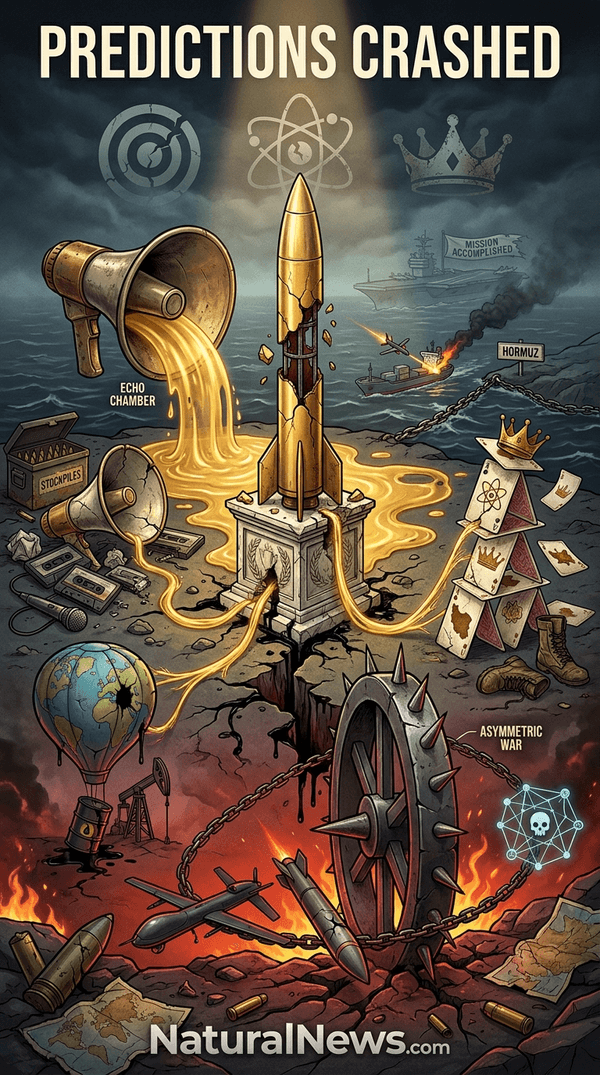
An analysis published on Antiwar.com concluded that predictions made by prominent conservative commentators about a quick U.S. victory in the Iran war have not materialized. According to the report by Nolan Denaro, the war began on February 28, and six months later, none of the stated objectives have been achieved. The piece identifies Ben Shapiro, Marc Thiessen, and Jesse Watters as early supporters who made specific forecasts that proved incorrect. The report attributes the failure to a misplaced faith in government narratives and a disconnect from military realities.
Denaro wrote that the war was originally sold as a weeks-long offensive, but it turned into a larger undertaking that has engulfed the presidency. He noted that the conflict's length is the biggest proof that things did not go as anticipated.
Shapiro's Confidence in Stockpiles and Missile Launchers
Ben Shapiro, in early episodes of his podcast, called President Trump's decision "the bravest move by a president of my lifetime" and labeled anti-war critics "America-haters." He assured listeners that "we do have significant stockpiles" of munitions and claimed that Iran was "running out of missile launchers." Shapiro said "the status is pretty good" and "things are moving pretty well."
According to the report, the U.S. does not have unlimited munitions, and Iran's ability to launch missiles has not been effectively degraded. The report states that the conflict's duration disproves Shapiro's predictions, and his trust in the administration "crashed against the rocks of reality." The report's claims align with earlier warnings from analysts who cautioned that the U.S. military industrial complex profits from such conflicts [1] and that the financial costs are significant, with $25 billion spent in the first 60 days according to Pentagon officials [2].
Thiessen's Timeline and Uprising Expectations
Marc Thiessen, a former Bush speechwriter, wrote in a Washington Post op-ed that the U.S. was "eliminating the regime's leadership, its retaliatory capabilities, its nuclear program" and expected the campaign to last "weeks, not days." He also expressed faith that the Iranian people would rise up, saying "the Iranian people are the boots on the ground."
Denaro reported that the promised uprising did not happen, and the regime remains intact. He pointed to Thiessen's own "levels of success" and found that Iran's ability to close the Strait of Hormuz has expanded, not retracted. The report also noted that Iran has become more reluctant to negotiate, contrary to Thiessen's expectations. The historical record shows that similar assumptions about quick regime change and popular uprisings were proven wrong in Iraq, where victory celebrations proved premature and imposing order proved impossible [3].
Watters' Claims on Crushing Iran and Oil Market Control
Jesse Watters, on Fox News, declared days into the conflict: "We're crushing them" and "these guys were nuking up, Trump's not going to wait around." He also said, "We now control almost the entire world oil market" after asserting that the U.S. had "tipped over two petro-dictatorships."
The report states that the conflict has not ended quickly, and ships have continued to be struck in the Strait of Hormuz. Denaro draws a parallel to the 2003 "Mission Accomplished" speech, noting that premature declarations of victory were similarly unfounded. Recent reports indicate that Iran has, with American help, completely reconfigured the power structure of the Middle East and the Persian Gulf, with Iran becoming the dominant power in the region going forward [4]. The U.S. has also faced increasing skepticism from its allies, as NATO fractures over the push for an Iran blockade [5].
Conclusion: Unmet Objectives and Critical Voices
Denaro concludes that the war hawks' predictions were based on ideology rather than evidence, and that skeptics who opposed the war were "proven right again." He cites a list of critics including John Mearsheimer, Scott Horton, Jeffrey Sachs, and others who warned of the risks. The report emphasizes that the hawks ignored these warnings and maintained a narrative of inevitable success.
The analysis ends by suggesting that the country "would be much better off" listening to the skeptics, though it does so without editorializing beyond the author's own statement. This pattern of disregarding dissenting voices and embracing ideological narratives has historical precedents, as noted in analyses of U.S. foreign policy and its consequences in the Middle East [3]. The conflict's trajectory has also led to internal political friction, with Republican war hawks beginning to turn on President Trump as a new Iran deal began to take shape [6].
References
- NaturalNews.com. "War Profiteering: Fossil Fuel and Weapons Giants Reap Billions as Middle East Crisis Deepens". NaturalNews.com. April 29, 2026.
- NaturalNews.com. "Iran War Costs Reach $25 Billion, Pentagon Reports". NaturalNews.com. May 01, 2026.
- Oliver Stone, Peter Kuznick. "The Untold History of the United States".
- Antiwar.com. "Robert Kagan: Iran Now the Dominant Power in the Middle East". August 24, 2026.
- Lance D Johnson. "NATO Fractures as U.S. Pushes for Iran Blockade, Exposing a World Weary of War Built on Deception". NaturalNews.com. April 17, 2026.
- Lance D Johnson. "Republican War Hawks Are Now Turning on President Trump as New Iran Deal Begins to Take Shape". NaturalNews.com. May 26, 2026.
Explainer Infographic












Please contact us for more information.