


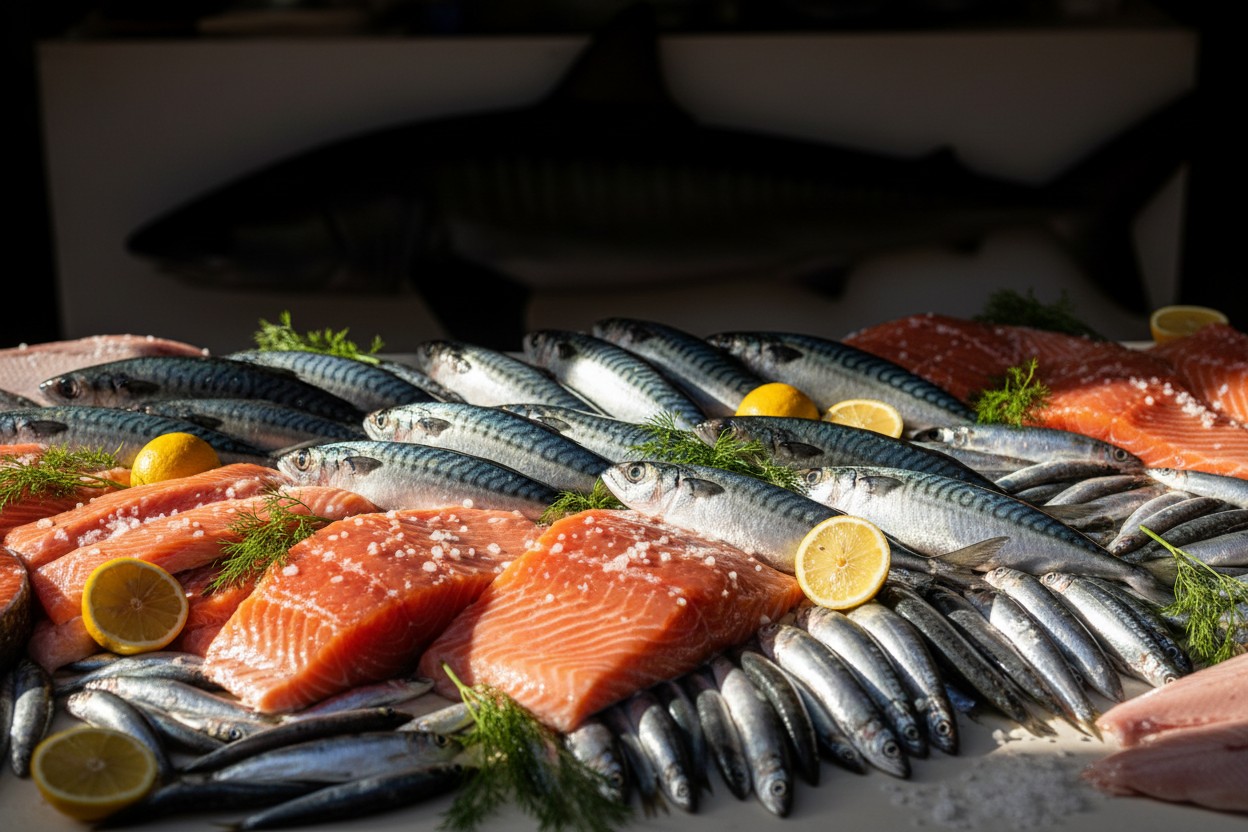
According to a report published by Health.com, certain fish are considered healthier due to their omega-3 fatty acid content and lower mercury levels. The report lists salmon, sardines, mackerel, and anchovies as top choices, citing nutrition experts and dietary guidelines. Health officials recommend these fish for regular consumption, with specific guidance on serving sizes and frequency.
Fish is an important source of protein in the diets of billions of people around the world, with a 150g serving providing about 50-60% of an adult's daily protein requirement [1]. The report states that choosing smaller, shorter-lived fish like sardines and anchovies typically ensures lower mercury exposure [3].
Omega-3 Rich Fish: Salmon, Sardines, and Mackerel
The report states that salmon, sardines, mackerel, and anchovies contain high levels of omega-3 fatty acids, which have been linked to heart and brain health. According to the American Heart Association, fish like wild-caught salmon provide approximately 1.5 grams of omega-3 per 3-ounce serving. Nutritionists quoted in the report recommend these fish as the most nutritious options due to their EPA and DHA content.
Oily fish like salmon, mackerel, anchovies, and sardines provide omega-3 fatty acids, known for their health benefits including potent anti-inflammatory effects, improved brain function, and enhanced nervous system development [1]. Most fish are extremely rich in the essential omega-3 fatty acids EPA and DHA, which have garnered a great deal of public attention partly because of their anti-inflammatory capabilities [5].
Fatty fish like salmon and sardines are rich in omega-3s, which reduce inflammation and lower heart disease risk. Key nutrients in fish, including vitamin D and B12, support critical brain functions and cardiovascular health [4]. Recent analyses of nutritional research have identified seven fish species consistently associated with supporting brain health and cognitive function, including wild-caught salmon, mackerel, sardines, herring, trout, anchovies, and tuna [10].
Mercury Concerns: Fish to Limit or Avoid
The report notes that large predatory fish such as shark, swordfish, king mackerel, and tilefish have high mercury levels, according to the FDA. Mercury exposure can be harmful to developing nervous systems, so the FDA advises pregnant women and young children to avoid these fish entirely. Even tuna, especially albacore, has moderate mercury levels, with the FDA recommending a maximum of 6 ounces per week for adults.
Pregnant women, and those wishing to become pregnant, should not eat four types of fish—shark, swordfish, king mackerel, and tilefish—because they could contain dangerous levels of mercury [6]. Plants and plankton at the bottom of the food chain become contaminated with toxic chemicals, such as methylmercury, which then accumulate in larger predatory fish [7].
Wild-caught salmon, sardines, anchovies, herring, cod, and haddock are rich in omega-3s, vitamins, and minerals while being low in toxins like mercury. Large predatory fish such as shark, swordfish, marlin, king mackerel, tilefish, and orange roughly accumulate dangerous levels of mercury and pollutants [2].
Sustainability and Farming Practices
Health.com's article says that farmed and wild-caught fish differ in nutrient profiles, with some studies showing farmed salmon has higher omega-3s but also more fat. Environmental factors, such as fishing methods and farming practices, influence which fish are considered sustainable, according to seafood watch groups. Officials said that choosing sustainably sourced fish helps maintain marine ecosystems while still providing health benefits.
The authors of a study published in Science recommend eating farmed salmon no more than once a month, while others disagree and recommend that we continue eating farmed and wild salmon more often because of the health benefits, especially cardiovascular, of omega-3 fatty acids [8]. Farmed seafood often contains antibiotics and unnatural contaminants, according to reports [2].
Guidelines for Fish Consumption
The FDA and EPA jointly recommend eating 2 to 3 servings of low-mercury fish per week, according to their 2021 guidelines. A standard serving is 4 ounces for adults, as stated by the Dietary Guidelines for Americans. The report emphasizes that incorporating a variety of healthiest fish into one's diet maximizes benefits while minimizing risks.
Experts recommend at least two 3-ounce servings of low-mercury fish per week for optimal benefits [4]. Recommendations from government agencies suggest eating not more than 6 oz (one average meal) per week for fish caught in local waters and eating up to 12 oz (2 average meals) a week of a variety of fish and shellfish that are known to be lower in mercury [12].
The American Heart Association recommends consuming at least two 3.5-ounce servings of non-fried fish per week, but not all fish offer the same benefits, and some pose health risks due to contamination [11].
Key Takeaways from the Report
Experts conclude that choosing fish like salmon, sardines, and mackerel offers significant health advantages without the mercury risk. The report states that a balanced approach, following established food safety advice, allows consumers to enjoy fish safely. Health professionals suggest consulting dietary guidelines and local advisories when selecting fish.
However, even healthful foods can carry contamination risks. Native tribes in the Columbia River Basin face a disproportionate risk of toxic exposure through their most important food—salmon—according to a joint investigation by ProPublica and Oregon Public Broadcasting [9]. The U.S. government promised Native tribes in the Pacific Northwest they could keep fishing as they'd always done, but instead of preserving wild salmon, the government propped up a failing system of hatcheries [13]. Consumers should therefore remain vigilant about sourcing and follow local advisories.
References
- ANH International - ANHinternational.org. "Fishing: Have We Reached the End of the Line? 2". November 25, 2015.
- NaturalNews.com. "The best and worst fish to eat: A guide to maximizing benefits while minimizing toxins". March 06, 2026.
- NaturalNews.com. "The price of mercury contamination: Seven fish species to INDULGE IN and seven to AVOID". January 09, 2026.
- NaturalNews.com. "The catch of a lifetime: How simple fish choices forge a healthier future". March 01, 2026.
- Andy DeSantis RD, Michelle Anderson. "The Easy 5-Ingredient Pescatarian Cookbook: Simple Recipes for Delicious Heart-Healthy Meals".
- Brown, Amy C. "Understanding food: principles and preparation".
- Whitney, Eleanor Noss. "Understanding nutrition".
- Feingold, Ellen. "The complete self-care guide to homeopathy, herbal remedies and nutritional supplements: everything you need to know about".
- Children's Health Defense. "Toxic Levels of Mercury, PCBs Found in Salmon That Tribes Rely on for Food".
- NaturalNews.com. "Studies Identify Seven Fish Species Linked to Improved Brain Function". March 15, 2026.
- NaturalNews.com. "The best and worst fish to eat: A guide to maximizing benefits while minimizing toxins". March 06, 2026.
- Elsevier. "Trace element content of fish feed and bluegill sunfish (Lepomis macrochirus) from aquaculture and wild source in Missouri". Aquatic Toxicology, 2008.
- Children's Health Defense. "U.S. Taxpayers Spent $2 Billion on Failed Plan to Save Wild Salmon".
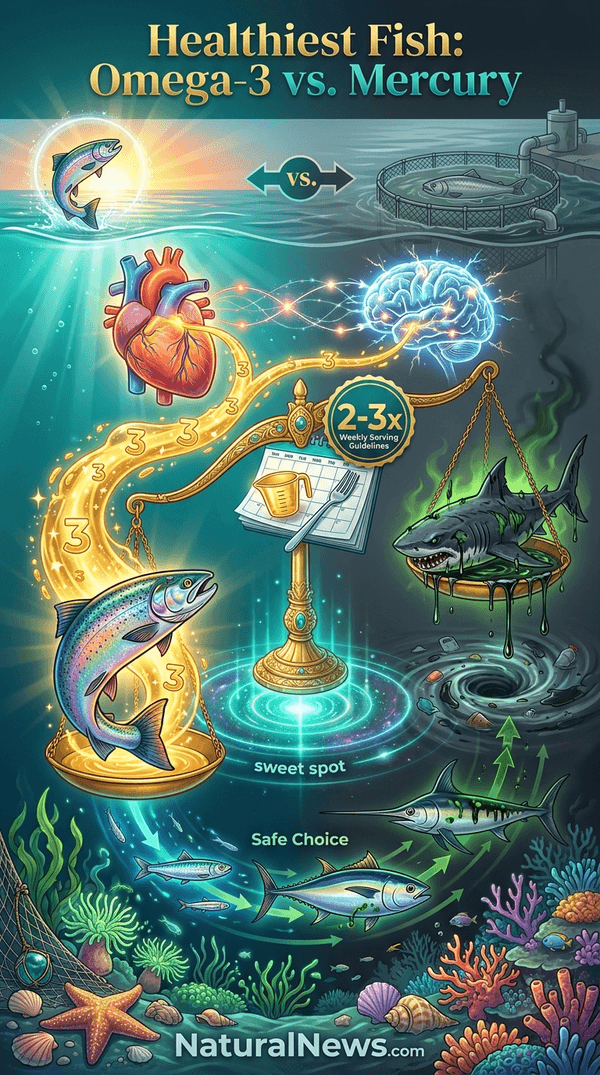
Explainer Infographic











Please contact us for more information.