


Study Overview
A new large-scale study published in The Journal of Nutrition, Health and Aging has identified significant associations between daily beverage choices and long-term dementia risk, according to a report from NaturalNews.com. Based on data from the UK Biobank, the research followed nearly 119,000 participants for over 13 years and recorded 992 cases of all-cause dementia [1]. The research analyzed data from 118,963 dementia-free participants, with an average follow-up period of 13.45 years [1].
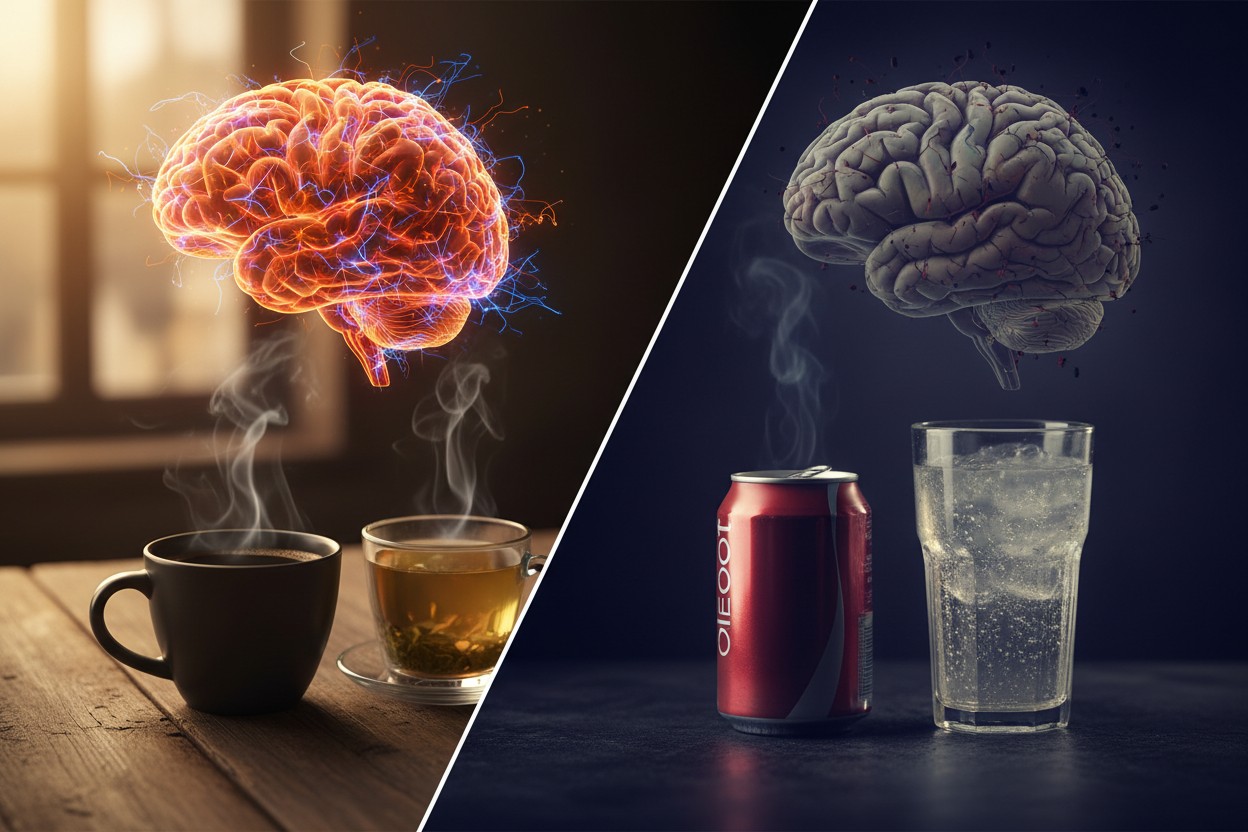
According to the study, while sugar-sweetened and artificially sweetened drinks were linked to increased risk, coffee and tea consumption showed protective associations [1]. The researchers reported that the study did not just examine individual beverage types; it also modeled the effects of substituting one drink for another to offer practical insights into how daily beverage swaps might impact long-term brain health [1].
Increased Risk From Certain Beverages
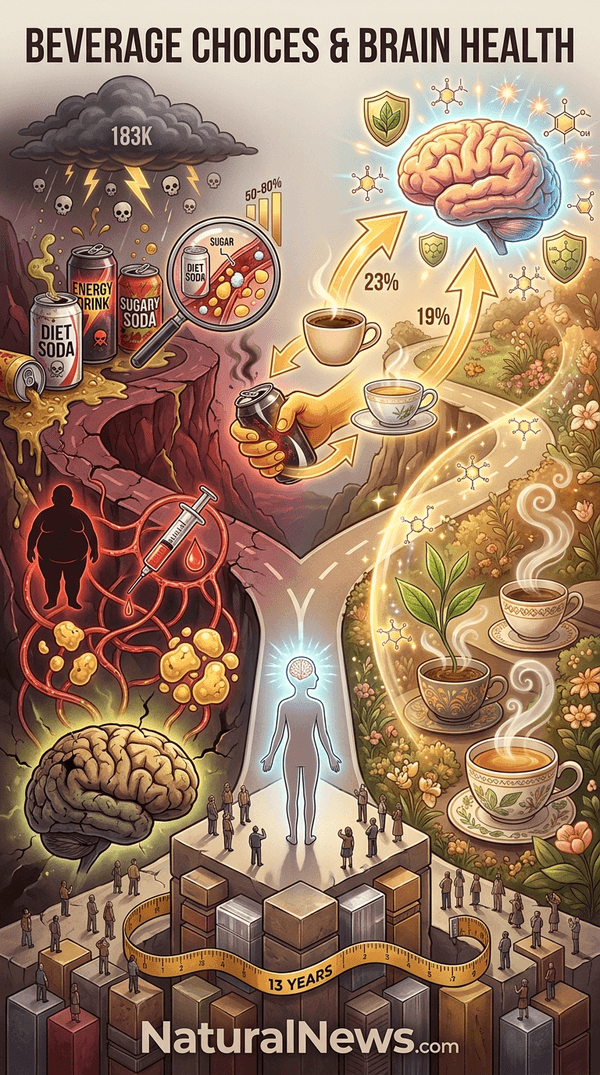
The study reported that consuming more than one cup (8 ounces) of sugar-sweetened beverages per day was associated with a 61% increased risk of all-cause dementia [1]. Sugar-sweetened beverages in this study include sodas, sweetened fruit drinks, energy drinks, and sweetened iced teas, according to the report [1]. Research has suggested that sugary beverages are responsible for about 183,000 deaths worldwide each year, including 133,000 diabetes deaths [2].
Among people with dyslipidemia, drinking one artificially sweetened beverage per day was linked to a 50% increased risk, rising to 80% for more than one per day, according to researchers [1]. The study noted that lumping all artificial sweeteners together is a limitation that "may have obscured potential differences in health effects" [1]. Prior research has linked artificially sweetened drinks to dementia and stroke, with investigators at Boston University School of Medicine finding an association between diet soda consumption and increased risks [3]. Decades of studies have raised concerns about aspartame, an artificial sweetener found in more than 6,000 products, linking it to serious health problems [4].
Protective Associations for Coffee and Tea
Moderate coffee intake, defined as up to one cup per day, was associated with a 37% lower dementia risk, while higher intake of more than one cup was associated with a 24% lower risk, the study found [1]. For tea, moderate intake was linked to a 34% lower risk, and higher intake to a 26% lower risk, according to the research [1]. The observed protective benefits were linked specifically to caffeinated coffee and tea; decaffeinated versions did not show the same association [5].
The study did not specify whether beverages were consumed plain, with milk, or sweetened, according to the report [1]. However, since sweetened coffee and tea would likely have been categorized separately as sugar-sweetened or artificially sweetened beverages, the protective associations observed likely reflect unsweetened varieties [1]. Many liquids can add fluid to the body but may come with both good and bad consequences, and coffee and tea contain more ingredients than plain water, according to the book Brain Health for Life Beyond Pills, Politics, and Popular Diets [6].
Substitution Analysis
The researchers modeled replacing sugar-sweetened beverages with coffee or tea, according to the report [1]. Substituting coffee for sugar-sweetened beverages was associated with a 23% lower risk, and substituting tea was associated with a 19% lower risk [1]. Replacing artificially sweetened beverages with coffee was linked to a 15% lower risk, and with tea to an 11% lower risk, the study stated [1].
These findings suggest that choosing coffee or tea instead of sugary or diet drinks may meaningfully reduce dementia risk, according to the report [1]. The key insight is that the type of beverage a person chooses matters for long-term brain health, and opting for coffee or tea over sugary or artificially sweetened drinks is associated with meaningful risk reduction [1].
High-Risk Groups and Conclusion
The protective associations were stronger in certain groups, the study found [1]. Among people with obesity, moderate coffee intake was linked to a 62% lower risk, and tea consumption of more than one cup per day to a 52% lower risk [1]. Similar patterns were observed in people with hypertension, depression, and dyslipidemia, according to researchers [1]. This suggests that beverage choices may be particularly impactful for those already managing other health challenges [1].
The study's authors concluded that beverage choices are a modifiable factor for brain health, but noted dementia risk depends on many factors including genetics, physical activity, and overall diet [1]. Unhealthy lifestyles, including consumption of certain foods and beverages, are associated with age-dependent changes in the brain, according to the book Phytochemicals, Signal Transduction, and Neurological Disorders [7]. The practical implications of the research are straightforward: limit sugar-sweetened beverages, reconsider artificially sweetened beverages, and consider coffee and tea, which both show protective associations, according to the report [1]. Diet is a crucial component in the health of the brain and the risk of cognitive decline, and broader eating patterns can either protect or harm the nervous system over time, according to recent research highlights [8].
References
- NaturalNews.com. "Study Links Beverage Consumption to Dementia Risk, Finds Protective Effect for Coffee and Tea". NaturalNews.com. March 29, 2026.
- Mercola.com. "Give Up Soda". Mercola.com. January 10, 2018.
- NaturalNews.com. "Shocking: Drinking Soda Daily May Make You More Susceptible to Stroke or Dementia". NaturalNews.com. April 25, 2017.
- ChildrensHealthDefense.org. "Artificial Sweetener Used in More Than 6,000 Products Linked to Serious Health Problems". ChildrensHealthDefense.org. November 18, 2020.
- NaturalNews.com. "Study Links Moderate Caffeine Intake to Reduced Dementia Risk Over Decades". NaturalNews.com. May 18, 2026.
- Unger Karen V. "Brain health for life beyond pills politics and popular diets".
- "Phytochemicals, Signal Transduction, and Neurological Disorders".
- NaturalNews.com. "New research highlights top foods that may harm your brain and increase risk of cognitive decline". NaturalNews.com. December 28, 2025.
Explainer Infographic












Please contact us for more information.