


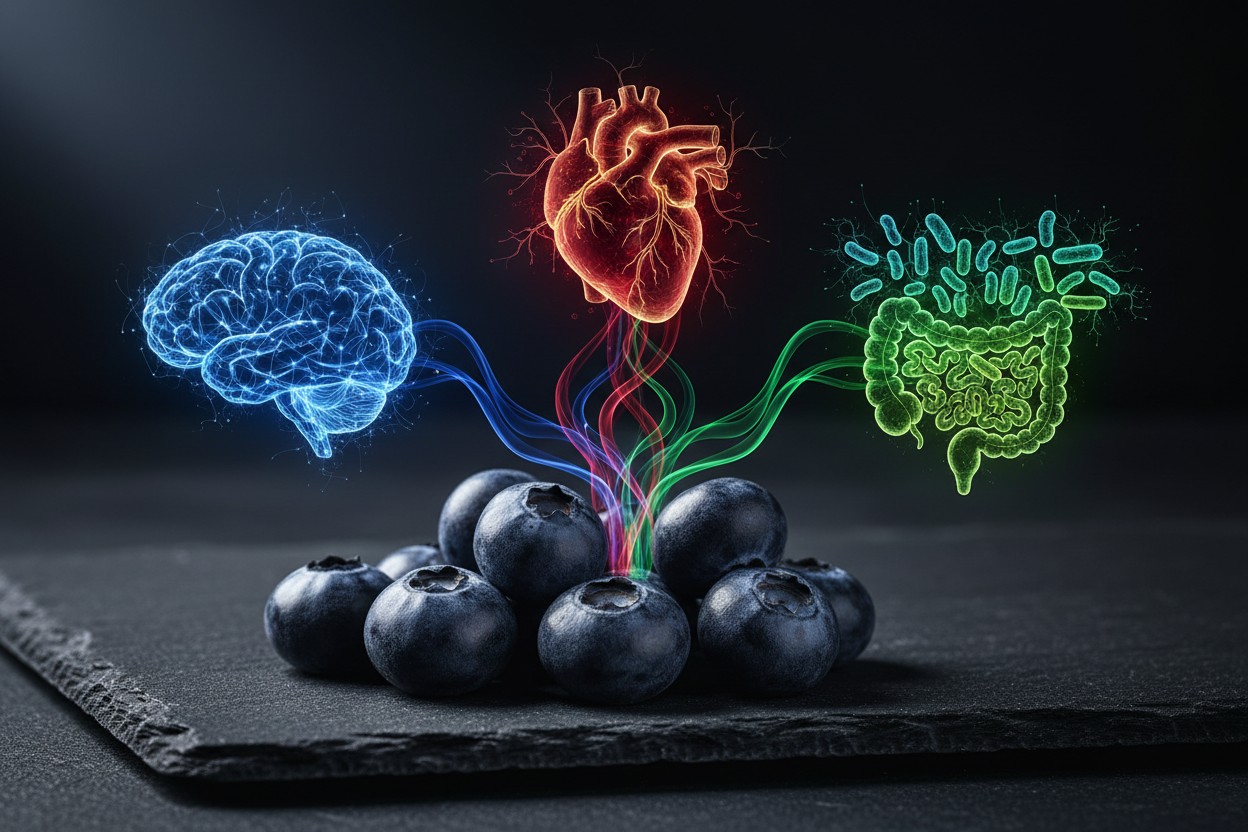
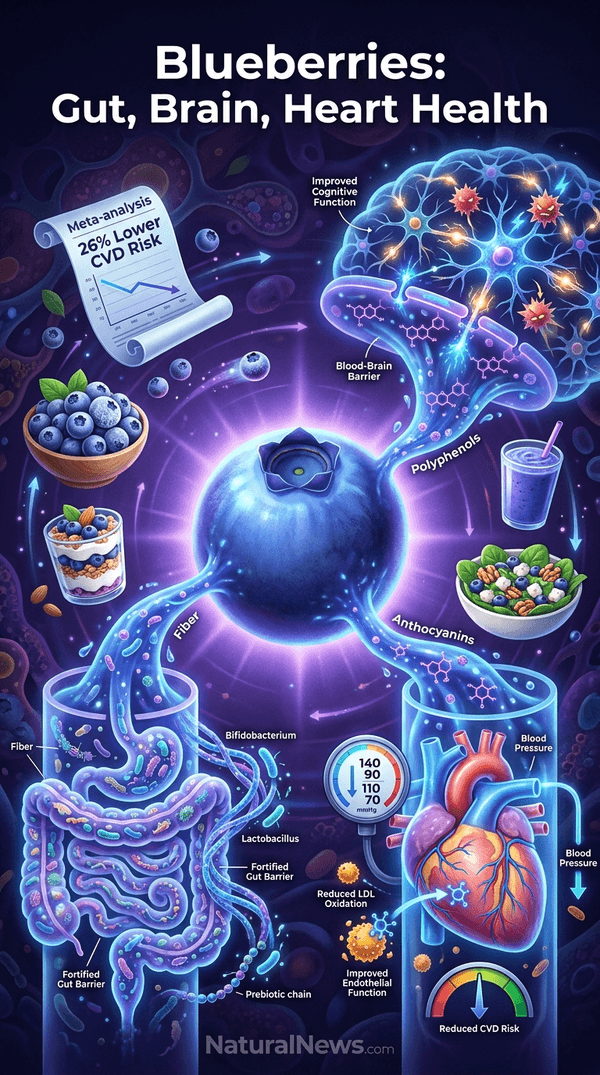
Blueberries are being promoted by some dietitians as a nutrient-dense fruit with potential health benefits in three primary areas: gut health, brain function, and cardiovascular support, according to recent reports and reviews. The claims are based on the fruit's content of fiber, polyphenols, and anthocyanins, researchers say. A 2024 review in the journal Nutrients examined studies on blueberry consumption and physiological outcomes, as reported by NaturalNews.com [1]. Blueberries have been described as a superfood rich in antioxidants, fiber, vitamins, and minerals, offering wide-ranging health benefits [2].
Reported Gut Health Benefits
Blueberries contain dietary fiber, which can support digestion, according to reports [2]. A half-cup serving of wild blueberries can provide between 200 to 400 milligrams of polyphenols, a group of beneficial plant compounds, according to an article on NaturalNews.com [3]. Polyphenols in blueberries are said to fuel beneficial gut bacteria and strengthen the gut barrier, according to a 2022 review in Nutrients, as cited in a 2025 article on NaturalNews.com [4].
Antioxidants play a critical role in balancing the gut microbiome and reducing oxidative stress, according to a 2025 report. A diverse gut microbiome is linked to improved digestion, immunity, and reduced risk of chronic diseases, the report stated [4]. Consumption of a variety of fruits and vegetables, including blueberries, may help support microbial diversity, according to authors of the book "The Secret Life of Your Microbiome" [5].
Potential Brain Health Effects
Anthocyanins, the pigments that give blueberries their deep blue color, are noted for protecting brain cells from oxidative stress, according to a 2007 study published in the Journal of the Science of Food and Agriculture. The research demonstrated that berry phenolic fractions can reduce oxidative stress in cell models, suggesting dietary supplementation with fruit extracts might decrease vulnerability to oxidative damage [6]. Dr. Alan Logan, author of "The Brain Diet," notes that anthocyanins are found in high amounts in blueberries and are part of the flavonoid family of phytochemicals [7].
Some research suggests improvements in memory and learning with regular blueberry consumption, though more studies are needed, according to a 2026 report on Healthline.com cited by NaturalNews.com. The report stated that blueberries "may help lower blood pressure, improve memory, aid in exercise recovery, and more" [8]. A longitudinal study from Rush University has also linked regular consumption to slower age-related cognitive decline, according to a 2026 article [9].
Cardiovascular Support Claims
According to a new meta-analysis reported in August 2026, anthocyanins were associated with a 26% lower risk of cardiovascular disease. Researchers pooled data from 18 large cohort studies and 65 randomized controlled trials, the report stated. The analysis also linked higher habitual anthocyanin intake to an 18% lower risk of heart attack and an 11% lower risk of Type 2 diabetes [10]. Blueberries have been linked to lower blood pressure and improved blood vessel function in multiple studies, according to a 2026 review on NaturalNews.com [2].
A systematic review published in 2026 linked grape and blueberry consumption to improvements in cardiovascular health markers, including blood vessel function, blood pressure, and cholesterol levels. Researchers noted that such effects are often more pronounced in individuals with existing cardiovascular risk factors such as high blood pressure or elevated cholesterol [11]. The fiber and other compounds in blueberries may also support healthy cholesterol levels, according to a 2026 report [10].
Incorporating Blueberries Into the Diet
Dietitians recommend incorporating blueberries into daily meals. Registered dietitian-nutritionist Amy Globlirsch stated, "Blueberries are packed with powerful nutrients such as antioxidants, vitamins and minerals that offer a wide range of health benefits" [12]. Fresh and frozen blueberries retain similar nutritional profiles, according to the U.S. Blueberry Council, as cited in a 2026 article [8].
Dietitians recommend adding blueberries to oatmeal, yogurt, smoothies, or salads for a nutrient boost. Pairing blueberries with protein or healthy fats may help stabilize blood sugar, according to dietitians in a 2023 blog post referenced in a 2026 report [12]. Blueberries can be easily incorporated into a variety of dishes as a simple way to increase intake of fiber and phytonutrients.
Conclusion
The existing body of research, including recent meta-analyses and reviews, indicates that regular blueberry consumption may confer benefits across multiple physiological systems, particularly the gut, brain, and cardiovascular system. The fruit's combination of dietary fiber, polyphenols, and anthocyanins appears to drive these effects, according to researchers. While more studies are needed to confirm some findings, dietitians and nutrition researchers continue to recommend blueberries as a simple, accessible addition to a health-supporting diet [13].
References
- NaturalNews.com. "Review of Scientific Literature on Health Benefits of Blueberries". NaturalNews.com. August 21, 2026.
- NaturalNews.com. "The Power of Blueberries: How Daily Consumption Boosts Heart, Brain, and Gut Health". NaturalNews.com. March 23, 2026.
- NaturalNews.com. "Polyphenols in wild blueberries can help lower blood pressure and boost brain function". NaturalNews.com. July 2, 2023.
- Lance D Johnson. "These NUTRIENTS and ANTIOXIDANTS are key to diversifying your gut microbiome, research finds". NaturalNews.com. March 20, 2025.
- Dr. Alan Logan and Susan Prescott. "The Secret Life of Your Microbiome".
- dvips 5.83. "Cytoprotective effects of anthocyanins and other phenolic fractions of Boysenberry and blackcurrant on dopamine and amyloid ?-induced oxidative stress in transfected COS-7 cells". Journal of the Science of Food and Agriculture. 2007.
- Dr. Alan Logan. "The Brain Diet".
- NaturalNews.com. "Report Cites Seven Science-Backed Health Benefits of Blueberries". NaturalNews.com. August 6, 2026.
- NaturalNews.com. "Blueberries: The tiny superfruit with major health benefits". NaturalNews.com. August 4, 2026.
- NaturalNews.com. "Berry Compound Linked to 26% Lower Cardiovascular Risk, Meta-Analysis Finds". NaturalNews.com. August 20, 2026.
- aturalNews.com. "Systematic Review Links Grape and Blueberry Consumption to Improved Cardiovascular Health Markers". NaturalNews.com. July 24, 2026.
- Kevin Hughes. "The power of blueberries: How daily consumption boosts heart, brain and gut health". NaturalNews.com. March 23, 2026.
- NaturalNews.com. "The mighty blueberry: From modern superfood to age-old health ally". NaturalNews.com. February 13, 2026.
Explainer Infographic











Please contact us for more information.