


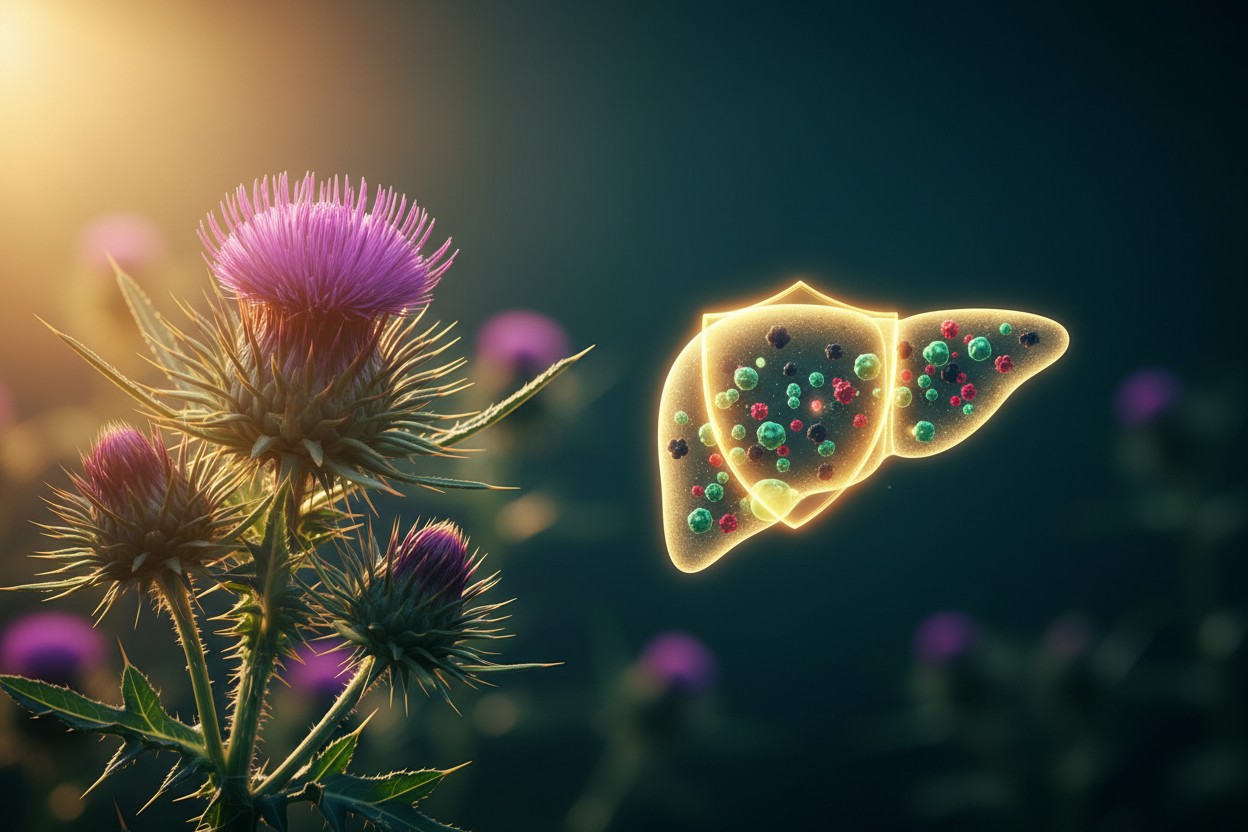
Milk thistle, an herb containing the bioactive compounds known as silymarins, has been the subject of research for its potential role in supporting liver health. According to reporting by Ava Grace on NaturalNews.com, the plant has been used medicinally for over 2,000 years, with ancient Greek and Roman physicians documenting its liver-supporting properties. [1]
The plant's primary active component, silymarin, is thought to be responsible for the beneficial effects attributed to milk thistle, including liver protection and antioxidant activity, according to a 2018 report from Mercola.com. [2] Research published in 2024 and indexed on PubMed has indicated that silymarin may support detoxification pathways and protect liver cells from oxidative stress. As the liver processes environmental toxins, alcohol, and medications, supporting its function has become a focus of nutritional research.
How Milk Thistle Supports the Body’s Natural Detoxification
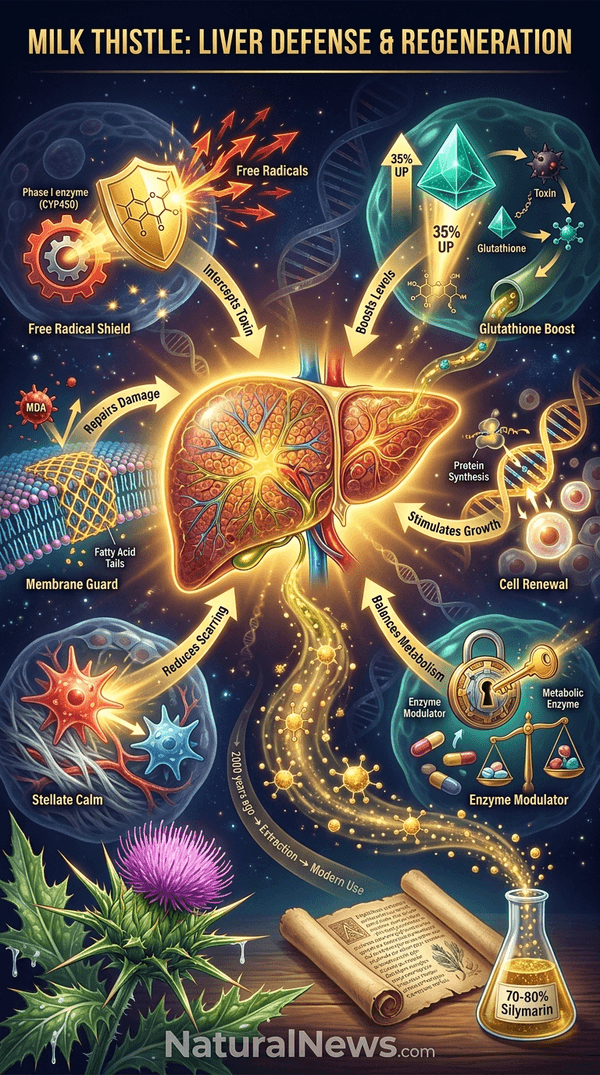
The liver uses a series of enzymatic reactions to process compounds so they can be eliminated from the body, a process that generates free radicals. According to researchers cited by Molly Knudsen, M.S., RDN, milk thistle's silymarins have antioxidant activity that may help neutralize these free radicals and support the liver as it carries out its normal detoxification functions.
Research has also found that silymarin may support the body's production of glutathione, an important antioxidant involved in the liver's defense and detoxification processes. According to Dr. Mercola and Ori Hofmekler in a report published on Mercola.com, glutathione is a powerful antioxidant found in every cell of the body, playing a crucial role in eliminating free radicals. [3] The liver has two phases for detoxifying the body, according to the book "The GSH Phenomenon: Nature's Most Powerful Antioxidant and Healing Agent" by Alan H. Pressman and Sheila Buff, which notes that Phase I involves the secretion of cytochrome P-450 enzymes that convert waste products and toxins into more water-soluble forms for excretion. [4]
Protecting Liver Cells from Oxidative Stress
The liver is regularly exposed to compounds that contribute to oxidative stress, according to researchers. Silymarin has been studied for its ability to help protect liver cells from oxidative stress and support the integrity of liver cell membranes. Preclinical research published in the Journal of Applied Toxicology has demonstrated the protective effects of silymarin against thallium-induced hepatotoxicity in rats, showing that it reduced the production of malondialdehyde, a marker of oxidative stress. [5]
This protective activity is one reason milk thistle has been studied extensively as a botanical for liver support. According to the book "Disease Prevention and Treatment" by the Life Extension Foundation, silymarin has been shown to inhibit lipid peroxidation and prevent glutathione depletion induced by alcohol and other liver toxins, even increasing total glutathione levels in the liver by 35 percent over controls. [6] The book further states that silymarin stimulates protein synthesis, resulting in the production of new liver cells to replace older, damaged ones. [6]
Maintaining Healthy Liver Cell Function
Beyond its antioxidant effects, milk thistle has been investigated for its potential to support the health and resilience of liver cells. Research suggests that silymarin may support several cellular pathways involved in maintaining healthy liver tissue, including pathways related to antioxidant defenses and the body's normal inflammatory response. A 2008 review in the Journal of Applied Toxicology noted that there are few efficient drugs to treat liver diseases such as cholestasis, fibrosis, or cirrhosis, underscoring the need for research into alternative compounds like silymarin. [7]
A 2024 report indicated that more research is needed to understand how these cellular effects translate to human health outcomes, according to study authors. Regarding silymarin's influence on liver enzyme activity, a 2005 study published in the Journal of Biochemical and Molecular Toxicology examined the effect of silybin, a key component of silymarin, on the expression of cytochromes P450 1A2 and 3A4 in primary cultures of human hepatocytes. [8] The study found that silybin and its glycosides modulated the expression of these important drug-metabolizing enzymes, suggesting a mechanism by which milk thistle may influence the liver's handling of various compounds. [8]
Conclusion: Milk Thistle as Part of a Liver Health Regimen
The liver has a built-in system for processing and eliminating compounds, according to medical experts. Milk thistle can complement these processes by providing antioxidant support and helping maintain healthy liver cell function, according to the report. As noted by the Life Extension Foundation, silymarin has demonstrated the ability to stimulate the production of new liver cells to replace older, damaged ones. [6]
A high-quality supplement containing milk thistle offers a clinically studied dose alongside other antioxidants like glutathione, vitamin C, vitamin E, and selenium, according to the article. For those looking to support their liver as part of a broader healthy lifestyle, milk thistle remains one of the most researched herbs for liver health.
References
- Ava Grace. "Milk Thistle: A Timeless Healing Herb with Modern Benefits". NaturalNews.com. March 4, 2025.
- Mercola.com. "Even Small Mixtures of Chemicals Damage Your". June 20, 2018.
- Dr. Mercola, Ori Hofmekler. "Glutathione: The Master Antioxidant". Mercola.com. April 10, 2010.
- Alan H. Pressman, Sheila Buff. "The GSH Phenomenon: Nature's Most Powerful Antioxidant and Healing Agent".
- Marisabel Mourelle, Liliana Favari, Jose Luis Amezcua. "Protection Against Thallium Hepatotoxicity by Silymarin". JOURNAL OF APPLIED TOXICOLOGY 8(5) 351-354. 1988.
- Life Extension Foundation. "Disease Prevention and Treatment".
- FuHT. "Beneficial drugs for liver diseases". J. Appl. Toxicol. 2008; 28: 93–103. 2008.
- Pavel Kosina, Patrick Maurel, Jitka Ulrichova, Zdenek Dvorak. "Effect of Silybin and its Glycosides on the Expression of Cytochromes P450 1A2 and 3A4 in
Explainer Infographic








Please contact us for more information.