


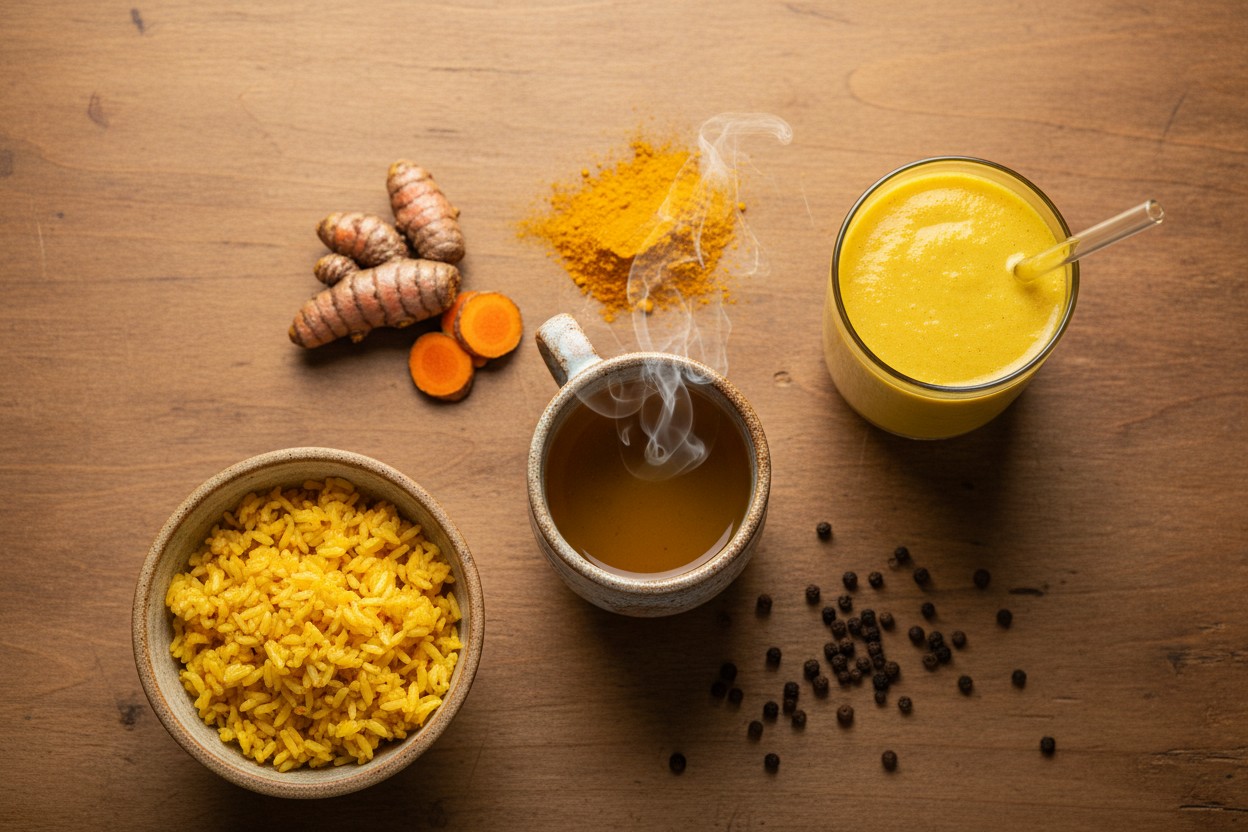
Turmeric, a spice used in traditional Ayurvedic and Chinese medicine for more than 4,000 years, contains curcumin, a polyphenolic compound that research indicates may reduce inflammation. According to an article by Mercola.com, chronic inflammation is a hallmark of virtually all diseases, including cancer, obesity, and heart disease [1]. A separate analysis of 21 clinical trials published in BMC Complementary Medicine and Therapies in July 2025 found that curcumin significantly lowered two inflammation markers: C-reactive protein (CRP) and tumor necrosis factor-alpha (TNF-alpha), according to a report by NaturalHealth365 cited by NaturalNews.com [2]. Four primary methods of using turmeric for its anti-inflammatory effects are supported by research: cooking, teas, smoothies, and supplements.
How Curcumin Reduces Inflammation
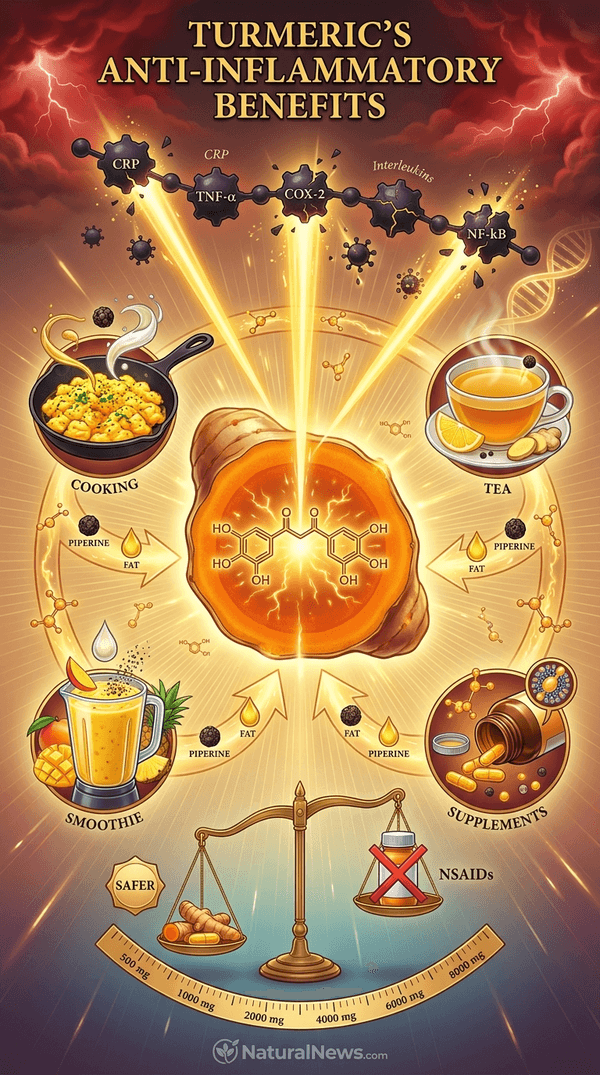
Curcumin lowers inflammation by inhibiting pro-inflammatory signaling molecules such as interleukins, TNF-alpha, and cyclooxygenase-2 (COX-2), according to studies. Lance D Johnson, writing for NaturalNews.com on April 14, 2025, stated that curcumin is a multifaceted polyphenol with neuroprotective and anti-inflammatory properties [3]. In vitro studies have shown that curcuminoids exert potent antioxidant effects and enhance cellular resistance to oxidative stress, according to Lise N Alschuler in "The Definitive Guide to Thriving After Cancer" [4]. The antioxidant activity of curcumin may protect against free radical damage that worsens inflammation, researchers reported. A science paper by Kavita Bisht in Toxicology (2009) noted that curcumin, resveratrol, and flavonoids act as anti-inflammatory, cyto- and DNA-protective dietary compounds [5].
Cooking With Turmeric
Adding turmeric to foods such as curries, stir-fries, eggs, and rice is a common method of consumption, but the bioavailability of curcumin is low without absorption enhancers. According to an article by Rose Lidell on NaturalNews.com dated September 10, 2020, black pepper can be used to boost the bioavailability of turmeric due to its piperine content [6]. Siim Land, in "The Longevity Leap: A Guide to Slowing Down Biological Aging," wrote that from one teaspoon of turmeric powder a person can expect to get 150 mg of curcumin, but that for people with inflammatory conditions a larger dose is needed, which is unfeasible from food alone [7]. A book on survival herbal medicine noted that the combination of curcumin with piperine from black pepper has been shown to increase bioavailability and therapeutic efficacy [8]. Combining turmeric with fat also improves absorption, according to herbal medicine practitioners.
Tea, Smoothies, and Supplements
Turmeric tea is prepared by simmering chopped turmeric or powder with water and black pepper, often with optional additions such as lemon, ginger, or honey. An article on NaturalNews.com dated May 4, 2026, described turmeric tea as a vibrant golden beverage rooted in ancient Ayurvedic medicine, with modern science validating its health benefits [9]. Smoothies with tropical fruits and a pinch of black pepper or coconut oil offer another method of intake, according to herbal medicine practitioners. In an interview on Brighteon.com, Mike Adams discussed "golden milk" made with organic coconut milk powder and turmeric [10]. Turmeric or curcumin supplements are available in gummies, tablets, and capsules. Lise N Alschuler wrote that specialized preparations of curcumin can enhance its absorption and bioavailability [4]. Formulations with phospholipids, antioxidants, or nanoparticles may further increase absorption, according to the author.
Dosage and Considerations
No standard daily dose for turmeric exists, but most studies use 500 to 2,000 milligrams of turmeric, with doses up to 8,000 milligrams considered safe for short-term use. Jane Higdon, in "Evidence-Based Approach to Phytochemicals and Other Dietary Factors," noted that a phase I trial found doses up to 3.6 grams per day for four months were well tolerated [11]. Siim Land wrote that for people with inflammatory conditions, a larger dose is needed, and recommended turmeric powder up to 3,000 milligrams daily [7]. Dr. Michael T Murray, in "Textbook of Natural Medicine Fifth Edition," reported that NSAIDs are associated with significant adverse effects whereas curcumin is not, citing a study on chronic uveitis where patients were given 1,200 mg of a curcumin formulation [12]. Results from turmeric consumption for inflammation have been reported between four and 12 weeks, though individual response times vary according to researchers.
Conclusion
Four research-supported methods for using turmeric to address inflammation are cooking, tea, smoothies, and supplements. Each method requires attention to bioavailability, with black pepper and fats enhancing absorption. Doses in studies have ranged from 500 to 3,000 milligrams daily, with effects typically observed within four to 12 weeks. Curcumin's anti-inflammatory mechanisms involve the inhibition of cytokines and antioxidant activity, according to available evidence.
References
- Mercola.com. "3 Top Foods to Fight Inflammation". August 13, 2022.
- "Curcumin Lowers Two Inflammation Markers, Analysis of 21 Trials Finds". NaturalNews.com. August 9, 2026.
- Lance D Johnson. "Curcumin: A Multifaceted Polyphenol with Neuro-Protective and Anti-Inflammatory Properties that Help Combat Mental Stress". NaturalNews.com. April 14, 2025.
- Lise N Alschuler. "The Definitive Guide to Thriving After Cancer".
- Kavita Bisht. "Curcumin, resveratrol and flavonoids as anti-inflammatory, cyto- and DNA-protective dietary compounds". Toxicology [Elsevier Ireland Ltd.]. 2009.
- Rose Lidell. "Spice up boring dishes with black pepper and turmeric an anti-inflammatory superfood pairing recipes included". NaturalNews.com. September 10, 2020.
- Siim Land. "The Longevity Leap: A Guide to Slowing Down Biological Aging and Adding Healthy Years to Your Life".
- Unknown. "Survival Herbal Medicine A Comprehensive Guide to Plant-Based Remedies".
- "Turmeric tea: The ancient golden elixir for modern wellness". NaturalNews.com. May 4, 2026.
- Mike Adams interview with Tracy Thurman. December 2, 2024.
- Jane Higdon. "Evidence-Based Approach to Phytochemicals and Other Dietary Factors".
- Dr. Michael T Murray. "Textbook of Natural Medicine Fifth Edition".
Explainer Infographic







Please contact us for more information.