


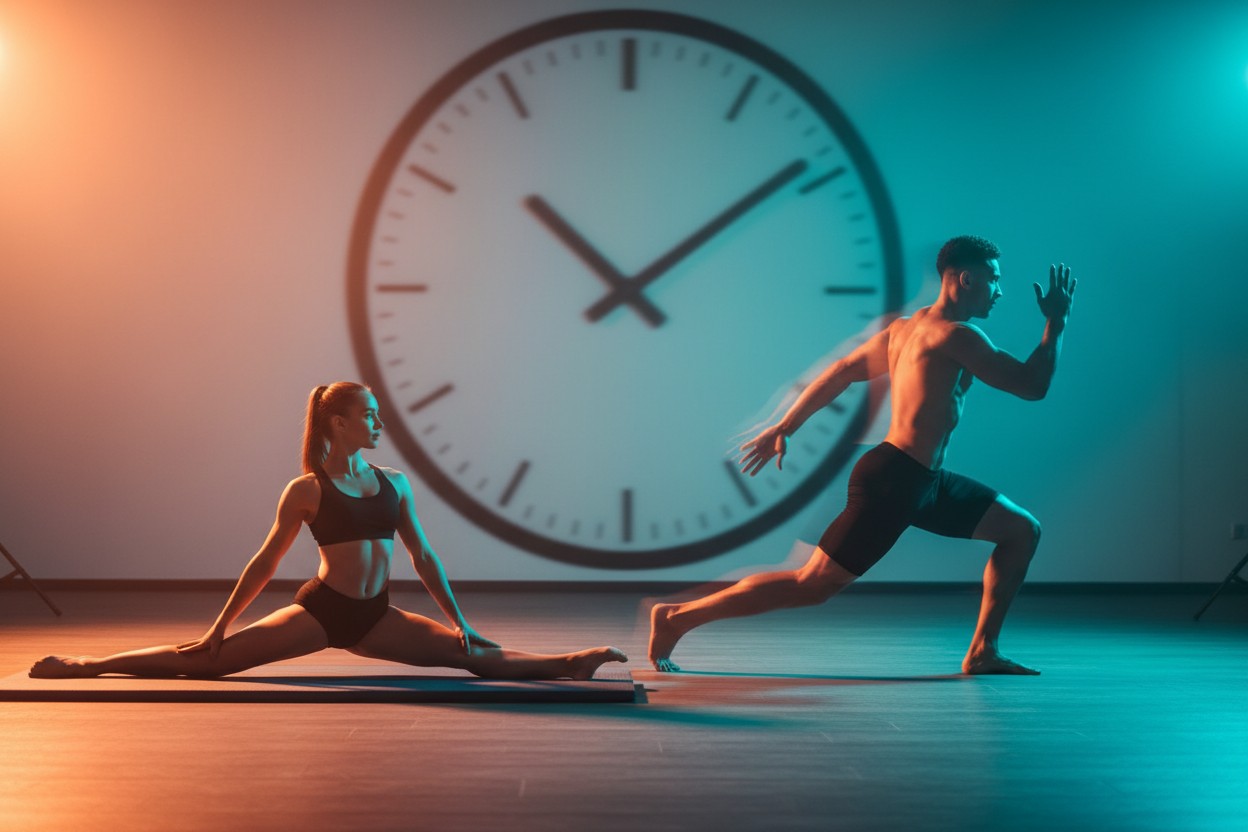
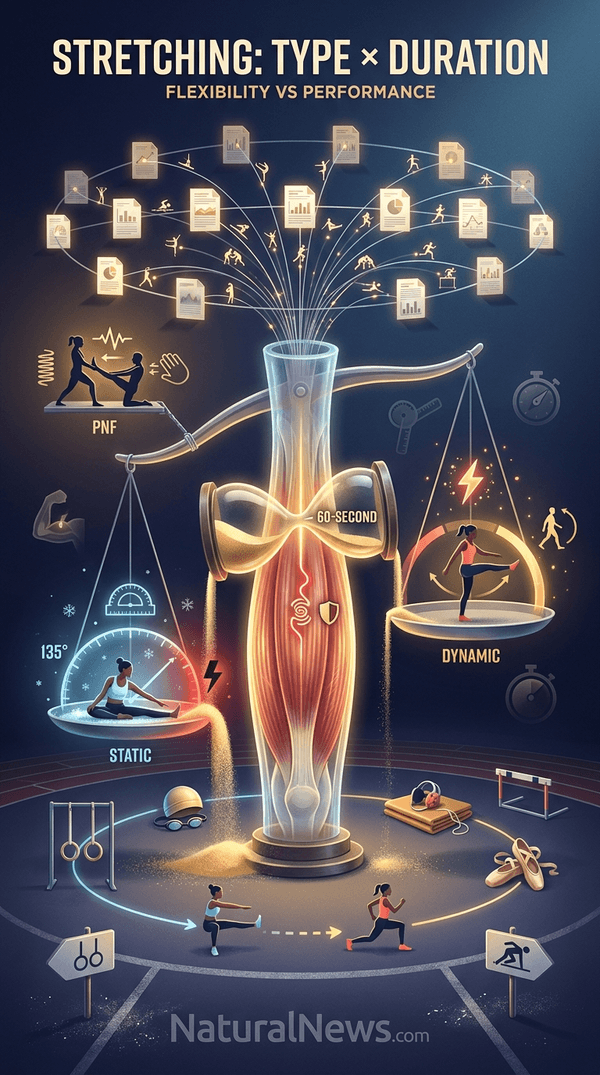
A systematic review of 23 studies involving 627 athletes found that the effects of stretching on flexibility and performance depend on the type and duration of stretching used, according to findings published Aug. 9, 2026. The review examined static stretching, dynamic stretching, combined stretching approaches, and proprioceptive neuromuscular facilitation (PNF) stretching among athletes in flexibility-dependent sports, including gymnastics, swimming, wrestling, dance, and track and field.
Static stretching produced moderate flexibility improvements, while dynamic stretching produced smaller flexibility gains but small performance improvements, the report found. The findings indicate that no single stretching method is universally preferable, and the most appropriate approach depends on the individual's goal, according to the study authors.
Stretching has long been a staple of athletic routines, and it is often viewed as a way to move better and prevent injury, according to the report. Stretching, or flexibility exercise, targets major muscle groups and prepares the muscles before physical activity, according to NaturalNews.com [2]. Good flexibility is known to aid with injury prevention, help minimize muscle soreness, and improve efficiency in physical activities, according to “Stretching Anatomy” by Arnold G. Nelson and Jouko Kokkonen [6].
Study Design and Methods
Researchers conducted a systematic review of 23 studies involving 627 athletes across flexibility-dependent sports, according to the report. The goal was to understand how different stretching techniques, including static stretching, dynamic stretching, combined stretching approaches, and proprioceptive neuromuscular facilitation (PNF) stretching, affect flexibility and performance, the report stated.
The researchers also examined whether stretching duration played a role, comparing shorter sessions of 60 seconds or less with longer-duration stretching of more than 60 seconds, according to the report. Outcome measures included changes in flexibility and performance after stretching sessions. Flexibility is defined as the ability of an individual to move a joint through its complete range of motion, according to “Safe and Effective Exercise for Overweight Youth” by Melinda S. Sothern [4]. The review synthesized results from published studies that measured flexibility and performance outcomes in athletic populations, the report said.
Static Stretching: Flexibility Gains and Performance Trade-off
Static stretching, which involves holding a stretch in a fixed position such as a seated hamstring stretch, was linked to moderate improvements in flexibility, the review found. Static stretching improved flexibility by about 3% compared with baseline and about 2% compared with control groups, according to the report.
The review also found that longer-duration stretching carried a trade-off. Stretching for more than 60 seconds led to the largest flexibility improvements, about 6%, but was associated with a small decline in performance afterward, the report found. Performance measures slightly decreased after long stretching sessions, according to the study authors.
The researchers said this does not mean static stretching is without value. Improving flexibility can be valuable for athletes in sports where range of motion is essential, the report stated. However, for those seeking to maximize power, speed, or strength immediately afterward, long static holds may not be the optimal warm-up strategy, according to the review. The stretch reflex, in which muscle spindles signal the spinal cord to contract the muscle when it is stretched, is a mechanism relevant to muscle response during static holds, according to “The Navy SEAL Physical Fitness Guide” by Patricia A. Deuster [3]. Overstretching may make a person more susceptible to injury or hamper performance, according to “Concepts of fitness and wellness with” by Charles B. Corbin and Ruth Lindsey [5].
Dynamic Stretching: Smaller Flexibility Gains, Performance Benefits
Dynamic stretching, described as active movements that take joints through their range of motion, produced smaller flexibility improvements compared with static stretching, the analysis found. Examples of dynamic stretching cited in the review include walking lunges, leg swings, and arm circles.
The most important aspect of dynamic stretching is performing the movement in a controlled manner through the range of motion, according to “Physical Education for Lifelong Fitness” by NASPE [7]. Dynamic stretching was associated with small improvements in performance, the report said, and the researchers found it improved performance by about 0.5% compared with control conditions.
The findings suggest dynamic stretching may help prepare the body for movement without the performance dip seen after longer static stretching, according to the report. This distinguishes dynamic stretching as a pre-activity option when the goal is to maintain athletic output, the study authors said.
Implications for Training
The report's authors said the most appropriate stretching method depends on the individual's goal. Longer static stretching sessions may be useful when flexibility is a key component of the activity, such as gymnastics, dance, or martial arts, according to the review. Dynamic stretching may be a better choice for preparing for a workout because it supports movement readiness while maintaining performance, the report stated.
For strength training, sprinting, or high-intensity exercise, the researchers recommended saving longer static stretching sessions for after training or in separate mobility sessions rather than immediately before a workout. Research has suggested that certain types of stretching before exercise may be counterproductive, according to Mercola.com [1].
Stretching is one part of moving well, the report noted. Strength training through a full range of motion, adequate recovery, proper hydration, and consistent movement habits all contribute to mobility and athletic performance, according to the review. Experts recommend incorporating daily mobility work as a strategy for preserving the ability to perform everyday activities without assistance, according to NaturalNews.com [8]. The review's authors said the current evidence supports using dynamic movements to prepare the body for exercise and longer static stretches for improving flexibility, according to the report.
References
- Mercola.com. "Reasons Not to Stretch". Mercola.com. April 19, 2013.
- NaturalNews.com. "Maintaining wellness: The importance of stretching and staying limber". NaturalNews.com. July 11, 2019.
- Patricia A Deuster. "The Navy SEAL Physical Fitness Guide".
- Melinda S. Sothern. "Safe and Effective Exercise for Overweight Youth".
- Charles B. Corbin and Ruth Lindsey. "Concepts of fitness and wellness with".
- Arnold G. Nelson and Jouko Kokkonen. "Stretching Anatomy".
- NASPE. "Physical Education for Lifelong Fitness".
- NaturalNews.com. "Mobility Training Linked to Longevity and Independence, Researchers Say". May 11, 2026.
Explainer Infographic









Please contact us for more information.