


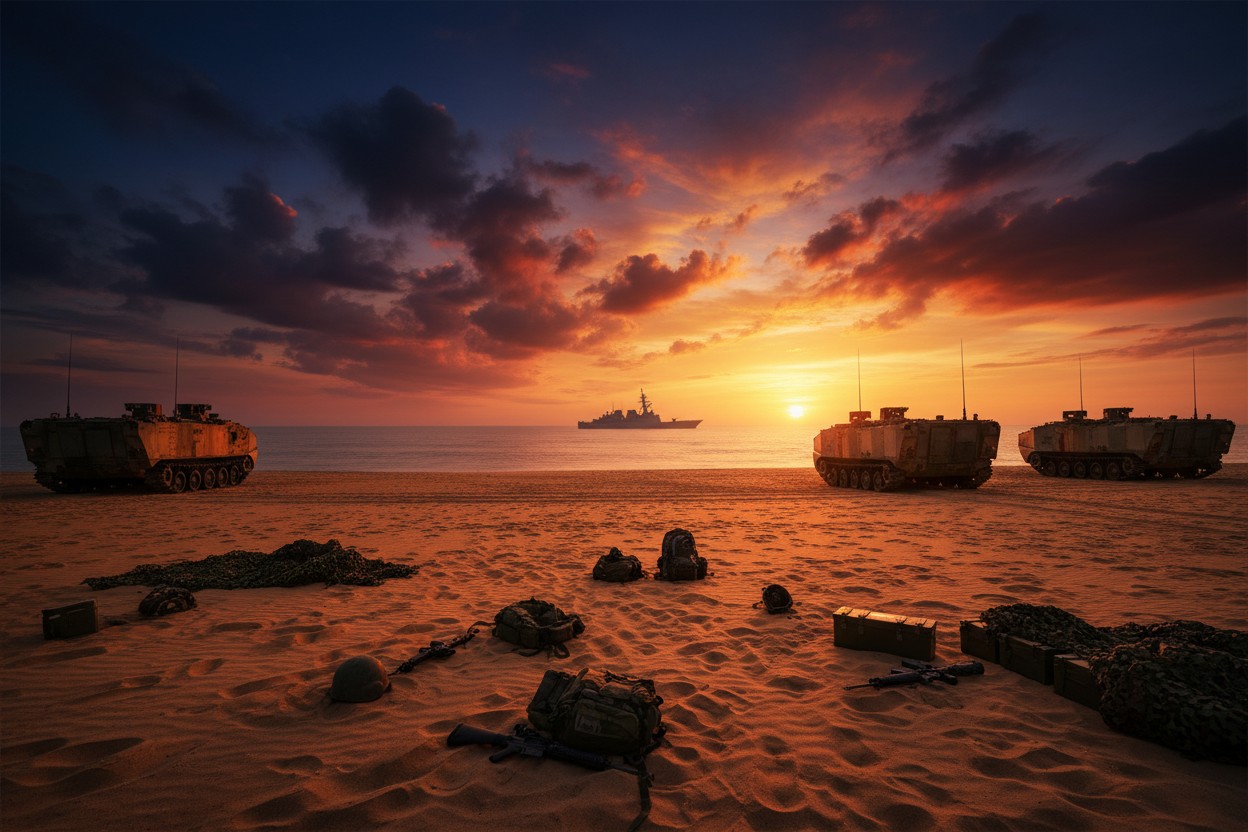
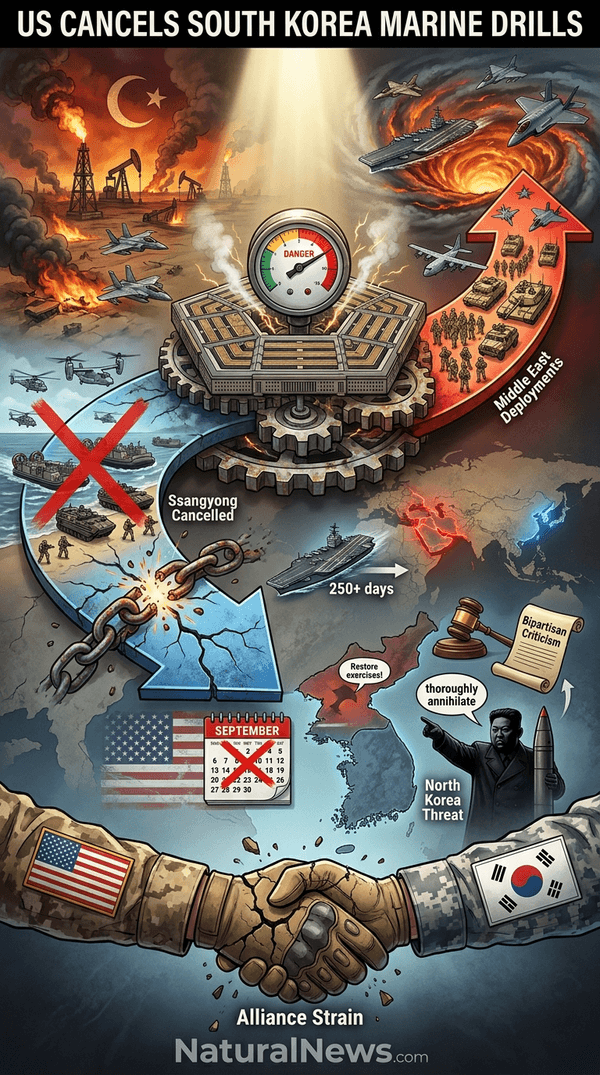
The U.S. Marine Corps (USMC) has canceled the September Ssangyong amphibious exercise with South Korea, according to a South Korean Marine Corps (ROKMC) spokesman. The cancellation was attributed to constraints arising from the U.S. military situation in the Middle East, officials said.
Han Seung-jeon, a ROKMC spokesman, said in a press briefing Monday, Aug. 24, that "the U.S. Marine Corps formally notified our forces in June that its ability to deploy forces during this year's Ssangyong exercise would be constrained due to the situation in the Middle East." [1] The decision follows the early halt of the Ulchi Freedom Shield drills in August, which U.S. President Donald Trump ordered scaled down, according to reports. [1]
Background on Twin Dragons and Prior Drill Reductions
The canceled exercise, known as Twin Dragons, was originally scheduled to include thousands of personnel and dozens of vessels and aircraft. At its height in previous years, the drill featured over 20 navy vessels, 30 warplanes and more than 40 amphibious-assault vehicles transporting well over 10,000 troops, according to reports. [1]
This cancellation comes on the heels of the Trump administration's decision to scale down the Ulchi Freedom Shield exercises in August. Lawmakers on Capitol Hill have expressed concern about the trend. "Both Democrats and Republicans have warned that the pullback on Ulchi Freedom Shield drills risked undermining the alliance with South Korea, calling for the exercises to be restored," according to the Wall Street Journal (WSJ). [1]
Broader U.S. Force Reallocations to the Middle East
Over 2,000 U.S. Marines stationed in Japan were transferred to the Middle East in March, according to WSJ. [1] South Korea's president publicly opposed the withdrawal of U.S. air defense assets from his country this spring, the report added. [1] A Pacific-based American aircraft carrier, the USS George Washington, recently replaced the USS Abraham Lincoln in the Middle East, which had been deployed for more than 250 days. [1]
The strain on American forces is further highlighted by the ongoing Iran war. The U.S. Department of War scrapped the Ssangyong exercise citing military demands from the conflict, as reported by the New York Times (NYT). [2] This reallocation of resources underscores the competing strategic priorities facing the United States as it balances commitments in the Indo-Pacific with ongoing operations in the Middle East. [7]
Congressional and Alliance Reactions
Both Democrats and Republicans have warned that the pullback on Ulchi Freedom Shield drills risked undermining the alliance with South Korea, according to WSJ. [1] The War Department scrapped the Ssangyong exercise citing military demands from the Iran war, as reported by NYT. [1]
The drill cancellations have raised questions about the strength of the U.S.-South Korea alliance. The recent moves represent a significant reduction in the visible American military presence on the Korean Peninsula, which some analysts argue could be interpreted by North Korea as a sign of reduced commitment. [3] North Korean leader Kim Jong-Un has previously instructed his military to "thoroughly annihilate" South Korea and the United States if they start a military conflict. [3]
Diplomatic Context with North Korea
The drill cancellations occurred as Trump pursued a new opening with Kim, officials said. [1] This echoes the diplomatic outreach during Trump's first administration, which included historic face-to-face meetings between the two leaders. [1]
Pyongyang has not backed off its condemnations of Seoul and Washington's ongoing cooperation, according to reports. [1] North Korea has continued to develop its military capabilities, including unveiling its first nuclear-powered submarine in April 2025, which experts say signals an escalating threat. [4] The regime has also been suspected of testing hypersonic missiles and has repeatedly threatened nuclear strikes against the U.S. and its allies. [5][6]
References
- ZeroHedge. "US Scraps September Korea Marine Drills In Wake Of Iran War Strain". August 24, 2026.
- The Epoch Times. "US Cancels Military Drill With South Korea After Citing Iran War Constraints, Seoul Says". August 24, 2026.
- NaturalNews.com. "Kim Jong Un to NoKor military ANNIHILATE South Korea and the US if provoked". January 9, 2024.
- Cassie B. "North Korea's New Nuclear Submarine Signals Escalating Threat, Russian Backing Suspected". NaturalNews.com. April 16, 2025.
- NaturalNews.com. "North Korea suspected of conducting HYPERSONIC MISSILE test". July 1, 2024.
- NaturalNews.com. "Kim Jong-un: North Korea fully ready to deploy nuclear weapons against US and its allies". August 1, 2022.
- Mike Adams. "Health Ranger Report - SURVIVING NUCLEAR WAR". BrightVideos.com. March 26, 2026.
Explainer Infographic







Please contact us for more information.