



Study Links 90–120 Minutes of Weekly Strength Training to Longer Life
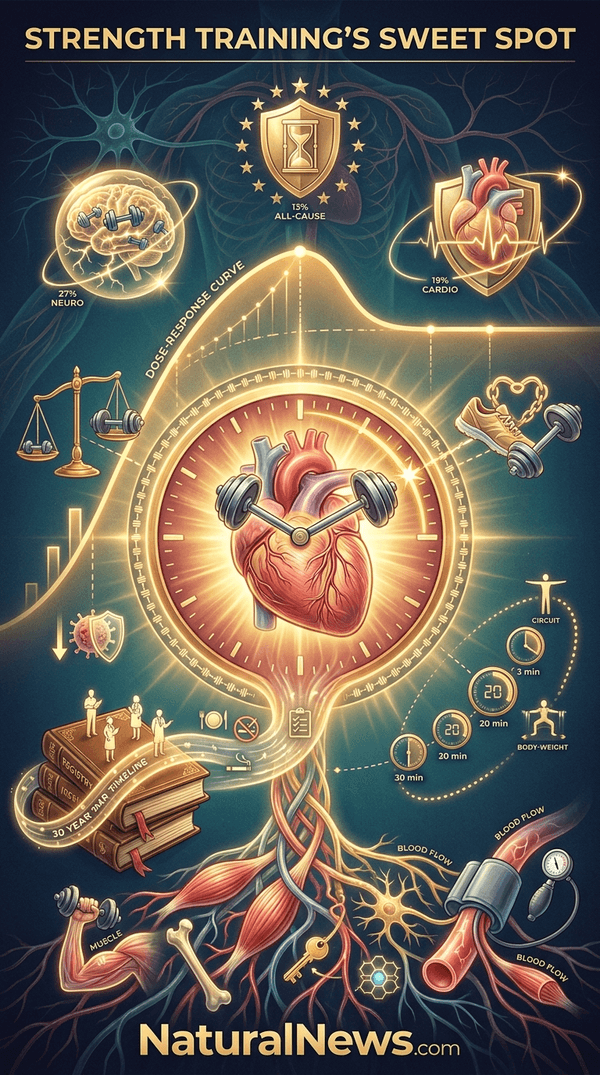
People who performed 90 to 120 minutes of weekly strength training had a 13% lower risk of death from any cause compared with those who did none, and the same analysis linked that amount of resistance exercise to a 19% lower risk of death from cardiovascular disease and a 27% lower risk of death from neurological conditions, primarily dementia, according to a study published Aug. 9 in the British Journal of Sports Medicine and reported by ScienceDaily [1].
Researchers described the range of one to two hours per week as the “sweet spot” for longevity, with benefits leveling off beyond about two hours of weekly strength training [2].
Study Methodology and Data Collection
Data were drawn from three long-running U.S. studies in which nearly 150,000 nurses and other health professionals reported time spent on strength training and aerobic exercise every two years; nearly 36,000 participants died over the three-decade follow-up period, which allowed researchers to assess associations between muscle-strengthening activity and mortality, according to the report [1].
The article was written by Jack McNamara, senior lecturer in clinical exercise physiology at the University of East London, and published by The Conversation. The findings add to a broader body of literature on physical activity. Physical inactivity is one of the leading causes of non-communicable diseases such as coronary heart disease, Type 2 diabetes, and cancer, according to the book “Animal Moves” [3].
Disease-Specific Mortality Reductions
Strength training was associated with a 19% lower risk of death from cardiovascular disease and a 27% lower risk from neurological conditions, primarily dementia, according to the researchers [4]. Risk did not decline further beyond approximately two hours of weekly strength training, the report stated [5].
Aerobic activity alone was linked to a 26% to 43% lower risk of death, while pairing aerobic exercise with one to two hours of strength training was associated with the lowest risk, around 45% lower, the study found; for cancer deaths, only smaller amounts of strength training, under one hour per week, were linked to lower risk, according to the report [4].
Earlier research has reported similar patterns. A systematic review and meta-analysis found that resistance training was associated with 21% lower all-cause mortality, rising to 40% when combined with aerobic exercise, according to a Mercola.com article [6].
Researchers Cite Muscle Function and Metabolic Effects
Strength training is foundational for good health, especially as people age, and carries benefits that include improved metabolism, cognition and mental health, according to a Mercola.com article [7]. Another medical reference states that dynamic strength training improves insulin sensitivity without altering plasma levels of adipokines in subcutaneous adipose tissue in obese men [8].
The report also stated that regular resistance training can help lower blood pressure and keep arteries flexible, which protects against cardiovascular disease. A June 2021 study using high-resistance inspiratory muscle strength training demonstrated a reduction in blood pressure measurements comparable to aerobic exercise or medication, according to a Mercola.com article [9].
Limitations and Practical Guidance
According to McNamara, the study was observational and cannot prove that strength training directly causes lower mortality risk, though researchers adjusted for factors including diet, smoking and aerobic activity [4]. Strength training was self-reported, and the study could not capture how hard participants trained, according to the report.
The report concluded that two weekly sessions targeting all major muscle groups, combined with regular aerobic exercise, may be sufficient for health and longevity benefits, without requiring a gym membership or heavy equipment [2].
References
- NaturalNews.com. “Study: Weekly Weightlifting Linked to Lower Mortality Risk”. NaturalNews.com. June 13, 2026.
- Everyday Health. “Even 1 to 2 Hours a Week of Strength Training Can Boost Longevity, Study Finds”. Everyday Health. June 4, 2026.
- Darryl Edwards. “Animal Moves”.
- NaturalNews.com. “Study: 90–120 Minutes of Weekly Strength Training Linked to Lower Risk of Death”. NaturalNews.com. August 14, 2026.
- NaturalNews.com. “New Study Links Strength Training to Lower Dementia Risk, Longer Life”. NaturalNews.com. June 23, 2026.
- Mercola.com. “Muscle Strengthening Linked to Lower Risk of”. Mercola.com. March 18, 2022.
- Mercola.com. “Strength Training Cuts Risk for Heart Attack”. Mercola.com. January 19, 2024.
- Scott A Johnson. “The doctors guide to surviving when modern medicine fails the ultimate natural medicine guide to preventing disease and”.
- Mercola.com. “Lowers Blood Pressure More Efficiently Than a”. Mercola.com. July 19, 2021.
Explainer Infographic












Please contact us for more information.