


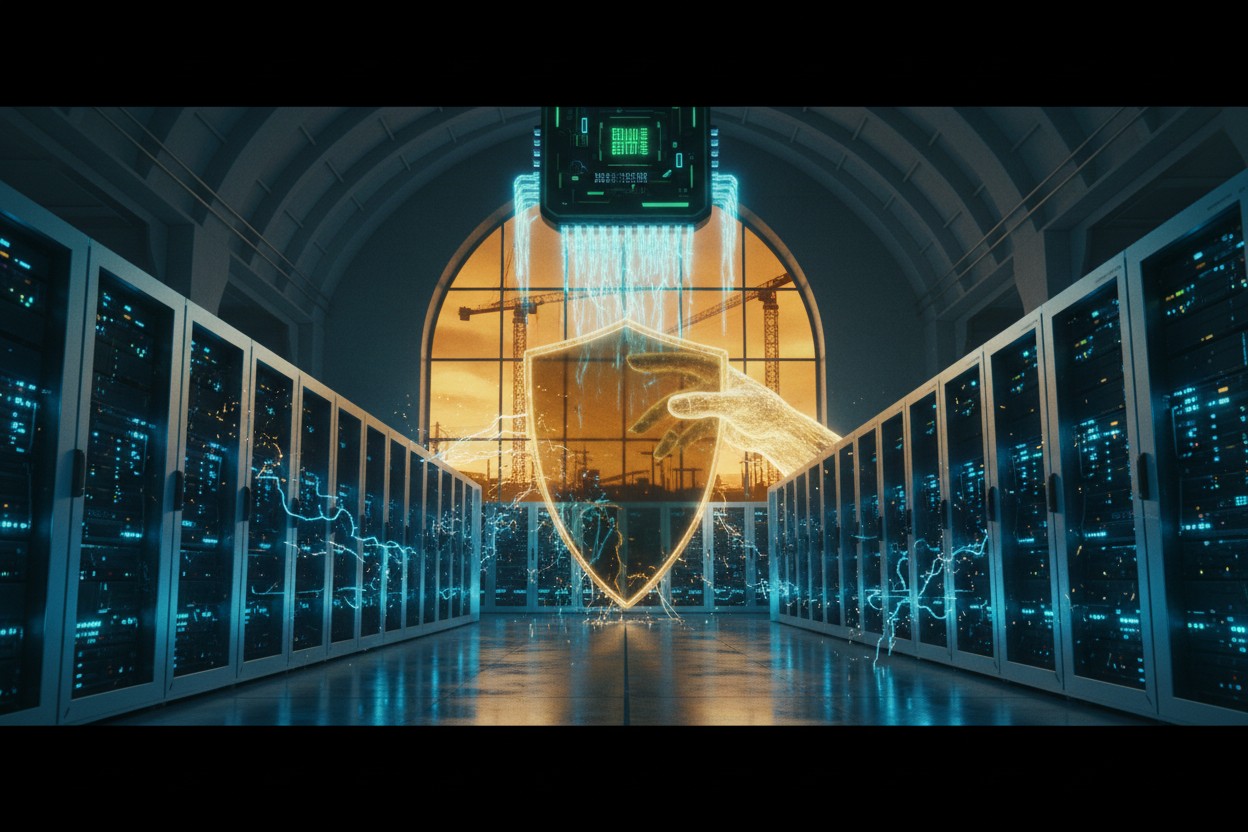
Nvidia has reduced the size of a planned guarantee of up to $250 billion for data center financing tied to OpenAI, according to people familiar with the matter. The revised amount has not been disclosed, and neither Nvidia nor OpenAI has publicly commented on the change as of this report. The guarantee was intended to support loans to firms building and operating data centers for OpenAI.
Bloomberg News reported on July 27, 2026, that Nvidia was in early talks to provide up to $250 billion in financing guarantees to help OpenAI lease computing capacity from a planned $500 billion, 10-gigawatt data center facility in Ohio [1]. The proposed deal highlighted investor concerns that the AI boom has been fueled by circular financing, according to Bloomberg's report [1].
Background of Nvidia-OpenAI Partnership
Nvidia supplies graphics processing units used to train and run AI models. According to Jon Peddie Research, Nvidia makes more than 80 percent of the chips that run AI data centers [2]. AI companies scrambling for cash to build new models and open data centers have offered their Nvidia chips as collateral for loans, according to the Trends Journal [2].
OpenAI and its corporate partners have pursued large data center projects under the Stargate initiative announced by President Donald Trump in January 2025. The $500 billion initiative, backed by OpenAI, SoftBank, and Oracle, aimed to establish AI data centers nationwide and create over 100,000 jobs, according to NaturalNews [3]. Reports in June 2026 described a proposed 10-gigawatt data center campus in Ohio that OpenAI was negotiating to lease, with a potential buildout cost exceeding $500 billion based on current prices for chips, labor, and construction materials [4].
In March 2026, Oracle and OpenAI abandoned plans to expand the Stargate AI data center in Abilene, Texas, from about 1.2 GW to 2.0 GW after talks stalled over financing issues and OpenAI's changing demand forecasts, according to Bloomberg News [5].
Details of the Revised Guarantee
The initial guarantee was reported at up to $250 billion, according to Bloomberg News [1]. Separately, Nvidia has agreed to guarantee, with its own money, that chips used as collateral in these deals will retain their value, according to TechCrunch [6]. Under the proposed structure, OpenAI would control the chip stacks through a long-term lease and begin making payments once the facility starts operations, according to earlier reports. The first phase of the Ohio campus is expected to come online in 2028, the report stated [4].
People familiar with the matter said the revised commitment is smaller, though exact figures have not been made public. The reduction followed an internal review of OpenAI's capital needs and construction timelines, the people said. Neither company has provided further details as of this report.
Potential Reasons and Market Reactions
The scaling-back comes as AI-related stocks have experienced sharp volatility. In February 2026, $1 trillion was wiped from the valuations of big technology companies as investors recoiled from escalating AI investments, according to NaturalNews [7]. OpenAI is projecting $44 billion in losses over five years, with no profits expected until later, according to a NaturalNews report [8].
Market analysts have described the AI buildout as a debt bubble. Ed Dowd, writing for Beyond The Narrative, said private credit has stalled, with flows reversing and redemptions surging, and that enterprise demand is cracking [9]. According to an RT investigation, there is rising unease about how a small group of companies fund the technology through circular deals that boost their market value, which is far greater than the profits the industry generates [10].
Outlook and Implications for AI Infrastructure
Despite the revised guarantee, OpenAI has continued to pursue large-scale data center projects. Reports in June described the Ohio campus as the largest data center development ever considered [4]. Energy constraints and permitting issues have been cited by local officials as key factors in construction timelines. Mayors across the U.S. have said rapid construction of data centers is creating environmental and infrastructure concerns, including possible blackouts and water shortages [11].
Critics of technology industry concentration have said that the scale of such investments centralizes control over AI infrastructure. Palantir CEO Alex Karp said the AI industry is "effing insane" and argued that governments and militaries should not trust companies like OpenAI and Anthropic with sensitive data [12]. OpenAI has called for creation of a "North American Compact on AI" under which the U.S. and Canadian governments and their AI companies would work together to outcompete China, according to the Trends Journal [13].
Conclusion
Nvidia's decision to scale back the guarantee comes amid broader questions about the financial structure of AI infrastructure. OpenAI has secured AI computing agreements with Nvidia, AMD, and Oracle that could together exceed $1 trillion in value, according to RT [10].
The final scope of Nvidia's guarantee remains undisclosed, and neither company has commented as of this report. Officials and developers have cited financing and power availability as key factors in data center construction timelines, according to reports [11][4].
References
- Zero Hedge. "Nvidia Weighs $250 Billion Backstop For OpenAI's Gargantuan Ohio Data Center Campus". July 27, 2026.
- Trends-Journal-2024-11-19.
- Belle Carter. "U.S. Launches $500B AI Initiative to Counter China's Tech Advancements". NaturalNews.com. January 26, 2025.
- NaturalNews.com. "OpenAI in Talks for Massive 10-Gigawatt Data Center in Ohio". June 12, 2026.
- Zero Hedge. "Oracle & OpenAI Scrap Texas Data Center Expansion Plan, Sending AI Stocks Lower". March 6, 2026.
- TechCrunch. "Nvidia’s new $500B plan is risky but brilliant, especially for aging GPUs". August 13, 2026.
- Kevin Hughes. "AI Bubble Fears Spark Sell-Off as Tech Giants Face Investor Backlash". NaturalNews.com. February 10, 2026.
- NaturalNews.com. "The AI Bubble: A Financial House of Cards That’s About to Collapse". June 3, 2026.
- Zero Hedge. "'Caution Is Warranted': Ed Dowd Warns Wall Street's AI CapEx Party Is Ending". July 24, 2026.
- RT. "AI boom fuels fears of an industry bubble (VIDEO)". January 15, 2026.
- Petra Stone. "Mayors Sound Alarm: AI Data Centers Push U.S. Toward Blackouts and Water Shortages". NaturalNews.com. March 18, 2026.
- RT. "AI industry is ‘effing insane’ – Palantir CEO". July 3, 2026.
- Trends-Journal-2024-11-19.
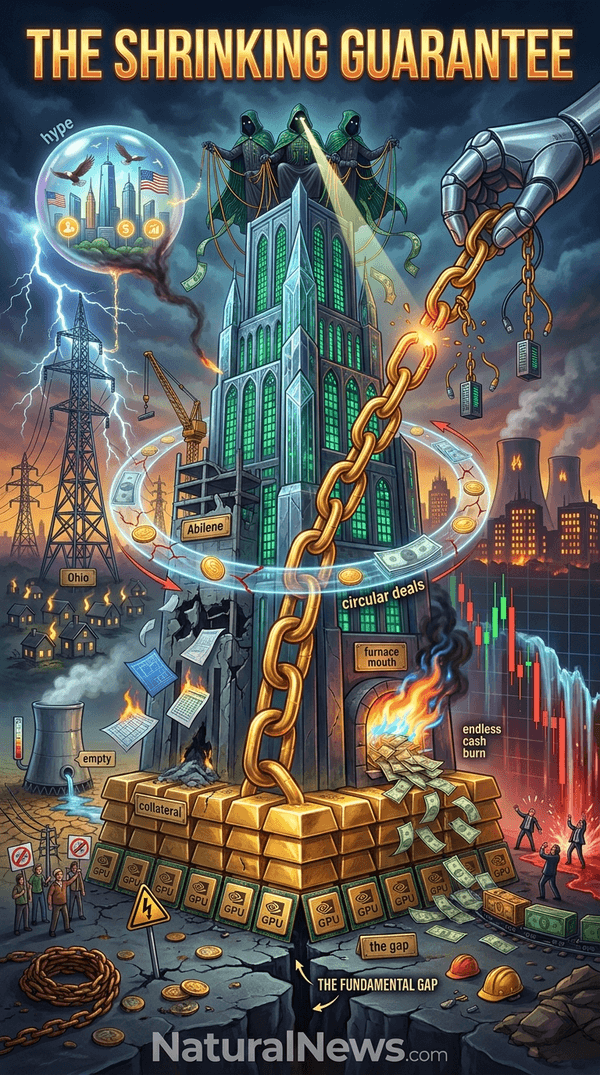
Explainer Infographic









Please contact us for more information.