


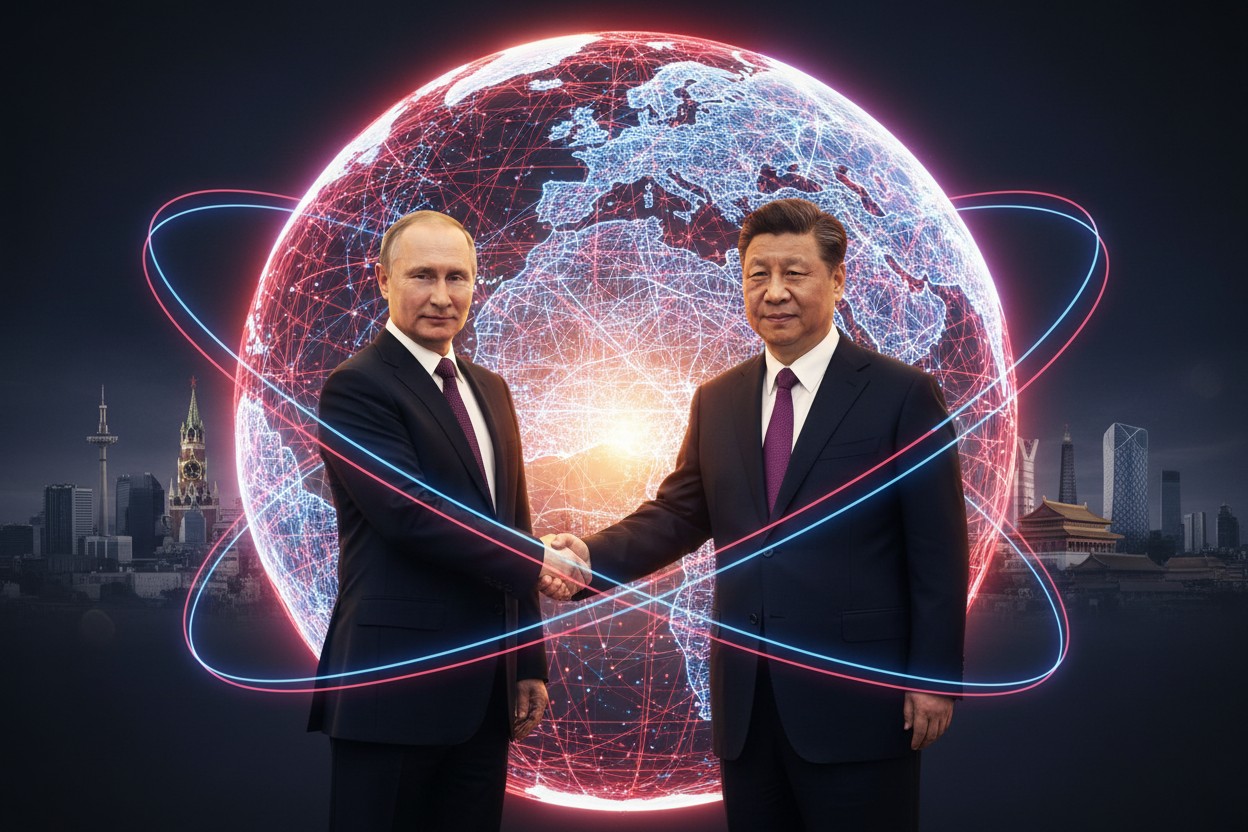
The frozen expanse of the Arctic Ocean is becoming a new frontier of trade, as Russia aggressively fortifies its military presence while simultaneously courting Asian economic powers to navigate a new era of import and export that bypasses Western sanctions. President Vladimir Putin’s declaration that the Arctic holds major strategic importance is no longer a whispered ambition but a roaring reality, with Cold War-era bases being resurrected and outfitted with offensive capabilities. However, the most significant development is not the icebreakers or missile cruisers, but the quiet, deliberate formation of an economic bloc that directly challenges the efficacy of Western sanctions. India and China, alongside other fast-growing economies, are actively engaging Moscow to utilize the Northern Sea Route, a move that signals a profound shift in global commerce and a stark rebuke to Washington’s and Brussels’ attempts at isolation.
Key points:
- Russia views the Arctic as vital for both mineral wealth extraction and military advantage over NATO.
- India and China are actively discussing cooperation with Russia on the Northern Sea Route.
- The NSR offers India a 40% reduction in shipping distance compared to the Suez Canal.
- Western sanctions have accelerated, not hindered, Russia’s partnership with Asian economies.
- India and Russia have formalized logistics pacts to facilitate naval and commercial access.
Western sanctions backfire, as new pacts unlock new shipping routes in the Arctic
When the West imposed sweeping sanctions on Moscow under Biden, the intended effect was to cripple the Russian economy and isolate President Putin on the world stage. Instead, the measures have accelerated a pivot eastward that had been brewing for years. During a visit to the Far East, Putin spoke to Pacific Fleet personnel aboard the missile cruiser Varyag. Putin said the growing interest in the Arctic route is a direct consequence of Western aggression.
“We see growing interest from countries wishing to engage with us on this front,” Putin said. “These partners include, above all, our friends China, India, and other nations who are actively discussing these matters with us.” There is confirmation that the unipolar world order is fracturing, replaced by a multipolar network where resource-rich nations set their own terms.
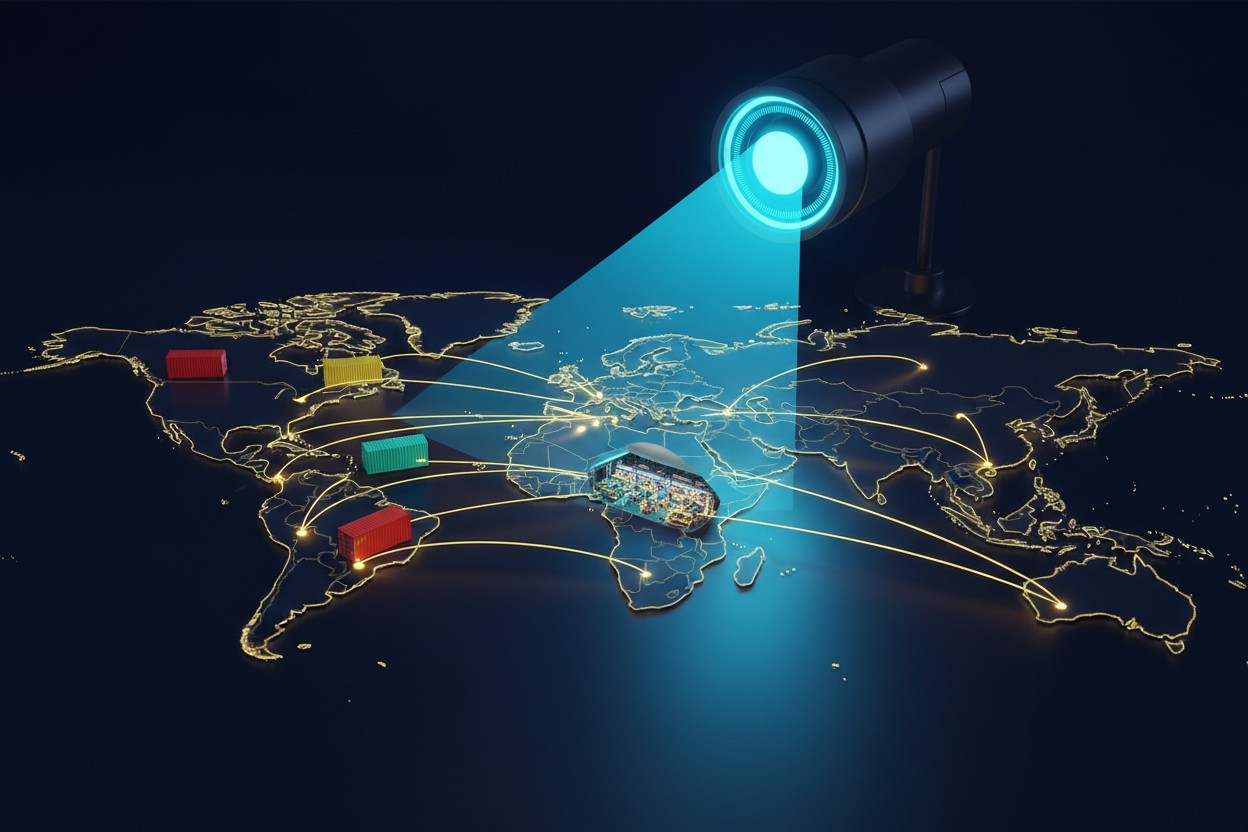
For New Delhi, the calculus is purely pragmatic, driven by energy security and economic efficiency. The 10,380-km Chennai-Vladivostok corridor, operational since 2024, has already opened a direct maritime highway between the two nations. Now, the focus is on the 5,600-km Northern Sea Route, which runs through the Arctic Ocean off Russia’s northern coastline. This passage is the shortest shipping lane between East Asia and Europe, offering India a way to circumvent the increasingly perilous Suez Canal, which has faced significant disruptions due to the Middle East conflict. By shifting cargo to the NSR, Indian exporters can save up to 40% in distance and roughly two weeks of travel time. For a nation striving to become a global manufacturing hub, time is money, and the Arctic offers a faster, more reliable artery that bypasses the choke points of the Global South.
A logistical pact for a new world order
The cooperation extends beyond mere talk of trade targets, which currently sit at an ambitious $100 billion. In December, during Putin’s visit to New Delhi, India and Russia formalized the Reciprocal Exchange of Logistics Support pact, a foundational agreement that grants India access to a network of ports stretching from Vladivostok to Murmansk. This is not just about civilian container ships; it provides the Indian Navy with strategic footholds in the High North, a capability that would have been unthinkable a decade ago. Furthermore, Indian shipyards are currently in talks to build non-nuclear icebreaker vessels for Rosatom, the Russian state-owned conglomerate that manages the world’s only fleet of nuclear-powered icebreakers.
Aleksey Chekunkov, the Russian minister for the development of the Far East and the Arctic, emphasized the synergy, stating, “We have dramatic common capabilities, common opportunities to jointly develop an ice-level fleet, to jointly develop container shipping, which is happening.”
The who, what, and where of this story points to a coordinated effort that the West has yet to effectively counter. Rosatom, as the designated operator of the NSR, has been instructed by Prime Minister Mikhail Mishustin to sign a memorandum with India on maritime cargo transportation. This institutionalizes the relationship, moving it from exploratory discussions to actionable policy. The practical implications are immense. As Western companies divest from Russian energy, Indian refiners are snapping up discounted crude, and Chinese manufacturers are filling the void left by European exporters. The Arctic, once a symbol of Cold War animosity, is now the crucible for a new economic alliance. While Washington preaches about rules-based international order, Moscow, Beijing, and New Delhi are writing their own rulebook on the ice, one that prioritizes national interest over ideological alignment.
Sources include:


Please contact us for more information.