



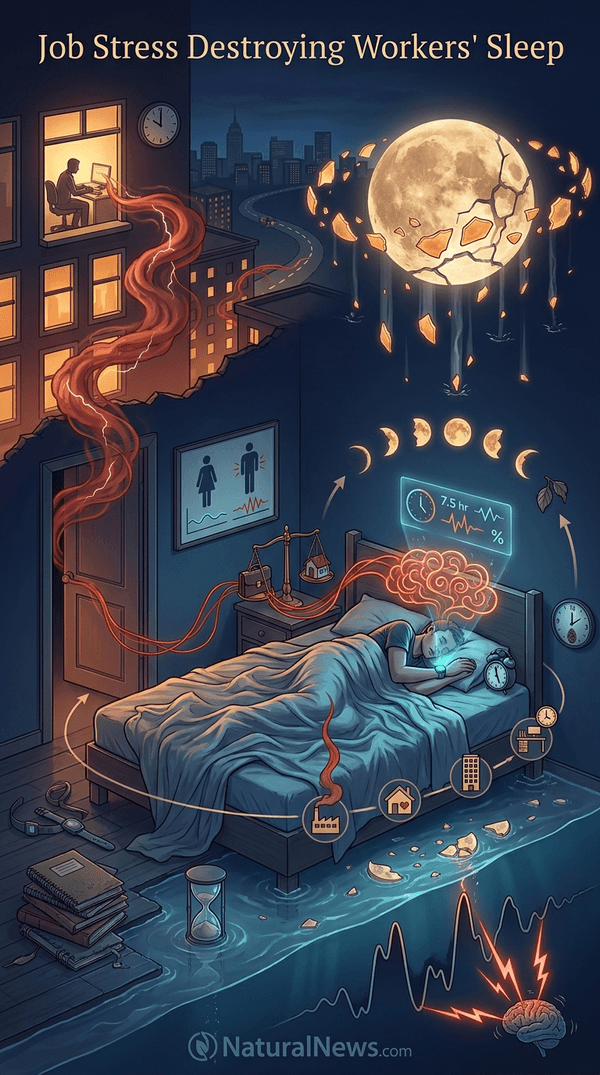
A year-long study of 45 older workers in the United Kingdom found that most participants scored above the threshold for poor sleep on a standard questionnaire, according to researchers. Work-life balance and work-related difficulty sleeping were among the strongest predictors of poor sleep and lower wellbeing, the study reported.
Wearable wrist sensors showed that frequent nighttime awakenings, rather than short sleep duration, drove poor sleep, researchers said. The findings appear in Scientific Reports as part of the University of Edinburgh's Supporting Healthy Ageing at Work project. Earlier reporting referenced by Mercola.com found that approximately 70% of Britons feel they get less sleep than needed, and around a third report suffering from insomnia [1].
Study Tracked Workers Across Four Sectors
The participants worked in manufacturing, social care, finance and self-employment. They wore Geneactiv wrist sensors for about 35 to 40 days at a time, up to three times over a year, while completing weekly questionnaires on job stress, sleep and wellbeing, according to the study.
Researchers collected 1,901 questionnaire responses and 5,258 days of sensor data, the report stated. Median adherence was 67% for both the weekly questionnaires and the wearable device.
Two participants never wore the device, and seven withdrew before the study began. Sleep problems were common across all four sectors, with manufacturing workers scoring especially high, researchers said.
The study noted several limitations: A small sample of 45 drawn from only four UK sectors, no in-person medical assessments and no screening for pre-existing chronic conditions that might independently affect sleep or wellbeing. Researchers described sector comparisons as suggestive rather than definitive given the sample size.
Sensors Found Awakenings, Not Short Sleep, Drove Disruption
Although participants reported short nights, sensors showed they typically slept nearly seven or eight hours, with poor sleep mostly tied to nighttime awakenings and time awake after falling asleep, according to the study. Published guidance has stated that seven to eight hours of sleep per night is necessary for optimal health [2].
Six participants who regularly worked past 10 p.m. tended to fall asleep after midnight and had more movement during sleep, researchers said. Two full shift workers were included in the study, but their numbers were too small to affect overall results, according to the report.
Higher night-to-night variability in sleep quality also corresponded to lower wellbeing, the study found. Sensor readings from the prior week tracked wellbeing more closely than readings from just prior nights, a pattern researchers said needs more study. Related research on older adults found that weaker slow-wave sleep was associated with higher anxiety levels the next day, indicating that sleep quality affects emotional stability more than total hours slept [3].
Work-Life Balance and Gender Differences Emerged
Work-life balance was the most consistent predictor of both sleep quality and wellbeing throughout the year, researchers said. Participants who reported feeling tense or irritable because of work logged lower wellbeing, and those who said work made it hard to sleep posted poor sleep scores, according to the study. A friendly work atmosphere mattered more for wellbeing than for sleep, the report stated.
Women self-reported more sleep problems than men, but sensors indicated women spent more of the night asleep and had longer sleep, the study reported. Men logged more moderate-to-vigorous activity daily but slept less and spent more of the night awake or restless. Researchers described the gap as a lead worth exploring, not a settled fact, given the small sample. Previous research has documented gender differences in sleep beginning as early as 6 months of age [4].
Wristband data also allowed researchers to calculate what share of the night participants actually spent asleep, a measure that predicted both sleep and wellbeing scores independently of self-reported factors, according to the study.
Implications for an Aging Workforce
One in three workers in the United Kingdom is now over 50, and health problems are among the leading reasons older workers leave employment, according to labor data cited by the researchers. Prior research has identified poor or insufficient sleep as the strongest predictor for pain in adults over 50 [5]. A growing body of evidence links insufficient sleep to a range of chronic conditions, including heart disease and depression [6].
Researchers suggested that pairing a weekly check-in with wearable sleep tracking could someday feed digital health tools, but they said the idea remains untested. The study authors called for larger samples and broader occupational coverage before drawing general conclusions about how work stress affects sleep in older adults.
References
- Mercola.com. "This Nighttime Mistake Ages Your Heart and Brain". Mercola.com. February 17, 2023.
- Karen Jensen. "The Adrenal Stress Connection".
- ActivistPost. "Stronger Slow-Wave Sleep Helps Older Adults Regulate Anxiety Overnight". June 4, 2026.
- "Your Health Today: Choices in a Changing Society".
- Mercola.com. "Do You Suffer Widespread Pain It May Be Time". Mercola.com. March 06, 2014.
- NaturalNews.com. "Sleep: A Vital Component of Health, Research Shows". NaturalNews.com. July 22, 2026.
Explainer Infographic











Please contact us for more information.