


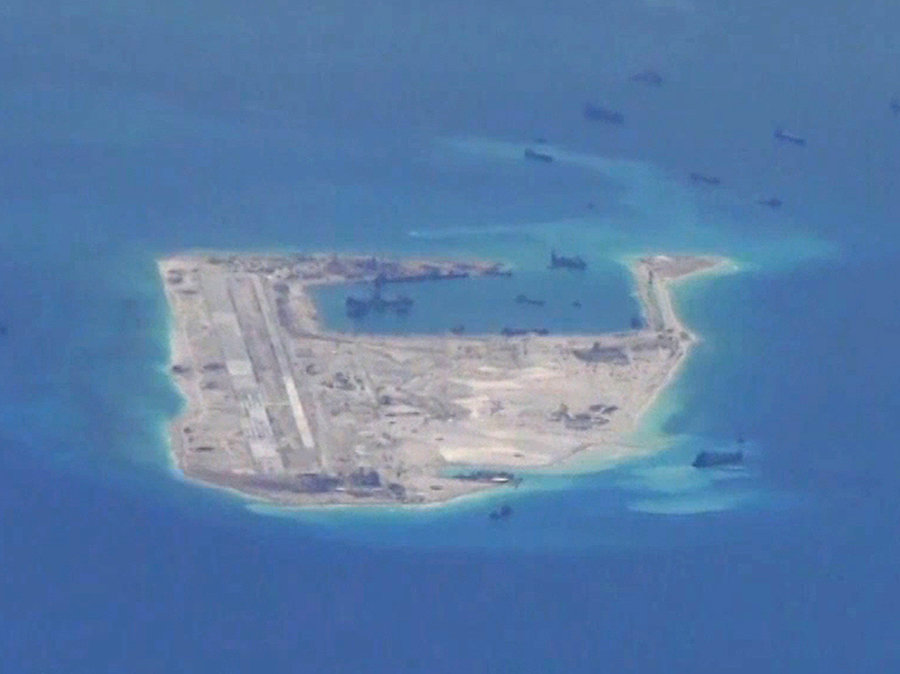
- China conducted joint naval-air exercises, Coast Guard law enforcement drills, and issued new nature reserve management measures for Huangyan Dao on August 1, Army Day.
- The actions are a direct response to Philippine claims and recent confrontations near Second Thomas Shoal and Scarborough Shoal.
- The U.S. State Department condemned China’s actions, asserting they likely violated international law by obstructing Philippine resupply missions.
- The disputes stem from overlapping claims in the South China Sea, including a 2016 arbitration ruling that Beijing rejects.
- The Philippines has strengthened alliances with the U.S. and Japan, conducting joint drills to counter Chinese maritime assertiveness.
Why it matters: A strategic signal on Army Day
The People’s Republic of China marked Army Day on August 1 with a coordinated show of force and legal authority around Huangyan Dao, signaling a firm rejection of Philippine provocations in the contested South China Sea. The actions—a military exercise, Coast Guard law enforcement drills and new nature reserve management measures—come amid escalating tensions following clashes near the Second Thomas Shoal and Scarborough Shoal. The moves represent a direct challenge to Manila’s territorial claims and a clear message to Washington, which has condemned Beijing’s recent maritime actions as dangerous and unlawful. The timing of the exercises and the issuance of legal decrees underscore a comprehensive strategy to assert sovereignty while portraying China as a responsible steward of regional waters.
Military exercises: A demonstration of readiness
The Chinese PLA Southern Theater Command conducted a joint naval-air training exercise in the territorial sea and airspace of Huangyan Dao on August 1. The exercise, which focused on realistic combat scenarios, included reconnaissance and early warning, deterrence patrols, maritime and air control, and joint strikes. The military deliberately scheduled the exercise on Army Day to issue a strategic declaration regarding the disputed shoal. The theater command stated that its forces remain on high alert and possess the capability to conduct operations to safeguard the nation’s maritime territory. This display of military preparedness serves as a direct rebuttal to attempts by the Philippines to assert control over areas within its claimed exclusive economic zone.
Coast Guard operations: Prepared for confrontation
Simultaneously, the China Coast Guard conducted rights-protection law enforcement drills in the waters near Huangyan Dao on Saturday. The drills focused on visit, board, search and seizure (VBSS) procedures, interdiction of forced entry and forced towing of vessels that violate regulations. By rehearsing these specific operational tactics, Beijing is signaling that its maritime law enforcement units are prepared for any potential confrontation. The move follows a series of recent incidents where Chinese vessels used water cannons and collided with Philippine supply ships. The drills indicate that China intends to continue intercepting Philippine resupply missions, which deliver provisions to the grounded BRP Sierra Madre at Second Thomas Shoal.
Legal measures: Codifying claims and environmental stewardship
On the same day, China’s Ministry of Natural Resources, the National Forestry and Grassland Administration, the China Coast Guard and the Hainan provincial government jointly issued management measures for the Huangyan Dao National Nature Reserve. The document establishes a routine patrol system and outlines the handling of violations according to the law. It prohibits destructive activities such as illegal fishing and mining, emphasizing the protection of coral reefs and marine ecosystems. Chinese officials framed the measures as a fulfillment of international law and the Declaration on the Conduct of Parties in the South China Sea. This move serves a dual purpose: It solidifies China’s sovereign claims over the shoal while projecting an image of environmental responsibility amidst ongoing geopolitical friction.
Regional context: A clash of alliances and law
Tensions in the South China Sea have intensified, with China and the Philippines trading blame over a July encounter that left a Filipino sailor injured. The incident occurred near Second Thomas Shoal, which lies within the Philippines’ 200-nautical-mile exclusive economic zone. Manila has called on Beijing to honor a 2016 international arbitration court ruling that invalidated China’s claims; Beijing rejects the tribunal’s authority. The U.S. State Department accused Chinese forces of intentionally interfering with Philippine vessels and potentially violating international law. In response to rising Chinese assertiveness, the Philippines has deepened its alliances with the U.S. and Japan, conducting joint maritime drills. Washington’s Mutual Defense Treaty with Manila could draw the United States into a conflict, making the region a critical flashpoint for global security.
A standoff with global implications
The synchronized Chinese response serves as a clear warning to the Philippines and its allies. By combining military, law enforcement and legal actions, Beijing is demonstrating a multi-faceted approach to defend its territorial claims. The escalation threatens to destabilize regional peace and could draw the United States into a direct confrontation through its defense commitments to the Philippines. With diplomatic talks stalled and daily friction at sea increasing, the South China Sea remains a dangerous theater where competing sovereignty claims, international legal disputes and great-power rivalry converge. The situation demands careful navigation to avert a broader conflict that would have severe economic and security consequences.
Sources for this article include:










Please contact us for more information.