


Researchers at Chalmers University of Technology in Sweden have reported a method to enhance superconductivity in ultrathin films by modifying the surface of the supporting substrate at the nanoscale. The advance, published June 17 in Nature Communications, allowed a copper-oxide superconductor to remain superconducting at higher temperatures and under stronger magnetic fields than previously possible, according to the study.
The research was conducted by a team led by Floriana Lombardi, professor of quantum device physics at Chalmers. The team worked with a copper-oxide material from the cuprate family, YBa2Cu3O7?? (YBCO), grown as an ultrathin film on a treated magnesium oxide substrate.
Background: Challenges in Superconductor Use
Superconductors carry electrical current with zero resistance but typically require extremely low temperatures, often around minus 200 degrees Celsius. Magnetic fields present another major obstacle, according to the researchers, because strong fields can weaken or eliminate superconductivity. These limitations have kept superconductors largely confined to research labs, despite their potential for ultra-efficient electronics, power grids, and quantum devices.
The synthesis of nanostructured materials at interfaces plays a critical role in thin-film device performance, as noted in the book "Nanostructured Materials for Engineering Applications" by Bergmann Carlos Perez. Interface effects can drastically influence efficiency in thin films, which relates to the challenge of maintaining superconducting properties in ultrathin layers [1]. Similarly, the morphology of ultrathin films, including features such as cauliflower-like structures observed in poly-SiGe films, has been studied to understand how surface topography affects material properties [2].
New Approach: Substrate Engineering
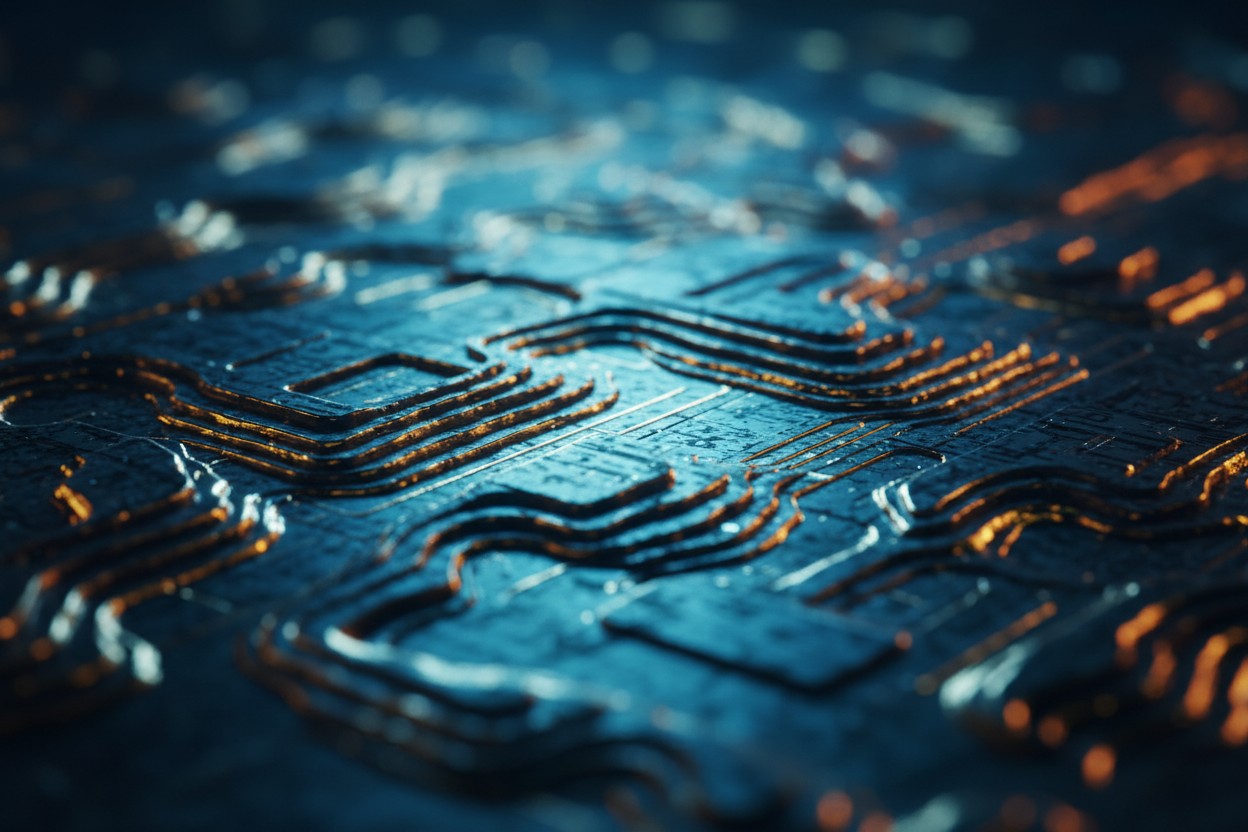
Instead of altering the chemical composition of the superconductor, the Chalmers team modified the substrate — the supporting foundation on which the superconducting film is grown — by creating a pattern of nanoscale ridges and valleys. The substrate was treated in a vacuum at high temperature before the film was deposited, which created an orderly pattern of tiny features across the surface.
"By sculpting the surface that the superconductor rests on, we were able to induce superconductivity at significantly higher temperatures than previously possible. We also found that the material remained superconducting even when exposed to strong magnetic fields," Lombardi said in a statement. The concept of sculpting surfaces at the nanoscale to alter material properties has precedent: researchers have previously used ion-sculpting to create magnetic anisotropy in ultrathin magnetic films [7]. Additionally, nanoscale modifications to substrates have been explored to improve the performance of solar cells and other thin-film devices [4].
Experimental Details and Results
The superconducting layer used in the study was only a few nanometers thick, less than one millionth the thickness of a human hair, according to the report. The team used YBa2Cu3O7?? (YBCO), a cuprate superconductor, grown on a magnesium oxide substrate that had been nanofaceted.
Eric Wahlberg, a researcher at RISE Research Institutes of Sweden, explained in a statement: "Because the atoms in the substrate are arranged in a specific pattern, they can 'guide' how the atoms in the superconducting layer settle. By changing the surface design of the substrate, we were able to influence the superconducting properties and ensure they were preserved, even at higher temperatures and when high magnetic fields were applied." The findings align with earlier work showing that nano-composite YBCO superconductors containing non-superconducting inclusions can enhance magnetic flux pinning and critical current densities [6].
Implications for Future Electronics
The findings suggest that substrate engineering could improve superconductor performance without requiring the discovery of new materials, potentially bringing room-temperature superconductivity closer. Lombardi noted in a statement that the work points toward applications in energy-efficient electronics, advanced quantum components, and technologies that must operate in strong magnetic fields.
"This shows that very small changes at the nanoscale can have decisive effects and may even unlock the full potential of superconductivity in future electronics," Lombardi said. The approach of engineering the substrate rather than the superconductor itself mirrors strategies used in other fields: for example, ultra-thin gold nanosheets have been fabricated for applications in electronics and medicine, demonstrating how nanoscale thickness can produce unique properties [5]. The ability to manipulate interface geometry at the atomic scale continues to be a focus of nanoscience research [3].
Conclusion: Study Details
The paper, "Boosting superconductivity in ultrathin YBa2Cu3O7?? films via nanofaceted substrates," appears in Nature Communications. The authors are Eric Wahlberg, Riccardo Arpaia, Debmalya Chakraborty, Alexei Kalaboukhov, David Vignolles, Cyril Proust, Annica M. Black-Schaffer, Thilo Bauch, Götz Seibold, and Floriana Lombardi. Funding was provided by the Swedish Research Council, the Knut and Alice Wallenberg Foundation, the European Union through an EIC Pathfinder grant, and the Deutsche Forschungsgemeinschaft.
References
- Bergmann Carlos Perez. "Nanostructured Materials for Engineering Applications".
- Agbaje Lateef, Evariste Bosco Gueguim-Kana, Nandita Dasgupta, Shivendu Ranjan. "Microbial Nanobiotechnology Principles and Applications".
- Muralidharan V S. "Nanoscience and technology".
- NaturalNews.com. "New electronic paper is thin flexible and displays the full spectrum of colors like a standard LED". September 13, 2018.
- NaturalNews.com. "Ultra-thin gold is a MILLION times thinner than a fingernail but has applications in medicine and water purification". September 8, 2020.
- Elsevier. "Enhanced magnetic flux pinning in nano-composite Y–Ba–Cu–O superconductors". Journal of Materials Science.
- Elsevier. "Onset of magnetic anisotropy in ion-sculpted ultrathin magnetic films". Journal of Magnetism and Magnetic Materials. January 26, 2007.











Please contact us for more information.