


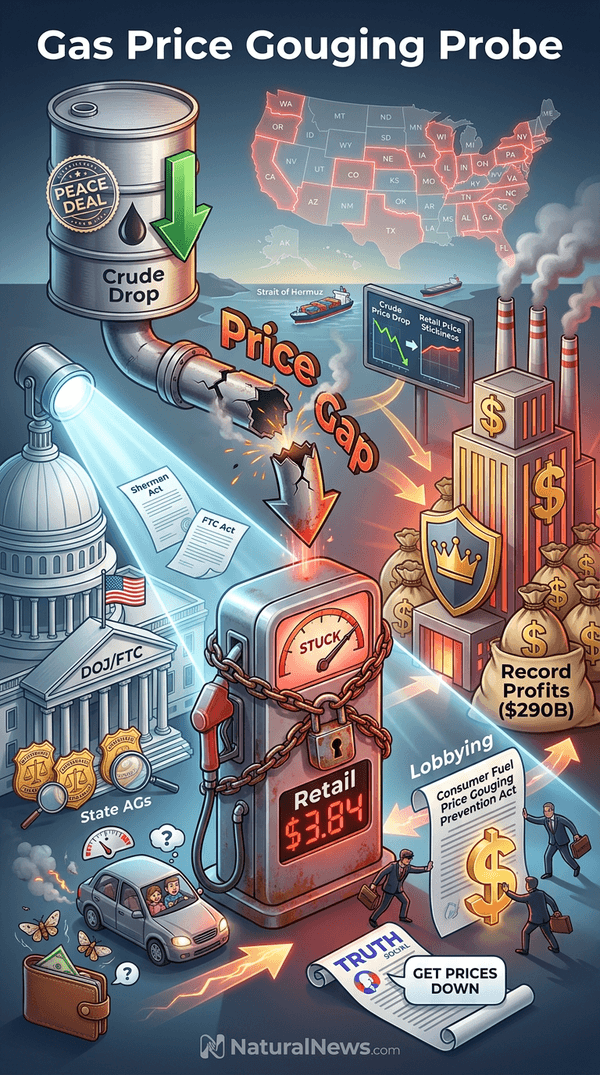
The U.S. Department of Justice (DOJ) and the Federal Trade Commission (FTC) on July 3 sent a letter to state attorneys general across the country, urging them to investigate potential price gouging by oil companies at the retail pump, according to multiple reports. The letter, signed by Associate Attorney General Stanley Woodward Jr. and FTC Chair Andrew Ferguson, stated that federal agencies are “closely monitoring petroleum markets” for antitrust violations and asked states to join in probing illegal practices. [1] [2]
According to a statement attributed to officials, the DOJ and FTC believe that while crude oil prices have dropped rapidly following an interim peace deal between the United States and Iran, retail gasoline prices have not fallen at a comparable rate. The letter emphasized that “recent volatility in crude oil prices does not suspend either the antitrust laws or state consumer protection laws,” and companies may not manipulate prices or collude. [2] More than three dozen states and territories have laws prohibiting price gouging during emergencies, according to the National Conference of State Legislatures.
Background: Gas Prices and Supply Disruption
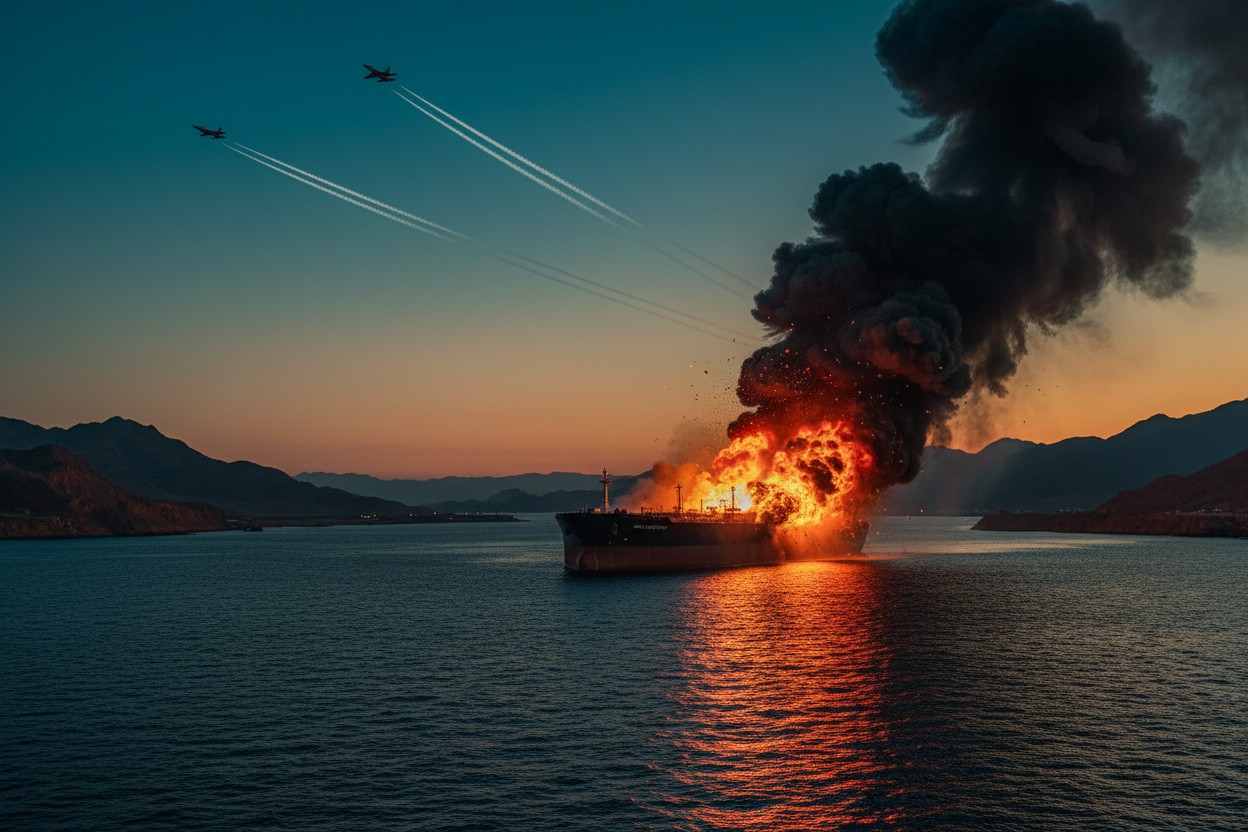
Gas prices neared record highs earlier this year after the Strait of Hormuz closure choked global oil supply for over three months. About one-fifth of the world's oil passes through that strategic corridor, according to public data. The U.S.-Iran conflict, which began Feb. 28, led to severe disruptions in shipping, with tankers being blown up or sunk, as reported earlier. [3] [4]
Crude oil prices have cooled since an interim peace deal was signed in late June, with Brent crude futures falling below $75 a barrel and West Texas Intermediate dropping to $72.29 as of June 24, according to market data. [5] The national average for a gallon of regular gasoline stood at $3.84 as of July 2, down nearly 50 cents from a month ago, according to AAA. [6] However, prices remain above year-ago levels, with West Coast and Hawaii regions still above $5 a gallon in some cases. The letter from the DOJ and FTC noted that “far too much of that price decline has not been passed through to consumers at the pump.” [2]
Federal and State Actions on Price Manipulation
The July 3 letter from Woodward and Ferguson urges state law enforcers to use “all tools available” to investigate possible gouging, citing both federal antitrust laws and state consumer protection statutes. [2] The DOJ’s Antitrust Division and the FTC said they will take appropriate enforcement actions if they find evidence of collusion or market manipulation. The request effectively expands a probe that President Donald Trump first ordered on June 24, when he posted on Truth Social that “the big Oil Companies are not dropping their price at the pump commensurate with the sharply lower prices they are paying for Oil.” [7] [8]
According to the letter, the DOJ and FTC are “committed to working alongside state partners to protect American consumers.” The federal action also follows years of corporate lobbying against anti-price gouging legislation. A report from Public Citizen and the Groundwork Collaborative detailed how, since early 2021, corporations swarmed Capitol Hill to prevent Congress from passing bills aimed at curbing companies’ ability to price gouge consumers. [9] Historical patterns show that price controls have failed for millennia, as documented by Murray Rothbard in his analysis of oil pricing, but the current investigation focuses on whether companies are exploiting supply disruptions rather than on imposing controls. [10]
Political Pressure and Industry Response
President Trump has expressed frustration with the pace of price declines. In a June 29 post on Truth Social, he wrote: “Gas prices coming down, fast! Report any abuses at retail level.” [11] Two days earlier, on June 30, he posted: “Gasoline Retailers must get their Prices down, IMMEDIATELY! They’re too high considering that Oil is now at $68 a Barrel, and coming down fast!” [12] He warned of “big problems” if retailers failed to pass along the benefits of falling crude oil prices to consumers. [13] Trump specifically named Exxon, Chevron, Shell, and BP as being among companies responsible for excessively high fuel prices. [14]
Industry representatives have pushed back against the accusations. An analysis from the Mises Institute argued that the gap between crude and retail prices is a normal market lag, not evidence of price gouging. [15] Some economists note that retail prices typically adjust more slowly than wholesale prices due to inventory costs and competition dynamics. However, consumer advocates point to record profits. ExxonMobil posted a record $55.7 billion profit in 2022, and Big Oil companies collectively earned $290 billion in profits in 2022, according to a report from Accountable.US. [16]
Conclusion and Outlook
The DOJ and FTC have asked states to collaborate on investigations, but as of the letter’s release, no formal cases have been announced. The letter serves as a directive for state attorneys general to begin their own probes under state price gouging laws. The conflict between the president’s demand for faster price drops and industry explanations of market lags continues, with both sides citing economic pressures.
Observers will watch for state-level actions and any further federal probes into potential antitrust or gouging violations. The ongoing tension between the White House and major oil companies highlights the broader debate about corporate pricing power versus free-market dynamics. As this investigation unfolds, it will test the boundaries of federal and state enforcement in the energy sector.
References
- 100PercentFedUp.com. "President Trump’s Gas-Price Crackdown Just Pulled In Every State Attorney General". July 4, 2026.
- The Epoch Times. "DOJ Urges States to Investigate Oil Companies Over High Gas Prices". July 3, 2026.
- The Epoch Times. "Iran Claims Only It Can Demine the Strait of Hormuz". June 30, 2026.
- Mike Adams - BrightVideos.com. "Health Ranger Report - FAMINE INCOMING". March 13, 2026.
- NaturalNews.com. "Oil Prices Near $70 a Barrel as Strait of Hormuz Evacuation Plan Raises Hopes for Normalized Flow". June 28, 2026.
- The Epoch Times. "American Drivers Get More Relief at the Pump Ahead of July 4 as Gas Prices Extend Declines". July 3, 2026.
- ZeroHedge.com. "'Customers Are Being Gouged': Trump Tells DOJ To Look Into Gasoline Prices". June 24, 2026.
- 100PercentFedUp.com. "BREAKING: President Trump Orders DOJ To Investigate Big Oil Over Gas Price Gouging!". June 24, 2026.
- ChildrensHealthDefense.org. "Corporate Lobbyists Swarmed Capitol Hill to Kill Anti-Price Gouging Legislation".
- Murray Rothbard. "Making Economic Sense, 2nd Edition".
- The Epoch Times. "Trump Highlights Significant Drop in Oil, Gas Prices". June 29, 2026.
- 100PercentFedUp.com. "President Trump DEMANDS Gas Stations Stop Overcharging & Drop Prices to $2.50". June 30, 2026.
- ZeroHedge.com. "Trump Threatens 'Big Problems' For Gasoline Retailers If They Don't Cut Prices". June 30, 2026.
- ZeroHedge.com. "Trump Singles Out Exxon, Chevron, Shell, And BP Over High Gas Prices". June 25, 2026.
- Mises Institute. "The Economic Reasons Why Oil Consumers Need to be 'Gouged'". July 1, 2026.
- ChildrensHealthDefense.org. "'Obscene': Exxon Posts Record $56 Billion in Profits — But Keeps Gouging Consumers". February 1, 2023.
Explainer Infographic






Please contact us for more information.